To promote freedom, fairness, and economic opportunity by repealing the income tax and other taxes, abolishing the Internal Revenue Service, and enacting a national sales tax to be administered primarily by the States.
Analysis under review: This bill has generated analysis that may be too generic or incomplete. Clause-level evidence remains available below.
Summary
What This Bill Does
This legislation (FairTax Act of 2025) completely replaces the federal income tax, payroll taxes, and estate/gift taxes with a 23% national sales tax on all goods and services. To prevent the tax from being regressive, every household receives a monthly 'prebate' equal to the sales tax on spending up to the poverty level. The IRS would be phased out and replaced with state-administered collection.
Who Benefits and How
Middle-class consumers benefit from elimination of income tax withholding and tax filing requirements. Businesses benefit from no corporate income tax, simpler compliance, and exemption for business-to-business purchases. Savers and investors benefit because investment income is no longer taxed until consumed. States receive administration fees for collecting federal sales tax. Tax preparers and accountants initially benefit from transition services. Wealthy individuals may benefit since accumulated wealth is only taxed when spent.
Who Bears the Burden and How
Consumers pay 23% sales tax on all purchases including housing, healthcare, and services. Low-income households face higher effective rates despite the prebate because they spend all income on consumption. State governments bear administrative costs of collection infrastructure. IRS employees lose jobs as the agency is phased out. Retailers bear collection, reporting, and remittance obligations. Service providers (lawyers, doctors, plumbers) must collect sales tax on services for the first time.
Key Provisions
- Repeals Subtitle A (income taxes), Subtitle B (estate/gift taxes), and Subtitle C (payroll taxes) of IRC
- Imposes 23% sales tax on all goods and services consumed in the United States
- Exempts business-to-business purchases from tax (intermediate sales exemption)
- Creates monthly family consumption allowance (prebate) based on poverty level
- Requires states to administer collection via cooperative agreements or federal backup
- Creates Sales Tax Bureau and Excise Tax Bureau in Treasury
- Sunsets entire law if 16th Amendment not repealed within 7 years
Evidence Chain:
This summary is generated from the full bill text using AI analysis. Expand "Detailed Analysis" below for identified beneficiaries/burden bearers.
At a Glance
What This Bill Does
Replaces federal income, payroll, and estate taxes with a national retail sales tax of 23%, provides monthly rebates to families based on poverty levels, and requires repeal of the 16th Amendment within 7 years.
Who Benefits
- High-income savers and investors
- Businesses (no corporate tax)
- Self-employed (no self-employment tax)
Who Bears Costs
- Low and middle-income consumers (higher effective rate)
- Retailers (collection burden)
- Service industry (new tax on services)
Key Policy Areas
Taxation, Consumer Finance, Social Security, Government Administration
Primary Purpose
Replaces federal income, payroll, and estate taxes with a national retail sales tax of 23%, provides monthly rebates to families based on poverty levels, and requires repeal of the 16th Amendment within 7 years.
Policy Domains
Legislative Strategy
"Replace entire progressive income tax system with consumption-based flat tax, using prebate mechanism to address regressivity concerns while dramatically simplifying tax code and eliminating IRS"
Sponsors



Legislative Progress
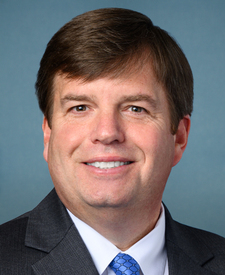
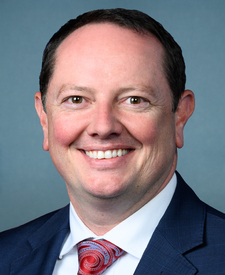
IntroducedMr. Carter of Georgia (for himself, Mr. Clyde, Mr. Carter …
Stakeholder Effects
cui bono?How this legislation distributes effects. Mention counts reflect frequency, not effect magnitude.
All affected parties, All individual and corporate income taxpayers, All registered families
Employers faces effects in multiple directions
Positive-direction: All individual and corporate income taxpayers, All registered families, Business owners with mixed-use property, Businesses claiming intermediate sales exemption, Businesses extending credit to customers, Businesses purchasing inputs, Businesses with accrual accounting, Debtors in bankruptcy, Donors to nonprofits, Employees, Employees receiving discounts, Families with changing circumstances, Families with lawful residents, High-income earners, Individuals making casual sales under $1,200/year, Low-income families, Registered families receiving prebate, Self-employed individuals, Small businesses using personal property for business, Social Security beneficiaries, Taxpayers facing improper collection, Taxpayers in disputes, Taxpayers in disputes with tax authorities, Taxpayers needing extensions, Taxpayers prevailing in disputes, Taxpayers subject to audit or collection, Taxpayers unable to pay in full, Taxpayers with overpayments, Wealthy individuals with large estates
Negative-direction: Consumers of financial services, Consumers of goods and services, Delinquent taxpayers, Fraudulent prebate claimants, Individuals claiming business deductions for hobbies, Small businesses subject to regulations, US residents using foreign financial services
All businesses selling taxable goods or services, Businesses collecting and remitting sales tax, Businesses required to register and collect tax
Positive-direction: Businesses with inventory at transition, Retailers and sellers collecting sales tax
Negative-direction: All businesses selling taxable goods or services, Businesses collecting and remitting sales tax, Businesses required to register and collect tax, Businesses selling across state lines, Businesses subject to audit, Interstate commerce businesses, Large sellers with $100,000+ monthly collections, Non-compliant sellers, Registered sellers, Retailers and service providers, Retailers issuing receipts, Sellers of taxable property and services
Federal government agencies, Government-owned enterprises, IRS employees
Positive-direction: Medicare Trust Funds, Social Security Trust Funds, State governments, State governments administering sales tax, State tax administrators
Negative-direction: Federal government agencies, Government-owned enterprises, IRS employees, Social Security Administration, State and local governments, State tax administering authorities, Treasury Department
Banks and financial institutions, Equipment leasing companies, Financial institutions
Positive-direction: Insurance policyholders receiving claims, Investment-purpose purchases, Lenders with defaulted loans
Negative-direction: Banks and financial institutions, Equipment leasing companies, Financial institutions, Financial institutions calculating implicit fees, Foreign financial service providers, Foreign investors receiving US-source income
Businesses purchasing inputs for production, Exporters
Casinos and gaming operators, Lottery operators
Bill Structure & Actor Mappings
Who is "The Secretary" in each section?
- "the_secretary"
- → Secretary of the Treasury
- "the_secretary"
- → Secretary of the Treasury
- "sales_tax_administering_authority"
- → State tax authority or Federal Sales Tax Bureau
- "the_secretary"
- → Secretary of the Treasury
- "social_security_administration"
- → Social Security Administration
- "the_secretary"
- → Secretary of the Treasury
- "sales_tax_administering_authority"
- → State tax authority
- "the_secretary"
- → Secretary of the Treasury
- "sales_tax_administering_authority"
- → State or Federal tax authority
- "sales_tax_administering_authority"
- → State or Federal tax authority
- "the_secretary"
- → Secretary of the Treasury
- "the_secretary"
- → Secretary of the Treasury
- "the_secretary"
- → Secretary of the Treasury
- "social_security_administration"
- → Social Security Administration
- "the_secretary"
- → Secretary of the Treasury
Key Definitions
Terms defined in this bill
Any property or service purchased for use or consumption in the United States, excluding business-to-business purchases
The total amount paid for taxable property or services, including federal sales tax
Purchase of property or services for use in a trade or business, exempt from sales tax
One or more family members sharing a common residence, eligible for monthly prebate
A state that maintains a sales tax and enters into cooperative agreement with Treasury to collect federal sales tax
Sum of explicitly and implicitly charged fees by financial institutions, subject to special taxation rules
We use a combination of our own taxonomy and classification in addition to large language models to assess meaning and potential beneficiaries. High confidence means strong textual evidence. Always verify with the original bill text.
Learn more about our methodology