Dairy Nutrition Incentive Program Act of 2025
Summary
What This Bill Does
The Dairy Nutrition Incentive Program Act creates a new section in the Food and Nutrition Act. USDA must establish a program within 180 days to test methods for increasing SNAP household purchases and consumption of naturally nutrient-rich dairy, defined as cow's milk, yogurt and cultured cow's milk products, and cheese. Grants or cooperative agreements go competitively to state or local governments and nonprofit organizations, with priority for projects that maximize direct SNAP participant incentives, issue incentives at the point of purchase when naturally nutrient-rich dairy is bought with SNAP, allow earned incentives to be used only for naturally nutrient-rich dairy, serve SNAP households, and use electronic point-of-sale systems. USDA must independently evaluate each project with rigorous methods, publish results, submit biennial reports, transition existing 2018 farm bill dairy incentive projects without interruption, and later repeal the prior authority. Funding includes $10 million in mandatory annual appropriations plus authorization for another $10 million for fiscal year 2026 and each year thereafter.
Who Benefits and How
SNAP households purchasing dairy benefit from point-of-sale incentives that lower the effective cost of milk, yogurt, cultured dairy, and cheese. Dairy producers benefit if incentives increase SNAP purchases of naturally nutrient-rich dairy products. State nutrition agencies benefit from competitive grant or cooperative-agreement opportunities to test dairy incentives. Nonprofit nutrition organizations benefit from eligibility to operate incentive projects and receive EBT technology startup support.
Who Bears the Burden and How
USDA grant administrators must establish the program, publish evaluation criteria, run competitions, fund EBT technology support, commission independent evaluations, report biennially, and transition older projects. Participating retailers must use point-of-sale systems capable of electronically issuing and restricting incentives to eligible dairy purchases. Federal taxpayers bear $10 million in mandatory annual funding plus any additional $10 million annual appropriations Congress provides. Projects with poor evaluations or noncompliance can be discontinued or closed by USDA.
Key Provisions
- Creates a USDA Dairy Nutrition Incentive Program to increase SNAP purchases of naturally nutrient-rich dairy.
- Authorizes competitive grants or cooperative agreements for state, local, and nonprofit projects using point-of-sale incentives.
- Requires rigorous independent evaluations, public results, biennial reports, and transition of existing dairy incentive projects.
- Appropriates $10 million annually and authorizes an additional $10 million for fiscal year 2026 and each fiscal year thereafter.
Evidence Chain:
This summary is generated from the full bill text using AI analysis. Expand "Detailed Analysis" below for identified beneficiaries/burden bearers with clause-level evidence links.
At a Glance
What This Bill Does
Creates a USDA Dairy Nutrition Incentive Program with competitive grants or cooperative agreements, point-of-sale SNAP incentives for naturally nutrient-rich dairy, rigorous evaluations, transition of existing dairy incentive projects, and $10 million in mandatory annual funding plus additional authorized funding.
Key Policy Areas
Nutrition Assistance, Agriculture, Dairy
Primary Purpose
Creates a USDA Dairy Nutrition Incentive Program with competitive grants or cooperative agreements, point-of-sale SNAP incentives for naturally nutrient-rich dairy, rigorous evaluations, transition of existing dairy incentive projects, and $10 million in mandatory annual funding plus additional authorized funding.
Policy Domains
Resolution provisions
Identified Gains
- SNAP households purchasing dairy
- Dairy producers
- State nutrition agencies
- Nonprofit nutrition organizations
Identified Costs
- USDA grant administrators
- Participating retailers
- Federal taxpayers
- Noncompliant dairy incentive projects
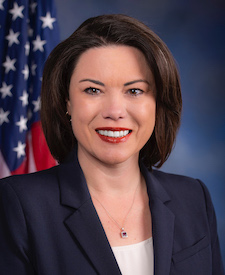
Sponsors




Legislative Progress
In CommitteeReferred to the Subcommittee on Livestock, Dairy, and Poultry.
Mr. Costa (for himself, Mr. Langworthy, Ms. Pingree, Mr. Newhouse, …
Referred to the House Committee on Agriculture.
Introduced in House
Stakeholder Effects
cui bono?How this legislation distributes effects. Mention counts reflect frequency, not effect magnitude.
Bill Structure & Actor Mappings
Who is "The Secretary" in each section?
We use a combination of our own taxonomy and classification in addition to large language models to assess meaning and potential beneficiaries. High confidence means strong textual evidence. Always verify with the original bill text.
Learn more about our methodology