SUPPORT for Patients and Communities Reauthorization Act of 2025
Summary
What This Bill Does
Reauthorizes the 2018 SUPPORT for Patients and Communities Act, extending federal programs combating substance use disorders (including opioids and fentanyl) through fiscal years 2026-2030. The bill increases funding for prevention, treatment, recovery services, and workforce development. It covers prenatal health, fetal alcohol spectrum disorders, overdose prevention, first responder training, child trauma initiatives, residential treatment for pregnant women, addiction medicine training, peer support services, recovery community centers, youth prevention, and prescriber training requirements.
Who Benefits and How
- Individuals with substance use disorders gain expanded access to treatment programs, recovery centers, overdose reversal agents, and peer support services
- Pregnant and postpartum women receive targeted residential treatment programs and maternal substance use outreach (Sec. 201)
- Children and youth benefit from expanded trauma initiatives, fetal alcohol spectrum disorder services, and youth prevention and recovery programs (Sec. 104, 107, 304)
- First responders receive broadened training to address overdoses from all substances, not just opioids (Sec. 106)
- Rural and underserved communities benefit from workforce development grants and loan repayment programs to recruit substance use disorder treatment providers (Sec. 204, 305)
- Recovery communities receive significantly increased funding ($17M/year, up from $5M) for building recovery infrastructure (Sec. 301)
- Peer support specialists gain professional development opportunities and expanded roles in nonclinical settings (Sec. 302)
- Patients prescribed buprenorphine/naloxone may benefit from potential rescheduling review that could improve access (Sec. 209)
Who Bears the Burden and How
- HHS (including SAMHSA, FDA, CDC) must administer numerous expanded grant programs, publish guidance documents, conduct reviews, and convene roundtables within prescribed timelines
- DEA must collaborate on at-home drug disposal guidance and controlled substance delivery rules (Sec. 111, 401)
- Prescribers of controlled substances face expanded mandatory training requirements from additional accrediting organizations (Sec. 402)
- States must comply with PDMP system requirements while retaining vendor choice (Sec. 105)
- Federal taxpayers bear the cost of reauthorized and expanded funding (e.g., SUD loan repayment from $25M to $40M/year; recovery communities from $5M to $17M/year; trauma monitoring from $2M to $9M/year)
Key Provisions
- Reauthorizes prenatal/postnatal health programs at $4.25M/year through 2030 (Sec. 101)
- Creates comprehensive fetal alcohol spectrum disorder (FASD) program at $12.5M/year (Sec. 104)
- Broadens overdose prevention from opioid-specific to all substances (Sec. 103, 106)
- Authorizes fentanyl and xylazine test strips for state/tribal opioid grants (Sec. 113)
- Increases SUD treatment workforce loan repayment to $40M/year (Sec. 204)
- Directs review of buprenorphine/naloxone scheduling to potentially improve treatment access (Sec. 209)
- Triples recovery community funding to $17M/year (Sec. 301)
- Expands CAREER Act grants for treatment, recovery, and workforce support in high-impact areas (Sec. 305)
- Requires at-home drug disposal guidance within one year (Sec. 111)
- Adds cybersecurity protections for the 988 Suicide Prevention Lifeline (Sec. 108)
Evidence Chain:
This summary is generated from the full bill text using AI analysis. Expand "Detailed Analysis" below for identified beneficiaries/burden bearers with clause-level evidence links.
At a Glance
What This Bill Does
Reauthorizes and expands federal programs established by the 2018 SUPPORT for Patients and Communities Act to combat opioid and substance use disorders, strengthening prevention, treatment, recovery, and workforce development through FY2026-2030 with increased funding authorizations.
Key Policy Areas
Healthcare, Substance Abuse, Workforce Development, Criminal Justice, Education
Primary Purpose
Reauthorizes and expands federal programs established by the 2018 SUPPORT for Patients and Communities Act to combat opioid and substance use disorders, strengthening prevention, treatment, recovery, and workforce development through FY2026-2030 with increased funding authorizations.
Policy Domains
Title I — Public Health Provisions
Identified Gains
- Individuals at risk of substance overdose
- Pregnant women and families affected by fetal alcohol spectrum disorders
- First responders
- Children exposed to trauma
- State PDMP system operators
Identified Costs
- HHS (CDC, FDA, SAMHSA)
- Drug Enforcement Administration
- Federal taxpayers
Title II — Treatment and Recovery Workforce
Identified Gains
- Pregnant and postpartum women with SUDs
- Substance use disorder treatment providers
- Patients receiving buprenorphine/naloxone treatment
- Mental health professionals in training
Identified Costs
- HHS (SAMHSA, FDA)
- States administering mental health block grants
- Federal taxpayers
Title IV — Miscellaneous (Controlled Substances)
Identified Gains
- Patients receiving injectable/implantable SUD treatment
- Prescribers seeking training flexibility
- Pharmacies delivering controlled substances
Identified Costs
- Prescribers of controlled substances (expanded training mandate)
- DEA (enforcement oversight)
Title III — Recovery
Identified Gains
- Recovery communities and peer support specialists
- Youth at risk of substance use
- Workers in opioid-affected regions
- Comprehensive opioid recovery centers
Identified Costs
- SAMHSA
- Department of Labor
- Federal taxpayers
Sponsors
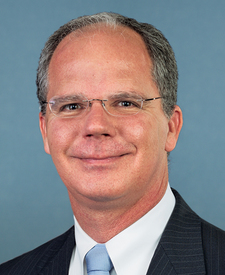
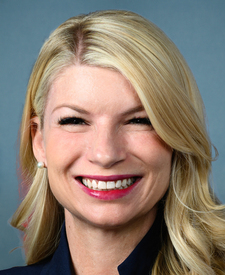
Legislative Progress
Signed into LawBecame Public Law No: 119-44.
Became Public Law No: 119-44
Signed by President.
Presented to President.
Message on Senate action sent to the House.
Passed Senate without amendment by Unanimous Consent. (consideration: CR S6712)
Passed/agreed to in Senate: Passed Senate without amendment by Unanimous …
Senate Committee on Health, Education, Labor, and Pensions discharged by …
Received in the Senate and Read twice and referred to …
Motion to reconsider laid on the table Agreed to without …
Stakeholder Effects
cui bono?How this legislation distributes effects. Mention counts reflect frequency, not effect magnitude.
988 Lifeline network administrator and crisis centers, 988 Suicide Prevention Lifeline users, Addiction medicine practitioners
Positive-direction: 988 Suicide Prevention Lifeline users, Addiction medicine practitioners, Addiction medicine training programs, Certain medical specialists with exemptions, Child trauma treatment and research organizations, Child trauma treatment organizations and NCTSI grantees, Crisis stabilization centers, Drug-related infection monitoring programs, Emergency departments, FASD prevention and treatment organizations, FASD program implementers, FASD program recipients, First episode psychosis treatment providers, Health professions schools and social service providers, Indian Health Service facilities, Indian Tribes and Tribal organizations, Individuals with serious mental illness and children with serious emotional disturbance, Licensed health providers distributing disposal systems, MAT programs, Maternal and child health providers, Maternal treatment grantees, Maternal treatment programs, Medical schools and training programs for mental health professionals, Medical training accreditation organizations (AAFP, APMA, AGD, AOA, APhA, ACPE, APNA, AAN), Mental and behavioral health education programs, Mental health professionals in training, NCTSI grantees and coordinating center, Peer support specialists, Pharmacies dispensing controlled substances, Podiatrists, optometrists, and pharmacists, Postnatal healthcare programs, Prenatal healthcare providers, Prescribing practitioners administering REMS-covered drugs, Public health laboratories, Residential treatment centers for women, State, local, and tribal health departments, Substance use disorder treatment providers, Substance use disorder treatment workers, Suicide prevention organizations, Trauma monitoring programs, Treatment center subcontractors and referral partners, Treatment program grantees, Youth substance abuse treatment programs, Youth-focused substance use prevention organizations
Negative-direction: 988 Lifeline network administrator and crisis centers, NCTSI grant recipients, NCTSI grantees, Prescribers of controlled substances
Adult trauma monitoring programs, CDC trauma monitoring programs, Child trauma monitoring programs
Administration for Community Living, DEA/Attorney General, FDA
Positive-direction: Administration for Community Living, HHS, State PDMPs, State and Tribal FASD coordinators, State and Tribal FASD service systems, State and Tribal governments receiving training grants, State and Tribal health departments, State mental health authorities, State prescription drug monitoring programs, Tribal nations and organizations
Negative-direction: DEA/Attorney General, FDA, Federal Interagency Work Group members, Federal agencies involved in drug policy, Federal agencies on Interagency Committee, Federal agencies on task force, HHS and DEA, HHS, FDA, and CDC, SAMHSA/HHS
Developmental disability service providers, Homeless services and treatment providers, Individuals with developmental disabilities who experience trauma
Comprehensive opioid recovery centers, Patients receiving medication-assisted treatment, Patients seeking addiction treatment
Manufacturers of buprenorphine/naloxone combination products, Manufacturers of injectable/implantable addiction treatment drugs, Manufacturers of non-naloxone opioid overdose reversal drugs
Positive-direction: Manufacturers of buprenorphine/naloxone combination products, Manufacturers of injectable/implantable addiction treatment drugs, Manufacturers of non-naloxone opioid overdose reversal drugs, Nonaddictive pain/addiction treatment developers, Overdose reversal drug manufacturers
Negative-direction: Opioid analgesic drug manufacturers
Communities impacted by opioid crisis workforce dislocation, Communities with high overdose and unemployment rates, Peer recovery specialists
Graduate-level mental health training programs, Healthcare workforce training programs, Local educational agencies and school districts
On Passage
SUPPORT for Patients and Communities Reauthorization Act
On Agreeing to the Amendment
Bill Structure & Actor Mappings
Who is "The Secretary" in each section?
- "the_secretary"
- → Secretary of Health and Human Services
- "the_administrator"
- → Administrator of the Drug Enforcement Administration (Sec. 111)
- "the_secretary"
- → Secretary of Health and Human Services
- "the_national_coordinator"
- → National Coordinator for Health Information Technology (Sec. 211)
- "the_secretary"
- → Secretary of Health and Human Services
- "the_secretary_labor"
- → Secretary of Labor (Sec. 306)
- "the_attorney_general"
- → Attorney General (implicit via Controlled Substances Act amendments)
We use a combination of our own taxonomy and classification in addition to large language models to assess meaning and potential beneficiaries. High confidence means strong textual evidence. Always verify with the original bill text.
Learn more about our methodology