SUPPORT for Patients and Communities Reauthorization Act of 2025
Sponsors

Legislative Progress
Signed into LawReported from the Committee on Energy and Commerce with an …
Committees on Education and Workforce, the Judiciary, and Financial Services …
Passed House (inferred from enr version)
Passed Senate (inferred from enr version)
Enrolled Bill (inferred from enr version)
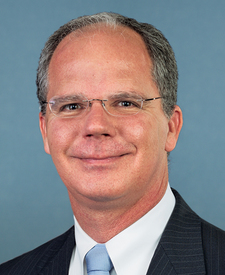
Mr. Guthrie (for himself and Ms. Pettersen) introduced the following …
On Passage
SUPPORT for Patients and Communities Reauthorization Act
On Agreeing to the Amendment
Summary
What This Bill Does
This bill reauthorizes the SUPPORT for Patients and Communities Act, extending federal funding and programs through 2030 that address substance abuse, drug overdoses, and fetal alcohol spectrum disorders (FASD). It updates existing programs to cover broader categories of controlled substances beyond just opioids and expands support for FASD prevention, identification, and treatment.
Who Benefits and How
Healthcare providers, state and tribal health agencies, and nonprofit organizations working on substance abuse prevention benefit through expanded grant programs totaling over $700 million annually. Specifically, they receive funding to implement overdose prevention programs ($505.6 million/year), provide first responder training ($57 million/year), deliver child trauma services ($98-100 million/year), and establish FASD prevention and treatment programs ($12.5 million/year). Individuals and families affected by substance abuse, overdose, and FASD gain access to improved screening, diagnostic services, treatment programs, and support services.
Who Bears the Burden and How
State and tribal governments face increased administrative requirements to comply with reporting mandates, implement wastewater surveillance systems for drug detection, and establish FASD coordinator positions and advisory committees. Grant applicants must prepare detailed applications describing their programs, evaluation plans, and compliance with federal privacy laws. The federal government bears the financial burden of appropriating approximately $773 million annually to fund these programs.
Key Provisions
- Expands overdose prevention programs beyond opioids to cover all controlled substances, authorizing $505.6 million annually and adding wastewater surveillance as an innovative detection strategy
- Establishes comprehensive FASD programs including education, screening, diagnosis, and culturally appropriate interventions, with $12.5 million in annual funding
- Increases first responder training funding from $36 million to $57 million annually and expands coverage to include overdoses from all drugs, not just opioids
- Reauthorizes the Donald J. Cohen National Child Traumatic Stress Initiative at $98-100 million annually with enhanced training and implementation support requirements
Evidence Chain:
This summary is derived from the structured analysis below. See "Detailed Analysis" for per-title beneficiaries/burden bearers with clause-level evidence links.
Primary Purpose
This bill reauthorizes and expands federal programs addressing substance abuse, overdose prevention, and fetal alcohol spectrum disorders through 2030.
Policy Domains
Legislative Strategy
"Reauthorize and modernize substance abuse prevention programs to address broader drug threats beyond opioids, while establishing comprehensive support systems for FASD"
Bill Structure & Actor Mappings
Who is "The Secretary" in each section?
- "the_secretary"
- → Secretary of Health and Human Services
Key Definitions
Terms defined in this bill
The bill expands the scope from 'opioid overdoses' to all 'controlled substance' overdoses, including associated risk factors
With respect to support or an intervention program, means that such support or intervention program uses culturally and linguistically informed evidence-based or practice-based interventions and appropriate resources to support an improved quality of life for an individual with FASD and the family of such individual
We use a combination of our own taxonomy and classification in addition to large language models to assess meaning and potential beneficiaries. High confidence means strong textual evidence. Always verify with the original bill text.
Learn more about our methodology