COST of Relocations Act
Summary
What This Bill Does
The COST of Relocations Act creates a pre-relocation review regime for significant federal agency moves and administrative redelegations. Before a covered relocation involving more than the lesser of 5 percent or 100 employees, the agency must conduct a benefit-cost analysis consistent with OMB Circular A-4 guidance, give an unredacted report to its inspector general, and wait for inspector general review and congressional reporting. Required content includes quantified outcomes, metrics, stakeholder effects, employee engagement plans, implementation timelines, staffing and financial needs, risk assessments, mission effects, and National Capital Region real estate comparisons when relevant. Public reports must omit proprietary, trade-secret, and confidential information.
Who Benefits and How
Federal employees affected by large relocations benefit because agencies must analyze commuting-area moves, engagement plans, mission effects, and stakeholder impacts before acting. Congressional oversight committees benefit from inspector general reports with data, assumptions, conclusions, and assessments of whether federal funds are justified. Communities served by relocating agency positions benefit from required analysis of service impacts and stakeholder effects. Federal taxpayers benefit if weak or politically motivated relocations are blocked or improved before money is spent.
Who Bears the Burden and How
Federal agencies planning large relocations must complete benefit-cost analyses, employee engagement plans, risk mitigation plans, and public reports before proceeding. Agency inspectors general must review unredacted relocation analyses and report to Congress within 90 days. Administration officials lose flexibility to move positions quickly without documenting benefits, costs, mission risks, and real estate alternatives. Destination communities seeking relocated federal jobs may face delays while agencies complete the required analyses and reviews.
Key Provisions
- Bars covered federal agency relocations unless the agency first completes a benefit-cost analysis and submits it to the agency inspector general.
- Requires the analysis to follow OMB Circular A-4 economic and social science principles.
- Mandates public agency reports and 90-day inspector general reports to Senate and House oversight committees.
- Defines covered relocations as large redelegations or moves affecting more than the lesser of 5 percent or 100 agency employees.
Evidence Chain:
This summary is generated from the full bill text using AI analysis. Expand "Detailed Analysis" below for identified beneficiaries/burden bearers with clause-level evidence links.
At a Glance
What This Bill Does
Requires federal agencies to complete OMB Circular A-4 benefit-cost analyses, inspector general review, public reporting, and congressional reporting before carrying out major agency relocations or redelegations of functions.
Key Policy Areas
Government Operations, Federal Workforce, Oversight
Primary Purpose
Requires federal agencies to complete OMB Circular A-4 benefit-cost analyses, inspector general review, public reporting, and congressional reporting before carrying out major agency relocations or redelegations of functions.
Policy Domains
Resolution provisions
Identified Gains
- Federal employees affected by relocations
- Congressional oversight committees
- Communities served by agency offices
- Federal taxpayers
Identified Costs
- Federal agencies planning relocations
- Agency inspectors general
- Administration relocation officials
- Destination communities seeking federal jobs
Sponsors


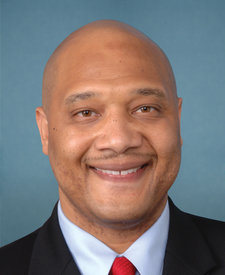


Legislative Progress
In CommitteeMr. Subramanyam (for himself, Mr. Beyer, Mr. Carson, Mr. Connolly, …
Referred to the House Committee on Oversight and Government Reform.
Introduced in House
Stakeholder Effects
cui bono?How this legislation distributes effects. Mention counts reflect frequency, not effect magnitude.
Agency inspectors general, Congressional oversight committees, Federal agencies planning relocations
Positive-direction: Congressional oversight committees
Negative-direction: Agency inspectors general, Federal agencies planning relocations
Federal employees affected by relocations
Bill Structure & Actor Mappings
Who is "The Secretary" in each section?
We use a combination of our own taxonomy and classification in addition to large language models to assess meaning and potential beneficiaries. High confidence means strong textual evidence. Always verify with the original bill text.
Learn more about our methodology