Ensuring Opportunities in Online Training Act
Summary
What This Bill Does
The Ensuring Opportunities in Online Training Act changes how Workforce Innovation and Opportunity Act training dollars can pay online-only providers. It clarifies that state procedures for eligible training providers apply to providers that deliver training exclusively online. If a WIOA participant chooses an online-only provider located outside the state whose local area approved the training, the provider cannot be paid from that state's WIOA allotment unless it appears on that state's eligible training provider list for the program involved. The bill therefore protects state oversight of taxpayer-funded workforce training while still allowing online providers that meet state-list requirements.
Who Benefits and How
State workforce agencies benefit because they keep control over which online-only providers can receive their WIOA training funds. WIOA participants benefit when eligible online programs have passed the paying state's provider-list standards. In-state eligible training providers benefit because out-of-state online competitors cannot bypass the state's list process. Local workforce boards benefit from clearer payment rules when participants choose online programs across state lines.
Who Bears the Burden and How
Online-only training providers located outside a participant's state must get onto that state's eligible provider list before receiving payment from that state's WIOA allotment. State eligible-provider list administrators must apply their procedures to online-only providers, not only local classroom providers. Participants choosing an unlisted out-of-state online program may need to choose another provider or wait for list approval. National online workforce-training companies face more state-by-state compliance work.
Key Provisions
- Applies WIOA eligible-training-provider procedures to providers that deliver training exclusively online.
- Bars payment from a state's WIOA allotment to out-of-state online-only providers not on that state's eligible provider list.
- Protects state-level oversight over taxpayer-funded workforce training providers.
- Clarifies cross-state online training payment rules for local workforce boards and participants.
Evidence Chain:
This summary is generated from the full bill text using AI analysis. Expand "Detailed Analysis" below for identified beneficiaries/burden bearers with clause-level evidence links.
At a Glance
What This Bill Does
Requires state eligible-training-provider procedures under the Workforce Innovation and Opportunity Act to cover online-only training providers and bars payment to out-of-state online providers unless they are on the paying state's eligible provider list.
Key Policy Areas
Workforce Development, Education, Online Training
Primary Purpose
Requires state eligible-training-provider procedures under the Workforce Innovation and Opportunity Act to cover online-only training providers and bars payment to out-of-state online providers unless they are on the paying state's eligible provider list.
Policy Domains
Resolution provisions
Identified Gains
- State workforce agencies
- WIOA participants
- In-state eligible training providers
- Local workforce boards
Identified Costs
- Out-of-state online training providers
- State provider-list administrators
- Participants choosing unlisted online programs
- National online workforce-training companies
Sponsors
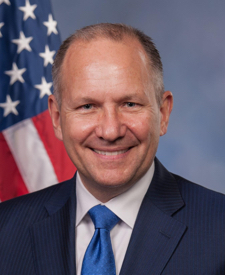

Legislative Progress
In CommitteeMr. Smucker (for himself and Mr. Mackenzie) introduced the following …
Referred to the House Committee on Education and Workforce.
Introduced in House
Stakeholder Effects
cui bono?How this legislation distributes effects. Mention counts reflect frequency, not effect magnitude.
State provider-list administrators, State workforce agencies
Positive-direction: State workforce agencies
Negative-direction: State provider-list administrators
Bill Structure & Actor Mappings
Who is "The Secretary" in each section?
We use a combination of our own taxonomy and classification in addition to large language models to assess meaning and potential beneficiaries. High confidence means strong textual evidence. Always verify with the original bill text.
Learn more about our methodology