Reclaim Trade Powers Act
Summary
What This Bill Does
The Reclaim Trade Powers Act is a short but substantive trade-authority bill. It repeals section 122 of the Trade Act of 1974, the balance-of-payments provision that allows the President to respond to serious U.S. balance-of-payments deficits with temporary import surcharges, import quotas, or other import restrictions. The practical effect is to pull that emergency tariff and quota lever back from the executive branch and require future trade restrictions of that kind to rest on some other statute or new congressional authorization.
Who Benefits and How
Importers benefit because one executive-branch source of sudden temporary import surcharges or quotas would disappear. Retailers and manufacturers using imported inputs benefit from lower risk that balance-of-payments findings trigger new tariff costs. Congressional trade committees benefit because repealing section 122 strengthens their role over future broad trade restrictions. Foreign exporters to the United States benefit from reduced exposure to this specific emergency import-restriction authority.
Who Bears the Burden and How
The President bears a concrete legal constraint because repeal removes a statutory pathway for responding quickly to serious balance-of-payments deficits with import surcharges or quotas. U.S. trade negotiators bear an operational burden because they lose unilateral leverage tied to temporary import restrictions under section 122. Domestic industries seeking emergency import relief bear a narrower remedy set because this balance-of-payments authority could no longer be invoked. Treasury and trade officials must use other legal authorities or seek Congress's approval before taking comparable import-restriction action.
Key Provisions
- Repeals section 122 of the Trade Act of 1974.
- Removes balance-of-payments authority for temporary import surcharges, quotas, or other import restrictions.
- Shifts this trade-restriction power away from unilateral presidential action.
- Protects import-dependent businesses from one source of emergency tariff or quota risk.
Evidence Chain:
This summary is generated from the full bill text using AI analysis. Expand "Detailed Analysis" below for identified beneficiaries/burden bearers.
At a Glance
What This Bill Does
Repeals section 122 of the Trade Act of 1974, removing the President's balance-of-payments authority to impose temporary import surcharges, quotas, or other trade restrictions without new congressional action.
Key Policy Areas
Trade, Tariffs, Congressional Oversight
Primary Purpose
Repeals section 122 of the Trade Act of 1974, removing the President's balance-of-payments authority to impose temporary import surcharges, quotas, or other trade restrictions without new congressional action.
Policy Domains
Resolution provisions
Identified Gains
Contextual inference, no direct clause citation- Importers
- Retailers using imported goods
- Congressional trade committees
- Foreign exporters
Contextual inference, no direct clause citation
Identified Costs
Contextual inference, no direct clause citation- President of the United States
- U.S. trade negotiators
- Domestic industries seeking import relief
- Treasury trade officials
Contextual inference, no direct clause citation
Sponsors

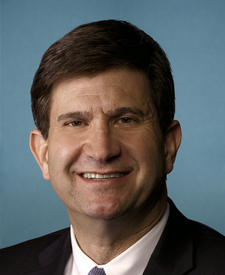


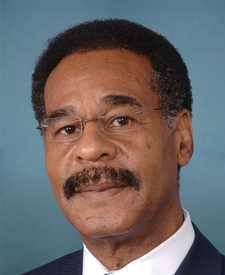
Legislative Progress
In CommitteeMr. Panetta (for himself, Mr. Beyer, Ms. DelBene, Ms. Sewell, …
Referred to the House Committee on Ways and Means.
Introduced in House
Bill Structure & Actor Mappings
Who is "The Secretary" in each section?
We use a combination of our own taxonomy and classification in addition to large language models to assess meaning and potential beneficiaries. High confidence means strong textual evidence. Always verify with the original bill text.
Learn more about our methodology