Guidance Clarity Act of 2025
Summary
What This Bill Does
The Guidance Clarity Act adds a disclosure rule for federal agency guidance documents. Once the Office of Management and Budget issues implementation guidance, each federal agency must place a guidance clarity statement on guidance issued under 5 U.S.C. 553(b)(4)(A). The statement must appear prominently on the first page and say the document does not have the force and effect of law, does not bind the public or the agency by itself, and is intended only to clarify existing legal requirements or agency policies. OMB must issue implementation guidance within 90 days after enactment.
Who Benefits and How
Regulated businesses benefit because agency guidance would have a front-page disclaimer separating nonbinding guidance from binding law. Small businesses using federal guidance benefit from clearer compliance expectations before they rely on agency manuals, bulletins, or interpretive documents. Regulated individuals benefit from a clearer statement that guidance alone does not create binding obligations. Regulatory lawyers and compliance departments benefit because the required statement gives them a clearer basis for evaluating whether an agency is trying to enforce guidance as law.
Who Bears the Burden and How
Federal agencies issuing guidance must add the required first-page statement to covered guidance documents. The Office of Management and Budget must write implementation guidance within 90 days and coordinate the governmentwide rollout. Agency program offices that draft guidance must update templates and review workflows. Agencies attempting to rely on informal guidance as binding policy face a legal and procedural constraint because the disclaimer undercuts that use.
Key Provisions
- Requires agencies to include a guidance clarity statement on covered guidance issued after OMB implementation guidance is released.
- Requires the statement to appear prominently on the first page of the guidance document.
- Provides required disclaimer text saying guidance does not have the force and effect of law and does not bind the public or the agency.
- Directs the OMB Director to issue implementation guidance within 90 days after enactment.
Evidence Chain:
This summary is generated from the full bill text using AI analysis. Expand "Detailed Analysis" below for identified beneficiaries/burden bearers with clause-level evidence links.
At a Glance
What This Bill Does
Requires federal agencies to place a prominent guidance clarity statement on nonbinding guidance issued under 5 U.S.C. 553(b)(4)(A), stating that the document does not have the force and effect of law and does not bind the public or the agency, and requires the Director of the Office of Management and Budget to issue implementation guidance within 90 days.
Key Policy Areas
Government Operations, Regulatory Policy, Administrative Law
Primary Purpose
Requires federal agencies to place a prominent guidance clarity statement on nonbinding guidance issued under 5 U.S.C. 553(b)(4)(A), stating that the document does not have the force and effect of law and does not bind the public or the agency, and requires the Director of the Office of Management and Budget to issue implementation guidance within 90 days.
Policy Domains
House resolution provisions
Identified Gains
- Regulated businesses
- Small businesses using federal guidance
- Regulated individuals
- Regulatory lawyers
- Compliance departments
Identified Costs
- Federal agencies issuing guidance
- Office of Management and Budget
- Agency program offices drafting guidance
- Agencies relying on informal guidance as binding policy
Sponsors
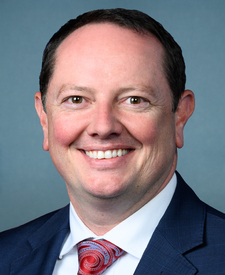




Legislative Progress
ReportedPlaced on the Union Calendar, Calendar No. 490.
Reported (Amended) by the Committee on Oversight and Government Reform. …
Additional sponsors: Mr. Gill of Texas, Mr. Fallon, Mr. Donalds, …
Reported with an amendment, committed to the Committee of the …
Ordered to be Reported by the Yeas and Nays: 23 …
Committee Consideration and Mark-up Session Held
Mr. Burlison (for himself, Mr. Golden of Maine, Mr. Davis …
Referred to the House Committee on Oversight and Government Reform.
Introduced in House
Stakeholder Effects
cui bono?How this legislation distributes effects. Mention counts reflect frequency, not effect magnitude.
Agency program offices drafting guidance, Federal agencies issuing guidance, Office of Management and Budget
Regulated businesses, Regulated individuals
Compliance departments, Small businesses using federal guidance
Bill Structure & Actor Mappings
Who is "The Secretary" in each section?
- "omb"
- → Office of Management and Budget
- "agencies"
- → Federal agencies issuing guidance
We use a combination of our own taxonomy and classification in addition to large language models to assess meaning and potential beneficiaries. High confidence means strong textual evidence. Always verify with the original bill text.
Learn more about our methodology