The White Oak Resilience Act
Summary
What This Bill Does
The White Oak Resilience Act turns the existing White Oak Restoration Initiative Coalition into a statutory public-private coordination hub for white oak restoration. It directs the Forest Service to establish five national-forest pilot projects and directs the Department of the Interior to assess Interior lands, report the results, and establish five additional restoration pilot projects. The bill also creates a non-regulatory White Oak and Upland Oak Habitat Regeneration Program with voluntary grants and technical assistance, requires a national strategy to expand Federal, State, Tribal, and private tree nursery capacity, authorizes research partnerships on white-oak genetics and reforestation methods, and creates a Natural Resources Conservation Service and Forest Service initiative for private landowners.
Who Benefits and How
Private forest landowners receive technical assistance and potential grant support to re-establish, manage, and naturally regenerate white oak. State forestry agencies, Tribal forestry programs, local governments, conservation organizations, and the White Oak Restoration Initiative Coalition benefit from a formal coordination channel for restoration policy and project priorities. Tree nurseries benefit from a national strategy that identifies seedling shortages, inventory gaps, infrastructure barriers, and opportunities to expand nursery capacity. Land-grant colleges, Indian Tribes, and forestry researchers benefit from authority to partner with USDA on white-oak genetics, seed banks, climate-adapted seed sourcing, abandoned mine land restoration, and economic research. Forest products manufacturers, including bourbon barrel and cooperage suppliers, benefit indirectly from a more resilient long-term white-oak supply.
Who Bears the Burden and How
The Forest Service must stand up five pilot projects, coordinate with the coalition, adopt a restoration strategy, run grant and technical assistance programs, and create a nursery-capacity strategy without increasing Federal full-time equivalents. The Department of the Interior must assess white-oak potential on lands such as refuges and abandoned mine lands, publish a report, and carry out five pilot projects. The Natural Resources Conservation Service and Forest Service must jointly operate a formal initiative for white-oak technical assistance and nursery-stock improvement. Federal taxpayers bear the cost of authorized grants, research, pilot projects, and agency administration if appropriations are provided.
Key Provisions
- Establishes the White Oak Restoration Initiative Coalition as a voluntary Federal, State, Tribal, local, private, and nonprofit coordination body.
- Directs the Forest Service to create five national-forest white-oak restoration and natural-regeneration pilot projects.
- Requires the Department of the Interior to assess Interior lands and establish five pilot projects after reporting white-oak restoration potential.
- Creates the White Oak and Upland Oak Habitat Regeneration Program with voluntary grants and technical assistance.
- Requires USDA to develop a national tree-nursery strategy covering seedling shortages, seed diversity, reforestation opportunities, and infrastructure barriers.
- Authorizes research memoranda with Indian Tribes and land-grant colleges on genetics, seed banks, reforestation, climate-adapted seed sourcing, and abandoned mine lands.
- Establishes a formal NRCS and Forest Service white-oak initiative for private landowners and nursery-stock improvement.
Evidence Chain:
This summary is generated from the full bill text using AI analysis. Expand "Detailed Analysis" below for identified beneficiaries/burden bearers with clause-level evidence links.
At a Glance
What This Bill Does
Establishes White Oak Restoration Initiative coordination, Forest Service and Interior pilot projects, a White Oak and Upland Oak Habitat Regeneration Program, nursery-capacity strategy, research partnerships, and a USDA white-oak initiative to restore white oak forests and improve seedling supply.
Key Policy Areas
Forest Management, Conservation, Agriculture, Natural Resources
Primary Purpose
Establishes White Oak Restoration Initiative coordination, Forest Service and Interior pilot projects, a White Oak and Upland Oak Habitat Regeneration Program, nursery-capacity strategy, research partnerships, and a USDA white-oak initiative to restore white oak forests and improve seedling supply.
Policy Domains
House resolution provisions
Identified Gains
- Private forest landowners
- State forestry agencies
- Tribal forestry programs
- Tree nurseries
- Land-grant colleges
- Forest products manufacturers
Identified Costs
- U.S. Forest Service
- Department of the Interior
- Natural Resources Conservation Service
- Federal taxpayers
- Agency grant administrators
Sponsors


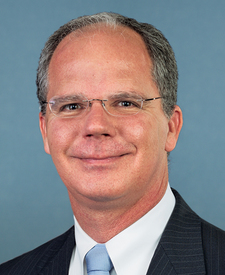


Legislative Progress
ReportedReported (Amended) by the Committee on Natural Resources. H. Rept. …
Ordered to be Reported (Amended) by Unanimous Consent.
Committee Consideration and Mark-up Session Held
Referred to the Subcommittee on Conservation, Research, and Biotechnology.
Referred to the Subcommittee on Forestry and Horticulture.
Mr. Barr (for himself, Mr. Comer, Mr. DesJarlais, Mr. Rogers …
Referred to the Committee on Agriculture, and in addition to …
Introduced in House
Stakeholder Effects
cui bono?How this legislation distributes effects. Mention counts reflect frequency, not effect magnitude.
Private forest landowners, State forestry agencies, State forestry nurseries
Bureau of Land Management, Department of the Interior, Fish and Wildlife Service
Indian Tribes, Tribal forestry programs
Environmental restoration contractors, Forest restoration contractors, White Oak Restoration Initiative Coalition
Bill Structure & Actor Mappings
Who is "The Secretary" in each section?
- "nfwf"
- → National Fish and Wildlife Foundation
- "nrcs"
- → Chief of the Natural Resources Conservation Service
- "forest_service"
- → Chief of the Forest Service
- "secretary_interior"
- → Secretary of the Interior
- "secretary_agriculture"
- → Secretary of Agriculture
We use a combination of our own taxonomy and classification in addition to large language models to assess meaning and potential beneficiaries. High confidence means strong textual evidence. Always verify with the original bill text.
Learn more about our methodology