Rural Broadband Protection Act of 2025
Summary
What This Bill Does
Requires the Federal Communications Commission to create a vetting process for new high-cost universal service fund broadband applicants and other recipients, including qualification review based on technical, financial, operational, and compliance history standards, plus stronger penalties for pre-authorization defaults.
Who Benefits and How
Rural communities and fund administrators could benefit from tighter screening of applicants before federal broadband subsidies are awarded, reducing the risk of failed or unqualified deployment promises.
Who Bears the Burden and How
Broadband applicants and recipients must provide more detailed documentation and face stricter penalties for pre-authorization defaults, while the FCC must conduct rulemaking and enforce the vetting regime.
Key Provisions
- Requires an FCC rulemaking within 180 days to establish a vetting process for new high-cost fund awards.
- Requires applicants to demonstrate technical, financial, and operational capability and a reasonable business plan.
- Requires FCC evaluation of applicants against technical standards and their past compliance in other broadband-deployment funding programs.
- Requires penalties for pre-authorization defaults of at least $9,000 per violation and a base forfeiture floor of at least 30 percent of total support absent a demonstrated need for less.
Evidence Chain:
This summary is generated from the full bill text using AI analysis. Expand "Detailed Analysis" below for identified beneficiaries/burden bearers.
At a Glance
What This Bill Does
Requires the Federal Communications Commission to create a vetting process for new high-cost universal service fund broadband applicants and other recipients, including qualification review based on technical, financial, operational, and compliance history standards, plus stronger penalties for pre-authorization defaults.
Key Policy Areas
Telecommunications, Broadband, Rural Development
Primary Purpose
Requires the Federal Communications Commission to create a vetting process for new high-cost universal service fund broadband applicants and other recipients, including qualification review based on technical, financial, operational, and compliance history standards, plus stronger penalties for pre-authorization defaults.
Policy Domains
Main Provisions
Identified Gains
Contextual inference, no direct clause citation- Rural broadband programs and communities that depend on subsidies going to technically and financially credible providers
Contextual inference, no direct clause citation
Identified Costs
Contextual inference, no direct clause citation- Broadband applicants and the FCC, which must comply with the stricter vetting and penalty framework
Contextual inference, no direct clause citation
Sponsors
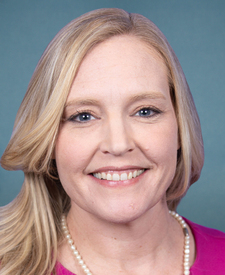
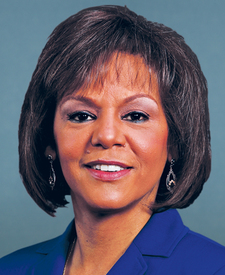
Legislative Progress
Passed HousePassed House (inferred from eh version)
Received; read twice and placed on the calendar
Received in the Senate. Read twice. Placed on Senate Legislative …
On motion to suspend the rules and pass the bill …
Passed/agreed to in House: On motion to suspend the rules …
Considered under suspension of the rules. (consideration: CR H1662-1663)
DEBATE - The House proceeded with forty minutes of debate …
Mr. Bilirakis moved to suspend the rules and pass the …
Motion to reconsider laid on the table Agreed to without …
Placed on the Union Calendar, Calendar No. 55.
Impact analysis is available but no clear stakeholder effects identified. View clause-level analysis →
Bill Structure & Actor Mappings
Who is "The Secretary" in each section?
We use a combination of our own taxonomy and classification in addition to large language models to assess meaning and potential beneficiaries. High confidence means strong textual evidence. Always verify with the original bill text.
Learn more about our methodology