First Responders Retirement Parity Act
Summary
What This Bill Does
The First Responders Retirement Parity Act fixes pension classification for nonprofit public safety agencies that contract with local governments. A governmental plan would not lose its status solely because it lets a tax-exempt public safety agency participate for employees who are emergency response providers and whose services are substantially all firefighting or out-of-hospital emergency medical services for a political subdivision under contract. The bill makes parallel changes in the Internal Revenue Code and ERISA, adjusts PBGC coverage and benefit-limit provisions, and applies to plan years beginning after enactment.
Who Benefits and How
Contract firefighters benefit because their nonprofit public safety agency can participate in a governmental pension plan without disqualifying the plan. Emergency medical technicians benefit from access to retirement treatment comparable to public-sector responders when they serve a political subdivision under contract. Paramedics at nonprofit public safety agencies benefit if their employers can join governmental pension arrangements for covered emergency response work. Local governments using contracted emergency services benefit from clearer pension rules for nonprofit public safety partners.
Who Bears the Burden and How
Governmental pension plan administrators must verify that covered public safety agency employees meet the emergency-response and contract-service requirements. Tax-exempt public safety agencies must limit participation to covered firefighters, emergency medical technicians, and paramedics. IRS employee plans staff must administer the new governmental-plan classification rule under section 414(d). ERISA and PBGC administrators must apply conforming governmental-plan and coverage exclusions.
Key Provisions
- Amends Internal Revenue Code section 414(d) so covered nonprofit public safety agency employees can participate in governmental plans.
- Amends ERISA's governmental-plan definition in parallel for emergency response providers serving political subdivisions under contract.
- Applies the rule to firefighters, emergency medical technicians, and paramedics performing firefighting or out-of-hospital emergency medical services.
- Modifies PBGC and tax benefit-limit provisions to conform to the new public safety agency employee treatment.
- Applies to plan years beginning after enactment.
Evidence Chain:
This summary is generated from the full bill text using AI analysis. Expand "Detailed Analysis" below for identified beneficiaries/burden bearers with clause-level evidence links.
At a Glance
What This Bill Does
Allows governmental pension plans to include certain nonprofit public safety agency firefighters, emergency medical technicians, and paramedics serving political subdivisions under contract, without losing governmental-plan status under the tax code or ERISA.
Key Policy Areas
Retirement, Public Safety, Tax
Primary Purpose
Allows governmental pension plans to include certain nonprofit public safety agency firefighters, emergency medical technicians, and paramedics serving political subdivisions under contract, without losing governmental-plan status under the tax code or ERISA.
Policy Domains
Resolution provisions
Identified Gains
- Contract firefighters
- Emergency medical technicians
- Paramedics at nonprofit public safety agencies
- Local governments using contracted emergency services
Identified Costs
- Governmental pension plan administrators
- Tax-exempt public safety agencies
- IRS employee plans staff
- ERISA administrators
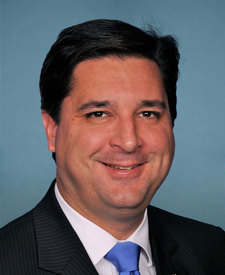
Sponsors




Legislative Progress
In CommitteeMr. Murphy (for himself, Ms. Foxx, Mr. Hudson, Mr. Rouzer, …
Referred to the Committee on Education and Workforce, and in …
Introduced in House
Stakeholder Effects
cui bono?How this legislation distributes effects. Mention counts reflect frequency, not effect magnitude.
Emergency medical technicians, Paramedics at nonprofit public safety agencies
Governmental pension plan administrators, IRS employee plans staff
Bill Structure & Actor Mappings
Who is "The Secretary" in each section?
We use a combination of our own taxonomy and classification in addition to large language models to assess meaning and potential beneficiaries. High confidence means strong textual evidence. Always verify with the original bill text.
Learn more about our methodology