Dietary Guidelines Reform Act of 2025
Summary
What This Bill Does
The Dietary Guidelines Reform Act changes how the federal dietary guidelines are produced. It lengthens the default cycle from every 5 years to at least every 10 years, but lets USDA and HHS update sooner when dietary reference intakes or other evidence warrant it. It adds Administrative Procedure Act rulemaking, requires significant scientific agreement through an evidence-based review, creates an eight-member Independent Advisory Board with nutrition or food science expertise, requires public conflict-of-interest disclosures for advisory members, excludes non-dietary topics such as taxation, social welfare policy, food production practices, race, religion, and food labeling, and directs $5 million per year from section 32 funds for fiscal years 2025 through 2029.
Who Benefits and How
Nutrition researchers benefit because guideline questions must be tied to evidence-based review and strength-of-evidence ratings. Patients with nutrition-related chronic diseases benefit because the guidelines must include information relevant to common chronic diseases identified by CDC. Consumers seeking affordable dietary guidance benefit because recommendations must be affordable, available, and accessible to the general population. Congressional agriculture and health committees benefit from 90-day advance notice and justification before USDA and HHS update the guidelines.
Who Bears the Burden and How
USDA dietary guidelines staff must run a more formal rulemaking process, evidence review, board appointment process, and disclosure publication process. HHS nutrition policy staff must coordinate with the advisory board and the United States-Canada dietary reference intake process. Advisory committee members must file Office of Government Ethics Form 450 disclosures and accept public posting of conflict-management plans. Section 32 funding users bear opportunity costs because $5 million per year is reserved for dietary-guideline work through fiscal year 2029.
Key Provisions
- Amends the dietary guidelines schedule from every 5 years to at least every 10 years, with earlier updates allowed when the science justifies them.
- Requires APA rulemaking, evidence-based review, scientific-agreement ratings, and Healthy Eating Index relevance for guideline recommendations.
- Creates an Independent Advisory Board of up to eight nutrition or food science experts to generate scientific questions for updates.
- Requires public conflict disclosures and conflict-management plans for Dietary Guidelines Advisory Committee and Independent Advisory Board members.
- Provides $5 million per year from section 32 funds for fiscal years 2025 through 2029 to carry out the revised process.
Evidence Chain:
This summary is generated from the full bill text using AI analysis. Expand "Detailed Analysis" below for identified beneficiaries/burden bearers with clause-level evidence links.
At a Glance
What This Bill Does
Rewrites the Dietary Guidelines for Americans process so USDA and HHS issue guidelines at least every 10 years, use evidence-based review, create an independent advisory board, disclose conflicts, and receive $5 million per year from section 32 funds for fiscal years 2025 through 2029.
Key Policy Areas
Public Health, Nutrition, Administrative Law
Primary Purpose
Rewrites the Dietary Guidelines for Americans process so USDA and HHS issue guidelines at least every 10 years, use evidence-based review, create an independent advisory board, disclose conflicts, and receive $5 million per year from section 32 funds for fiscal years 2025 through 2029.
Policy Domains
Resolution provisions
Identified Gains
- Nutrition researchers
- Patients with nutrition-related chronic diseases
- Consumers seeking affordable dietary guidance
- Congressional agriculture committees
Identified Costs
- USDA dietary guidelines staff
- HHS nutrition policy staff
- Advisory committee members
- Section 32 funding users
Sponsors
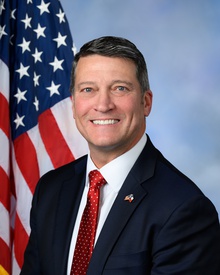

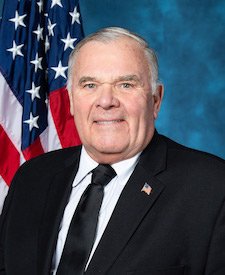
Legislative Progress
In CommitteeReferred to the Subcommittee on Nutrition and Foreign Agriculture.
Mr. Jackson of Texas (for himself, Mr. Mann, Mr. Baird, …
Referred to the House Committee on Agriculture.
Introduced in House
Stakeholder Effects
cui bono?How this legislation distributes effects. Mention counts reflect frequency, not effect magnitude.
Advisory committee members, Nutrition researchers
HHS nutrition policy staff, USDA dietary guidelines staff
Bill Structure & Actor Mappings
Who is "The Secretary" in each section?
We use a combination of our own taxonomy and classification in addition to large language models to assess meaning and potential beneficiaries. High confidence means strong textual evidence. Always verify with the original bill text.
Learn more about our methodology