Fairness for High-Skilled Americans Act of 2025
Summary
What This Bill Does
The Fairness for High-Skilled Americans Act amends INA section 274A(h). It provides that, notwithstanding any other law, an alien present in the United States as an F-1 academic student may not receive U.S. employment authorization under the Optional Practical Training Program or any successor program unless an express Act of Congress authorizes that program. The bill would therefore end executive-branch OPT work authorization as a path for F-1 students after study unless Congress affirmatively enacts a replacement or authorization.
Who Benefits and How
U.S. workers competing for entry-level professional jobs benefit if employers can no longer hire F-1 graduates through OPT absent congressional authorization. High-skilled American job applicants benefit from reduced competition from OPT-authorized foreign graduates. Congress benefits because future OPT-style work authorization would require express statutory approval. Immigration enforcement offices benefit from a clear statutory bar on OPT employment authorization without an Act of Congress.
Who Bears the Burden and How
F-1 student visa holders lose Optional Practical Training employment authorization unless Congress enacts a program. Universities recruiting international students may lose a major post-study employment pathway used to attract applicants. Employers hiring OPT graduates lose access to that work-authorized labor pool unless Congress acts. USCIS employment authorization staff must stop granting OPT or successor-program work authorization without express statutory authority.
Key Provisions
- Bars F-1 nonimmigrant students from receiving employment authorization under OPT without express congressional authorization.
- Applies the bar to successor programs as well as the existing Optional Practical Training Program.
- Amends INA section 274A(h), the employment verification and authorization provision.
- Transfers control over OPT-style work authorization from agency practice to Congress.
Evidence Chain:
This summary is generated from the full bill text using AI analysis. Expand "Detailed Analysis" below for identified beneficiaries/burden bearers with clause-level evidence links.
At a Glance
What This Bill Does
Eliminates employment authorization for F-1 nonimmigrant students through the Optional Practical Training Program or a successor program unless Congress expressly authorizes that program by statute.
Key Policy Areas
Immigration, Higher Education, Labor, Student Visas
Primary Purpose
Eliminates employment authorization for F-1 nonimmigrant students through the Optional Practical Training Program or a successor program unless Congress expressly authorizes that program by statute.
Policy Domains
Resolution provisions
Identified Gains
- U.S. workers competing for professional jobs
- High-skilled American job applicants
- Congress
- Immigration enforcement offices
Identified Costs
- F-1 student visa holders
- Universities recruiting international students
- Employers hiring OPT graduates
- USCIS employment authorization staff
Sponsors


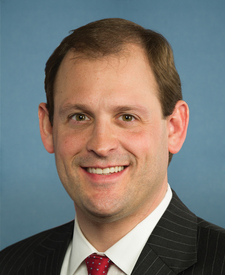


Legislative Progress
In CommitteeMr. Gosar (for himself, Mr. Biggs of Arizona, Mr. Gill …
Referred to the House Committee on the Judiciary.
Introduced in House
Stakeholder Effects
cui bono?How this legislation distributes effects. Mention counts reflect frequency, not effect magnitude.
High-skilled American job applicants, U.S. workers competing for professional jobs
Bill Structure & Actor Mappings
Who is "The Secretary" in each section?
We use a combination of our own taxonomy and classification in addition to large language models to assess meaning and potential beneficiaries. High confidence means strong textual evidence. Always verify with the original bill text.
Learn more about our methodology