To establish the Commission on National Agricultural Statistics Service Modernization to modernize the data collection and reporting processes of the National Agricultural Statistics Service, and for other purposes.
Summary
What This Bill Does
This bill establishes the Commission on National Agricultural Statistics Service Modernization. The commission must study NASS and recommend how to modernize and streamline data collection to improve reported statistics, account for national, regional, and local production differences, adopt technologies that reduce the number of surveys, improve producer response rates and reduce survey fatigue, improve transparency through collaboration with agricultural stakeholders, use more real-time statistical and environmental data, and improve timely specialty crop data. The 11 members include the NASS Administrator, Economic Research Service Administrator, USDA Chief Economist, World Agricultural Outlook Board Chair, a Bureau of Labor Statistics representative, and six members appointed by House and Senate agriculture committee leaders. Members must be appointed within 60 days; the first meeting occurs within 60 days after appointments; the commission reports to the President and agriculture committees within two years; it can hold hearings, collect stakeholder feedback, secure federal agency information, use the mails, and receive USDA office and support services. The commission terminates September 30, 2030, and $1 million is authorized for fiscal year 2026 until expended.
Who Benefits and How
Agricultural producers benefit if NASS surveys become less burdensome, more transparent, and more responsive to regional production differences. Specialty crop growers benefit from a required focus on improving timely data for the specialty crop industry. Agricultural economists benefit from recommendations to improve statistical quality and use real-time environmental data. USDA data agencies benefit from a structured review involving NASS, ERS, the Chief Economist, and the World Agricultural Outlook Board. Congressional agriculture committees benefit from a two-year modernization report and recommended administrative, regulatory, or legislative changes.
Who Bears the Burden and How
Commission members must study NASS, hold hearings, collect stakeholder feedback, and produce recommendations within two years. USDA support staff must provide office space, administrative services, and agency information to the commission. Federal agency heads must provide information directly to the commission when requested. NASS survey managers may need to change collection practices if the commission's recommendations are adopted. Federal taxpayers fund the $1 million fiscal year 2026 authorization and member travel or compensation costs.
Key Provisions
- Creates an 11-member Commission on National Agricultural Statistics Service Modernization.
- Requires study of survey modernization, producer response rates, survey fatigue, stakeholder confidence, real-time data, and specialty crop data.
- Requires appointments within 60 days and a first meeting within 60 days after appointments.
- Requires a report to the President and congressional agriculture committees within two years.
- Authorizes $1 million for fiscal year 2026 and terminates the commission on September 30, 2030.
Evidence Chain:
This summary is generated from the full bill text using AI analysis. Expand "Detailed Analysis" below for identified beneficiaries/burden bearers with clause-level evidence links.
At a Glance
What This Bill Does
Creates an 11-member Commission on National Agricultural Statistics Service Modernization to study NASS data collection and recommend ways to improve statistical quality, reduce survey burden, use real-time and environmental data, address specialty crop data, and report within two years, with $1 million authorized for fiscal year 2026.
Key Policy Areas
Agriculture, Data, Statistics, USDA
Primary Purpose
Creates an 11-member Commission on National Agricultural Statistics Service Modernization to study NASS data collection and recommend ways to improve statistical quality, reduce survey burden, use real-time and environmental data, address specialty crop data, and report within two years, with $1 million authorized for fiscal year 2026.
Policy Domains
Resolution provisions
Identified Gains
- Agricultural producers
- Specialty crop growers
- Agricultural economists
- USDA data agencies
- Congressional agriculture committees
Identified Costs
- Commission members
- USDA support staff
- Federal agency heads
- NASS survey managers
- Federal taxpayers
Sponsors


Legislative Progress
In CommitteeReferred to the Subcommittee on Conservation, Research, and Biotechnology.
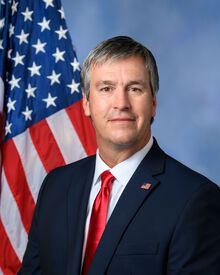
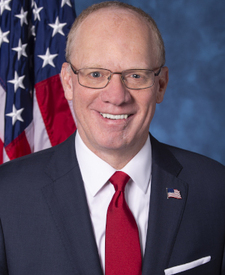
Mr. Moore of Alabama (for himself and Mr. Davis of …
Referred to the House Committee on Agriculture.
Introduced in House
Stakeholder Effects
cui bono?How this legislation distributes effects. Mention counts reflect frequency, not effect magnitude.
Commission members, Congressional agriculture committees, USDA data agencies
Agricultural producers, Specialty crop growers
Bill Structure & Actor Mappings
Who is "The Secretary" in each section?
We use a combination of our own taxonomy and classification in addition to large language models to assess meaning and potential beneficiaries. High confidence means strong textual evidence. Always verify with the original bill text.
Learn more about our methodology