Corrections Officer Blake Schwarz Suicide Prevention Act of 2025
Summary
What This Bill Does
The Corrections Officer Blake Schwarz Suicide Prevention Act creates a mental health screening and referral infrastructure for corrections officers. Within 90 days, the Attorney General may establish grants for states and local governments to run anonymous, confidential 5-to-10 question mental health screening surveys at eligible detention centers and refer officers to local mental health care providers when responses indicate severe mental illness such as schizophrenia, bipolar disorder, or major depression. Grantees must hire a mental health liaison to coordinate detention centers, providers, the advisory board, and outreach teams. Grant uses include survey design, technology, staff, referral outreach teams, salaries, and overtime. The Bureau of Prisons must establish its own survey and outreach team program within 90 days and submit an implementation plan. Within 60 days, the Attorney General must create an advisory board to approve state and local plans, monitor BOP plans, provide technical assistance, create best-practices working groups, coordinate outreach teams, enforce grant requirements, and develop protected self-reporting processes. The bill authorizes $50 million for 2026, $55 million for 2027, $60 million for 2028, $65 million for 2029, and $70 million for 2030, with 90 percent for grants and BOP, 5 percent for advisory board evaluation, and 5 percent for advisory board implementation work.
Who Benefits and How
Corrections officers benefit from anonymous mental health screening, referral outreach teams, and protected self-reporting processes. State prisons and local jails benefit from grants to build screening surveys, technology, staff capacity, and referral systems. Bureau of Prisons corrections officers benefit from a parallel federal screening and outreach team program. Local mental health care providers benefit from referral pathways connecting officers with nearby treatment resources. Jail and prison administrators benefit from advisory board technical assistance and best-practices models.
Who Bears the Burden and How
The Attorney General must establish the grant program, appoint the advisory board, and manage funding allocations. State and local grantees must submit plans, hire mental health liaison staff, administer surveys, and build outreach teams. Bureau of Prisons leadership must implement the federal officer screening program and submit plans to the advisory board. Advisory board members must evaluate plans, monitor compliance, provide technical assistance, and develop self-reporting safeguards. Federal taxpayers fund authorizations rising from $50 million in 2026 to $70 million in 2030.
Key Provisions
- Creates Attorney General grants for corrections officer mental health screening and referrals.
- Requires anonymous, confidential 5-to-10 question surveys for severe mental illness indicators.
- Requires outreach teams with mental health providers, detention center staff, and a mental health liaison.
- Directs the Bureau of Prisons to create a parallel screening and outreach program within 90 days.
- Creates an advisory board for plan approval, monitoring, technical assistance, best practices, and self-reporting protections.
- Authorizes $50 million in fiscal year 2026, rising to $70 million in fiscal year 2030.
Evidence Chain:
This summary is generated from the full bill text using AI analysis. Expand "Detailed Analysis" below for identified beneficiaries/burden bearers with clause-level evidence links.
At a Glance
What This Bill Does
Creates Attorney General grants and a Bureau of Prisons program for anonymous corrections officer mental health screening, referral outreach teams, advisory board oversight, and implementation support, with authorizations rising from $50 million in fiscal year 2026 to $70 million in fiscal year 2030.
Key Policy Areas
Criminal Justice, Mental Health, Corrections, Grants
Primary Purpose
Creates Attorney General grants and a Bureau of Prisons program for anonymous corrections officer mental health screening, referral outreach teams, advisory board oversight, and implementation support, with authorizations rising from $50 million in fiscal year 2026 to $70 million in fiscal year 2030.
Policy Domains
Resolution provisions
Identified Gains
- Corrections officers
- State prisons
- Local jails
- Bureau of Prisons officers
- Local mental health care providers
Identified Costs
- Attorney General
- State grantees
- Bureau of Prisons leadership
- Advisory board members
- Federal taxpayers
Sponsors
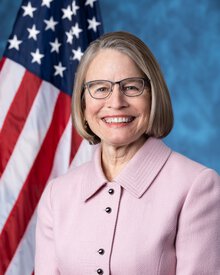
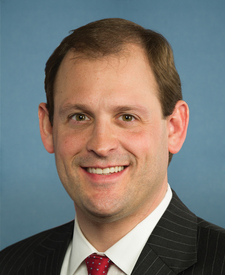
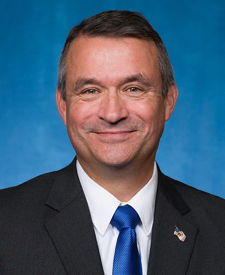
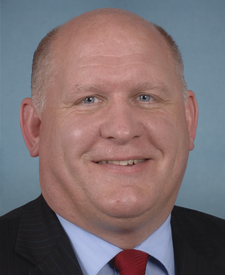
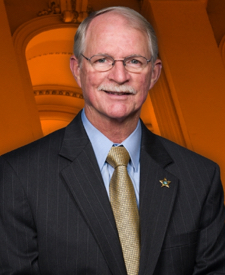
Legislative Progress
In CommitteeMrs. Miller-Meeks (for herself and Mr. Bacon) introduced the following …
Referred to the House Committee on the Judiciary.
Introduced in House
Stakeholder Effects
cui bono?How this legislation distributes effects. Mention counts reflect frequency, not effect magnitude.
Bureau of Prisons officers, Corrections officers
Bill Structure & Actor Mappings
Who is "The Secretary" in each section?
We use a combination of our own taxonomy and classification in addition to large language models to assess meaning and potential beneficiaries. High confidence means strong textual evidence. Always verify with the original bill text.
Learn more about our methodology