Ensuring Workers Get PAID Act of 2025
Summary
What This Bill Does
The Ensuring Workers Get PAID Act of 2025 codifies a voluntary Department of Labor program modeled on the 2018 Payroll Audit Independent Determination pilot. Congress cites pilot results of $4,131,238 in back wages for 7,429 employees, average back wages of $55,828 per case, and faster self-audits than traditional compliance actions. The bill defines affected employees, employers, good faith, self-audits, the Secretary of Labor, and the Wage and Hour Division Administrator. The Administrator must establish a PAID program for employers that inadvertently violate Fair Labor Standards Act minimum-wage or overtime requirements and voluntarily remedy unpaid wages within the Portal-to-Portal Act statute of limitations. Within 30 days, DOL must provide compliance-assistance resources. Employers must apply with self-audit materials, affected-employee lists, payroll records, wage calculations, correction assurances, litigation and communication assurances, and exclusions for H-1B, H-2B, H-2A, Davis-Bacon, and Service Contract Act prevailing-wage workers. The Administrator reviews applications, may request amendments, approves qualifying applications within 30 days, supervises settlement and payment, provides release forms to employees, lets workers decline and preserve private claims, bars use of rejected applications in investigations except limited safety-related cases, limits investigation scope to employer-identified violations, forbids participation fees, and protects application materials from discovery without employer consent.
Who Benefits and How
Affected employees benefit by receiving unpaid minimum wages or overtime through supervised settlements when they accept the offer. Good-faith employers benefit from a structured self-audit pathway that can correct inadvertent FLSA violations and limit released claims after full payment. The Wage and Hour Division benefits from employer-submitted payroll records, calculations, and corrections that can recover wages faster than some traditional investigations. Employees who decline settlement benefit because the release form must explain their right to preserve private FLSA claims. Employers in sectors not typically prioritized for enforcement benefit from a compliance-assistance route that still returns back wages to workers.
Who Bears the Burden and How
The Wage and Hour Division Administrator must create the program, publish resources, review applications, verify wage calculations, supervise settlements, issue release forms, and enforce program limits. Participating employers must conduct self-audits, correct practices, identify affected employees, calculate back wages, provide payroll records, and pay all approved amounts. Worker advocates may face concern that employees who accept payment waive private FLSA claims and liquidated damages for the covered violations. Employers with recent FLSA violations, pending investigations, litigation, or employee settlement communications are excluded from good-faith participation. Prevailing-wage workers under H-1B, H-2B, H-2A, Davis-Bacon, and Service Contract Act rules are excluded from the program.
Key Provisions
- Establishes a Payroll Audit Independent Determination program in the Wage and Hour Division.
- Requires DOL compliance-assistance resources within 30 days after enactment.
- Requires employer applications with self-audit results, affected-employee lists, payroll records, wage calculations, and correction assurances.
- Requires the Administrator to review applications, request amendments when needed, and approve qualifying applications within 30 days.
- Requires supervised settlements and full payment of unpaid minimum wages or overtime to accepting employees.
- Preserves private FLSA claims for employees who decline settlement offers.
- Bars use of unapproved applications in investigations except limited safety-related cases.
- Prohibits DOL from charging employer participation fees and limits discovery of application materials.
Evidence Chain:
This summary is generated from the full bill text using AI analysis. Expand "Detailed Analysis" below for identified beneficiaries/burden bearers with clause-level evidence links.
At a Glance
What This Bill Does
Establishes a Department of Labor Payroll Audit Independent Determination program letting good-faith employers voluntarily self-audit Fair Labor Standards Act minimum-wage and overtime violations, submit affected-employee and back-wage calculations, receive Wage and Hour Division review within 30 days, pay approved back wages under supervised settlements, and obtain employee releases only when workers accept payment while preserving private claims for workers who decline.
Key Policy Areas
Labor, Wages, Employment
Primary Purpose
Establishes a Department of Labor Payroll Audit Independent Determination program letting good-faith employers voluntarily self-audit Fair Labor Standards Act minimum-wage and overtime violations, submit affected-employee and back-wage calculations, receive Wage and Hour Division review within 30 days, pay approved back wages under supervised settlements, and obtain employee releases only when workers accept payment while preserving private claims for workers who decline.
Policy Domains
House resolution provisions
Identified Gains
- Affected employees owed back wages
- Good-faith employers
- Wage and Hour Division
- Employees declining settlement offers
- Employers in lower-priority enforcement sectors
Identified Costs
- Wage and Hour Division Administrator
- Participating employers
- Worker advocates
- Employers with recent FLSA violations
- Employers under pending investigation
- Prevailing-wage workers excluded from the program
Sponsors
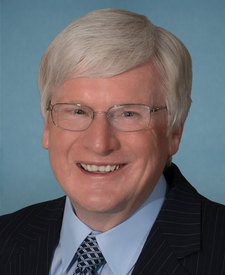

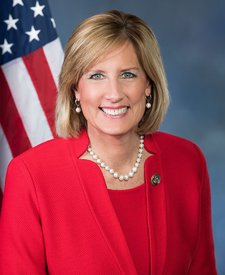
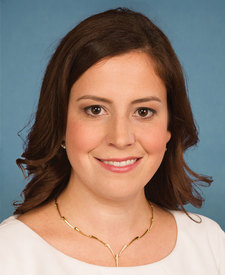

Legislative Progress
ReportedPlaced on the Union Calendar, Calendar No. 464.
Reported (Amended) by the Committee on Education and Workforce. H. …
Additional sponsors: Mr. Hamadeh of Arizona, Ms. Stefanik, Mr. Messmer, …
Placed on the Union Calendar, Calendar No. 464.
Committee Consideration and Mark-up Session Held
Ordered to be Reported (Amended) by the Yeas and Nays: …
Introduced in House
Referred to the House Committee on Education and Workforce.
Mr. Grothman introduced the following bill; which was referred to …
Stakeholder Effects
cui bono?How this legislation distributes effects. Mention counts reflect frequency, not effect magnitude.
Affected employees owed back wages, Good-faith employers, Participating employers
Positive-direction: Affected employees owed back wages, Good-faith employers
Negative-direction: Participating employers, Wage and Hour Division, Worker advocates
Bill Structure & Actor Mappings
Who is "The Secretary" in each section?
- "dol"
- → Department of Labor
- "whd"
- → Wage and Hour Division
We use a combination of our own taxonomy and classification in addition to large language models to assess meaning and potential beneficiaries. High confidence means strong textual evidence. Always verify with the original bill text.
Learn more about our methodology