SCHOOL Act of 2025
Summary
What This Bill Does
The SCHOOL Act turns major federal K-12 grant streams into student-following allocations where state law permits. For ESEA titles I, III, IV, V, and VI, a state educational agency must allocate funds among local educational agencies based on public-school enrollment and directly to eligible children in private schools or home schools through education savings accounts. Funds may be used for curriculum, books, technology, online materials, tutoring, private school tuition, extracurricular activities, testing fees, diagnostic tools, and educational therapies for students with disabilities. States must collect annual parent or guardian notices of school choice, use the information only for calculating and distributing funds, and distribute public-school amounts to local agencies and schools by enrollment while supplementing rather than supplanting nonfederal funds. The bill creates a parallel IDEA student-following rule for eligible children with disabilities, including direct education savings accounts for private school and home school students. It preserves free and reduced-price school lunch eligibility and says the bill does not authorize federal or state control over non-public education providers.
Who Benefits and How
Private school students benefit because eligible ESEA and IDEA funding could reach them through education savings accounts. Home school students benefit from direct education savings account access for allowable educational expenses. Parents of children with disabilities benefit because IDEA funds could follow eligible children to private or home school placements. School choice organizations benefit from federal grant formulas that follow children across public, private, and home school settings.
Who Bears the Burden and How
State educational agencies must build allocation plans, collect annual school-attendance notices, and administer education savings accounts. Local educational agencies may lose funds when eligible children attend private schools or home schools instead of public schools. Public schools may receive federal allocations based on enrolled eligible children rather than all eligible children in the district. Education Department oversight staff must monitor supplement-not-supplant, private-school participation, and non-control requirements.
Key Provisions
- Requires ESEA title I, III, IV, V, and VI funds to follow eligible children to public, private, or home schools where state law permits.
- Creates education savings account allocations for private school and home school students.
- Requires IDEA funds to follow eligible children with disabilities using a parallel allocation structure.
- Authorizes uses including curriculum, technology, tutoring, tuition, testing, diagnostic tools, and educational therapies.
- Preserves school lunch eligibility and bars federal or state control over non-public education providers.
Evidence Chain:
This summary is generated from the full bill text using AI analysis. Expand "Detailed Analysis" below for identified beneficiaries/burden bearers with clause-level evidence links.
At a Glance
What This Bill Does
Requires ESEA title I, III, IV, V, and VI funds and IDEA funds to follow eligible children to public schools, private schools, or home schools through local allocations or education savings accounts, while preserving school lunch eligibility and stating that the bill does not authorize government control over non-public education providers.
Key Policy Areas
Education, School Choice, Special Education, Federal Grants
Primary Purpose
Requires ESEA title I, III, IV, V, and VI funds and IDEA funds to follow eligible children to public schools, private schools, or home schools through local allocations or education savings accounts, while preserving school lunch eligibility and stating that the bill does not authorize government control over non-public education providers.
Policy Domains
Resolution provisions
Identified Gains
- Private school students
- Home school students
- Parents of children with disabilities
- School choice organizations
Identified Costs
- State educational agencies
- Local educational agencies
- Public schools losing enrollment funds
- Education Department oversight staff
Sponsors
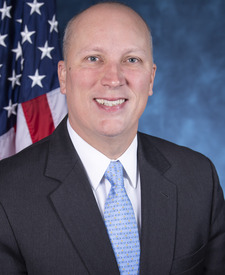
Legislative Progress
In CommitteeMr. Roy introduced the following bill; which was referred to …
Referred to the House Committee on Education and Workforce.
Introduced in House
Stakeholder Effects
cui bono?How this legislation distributes effects. Mention counts reflect frequency, not effect magnitude.
Home school students, Local educational agencies, Parents of children with disabilities
Bill Structure & Actor Mappings
Who is "The Secretary" in each section?
We use a combination of our own taxonomy and classification in addition to large language models to assess meaning and potential beneficiaries. High confidence means strong textual evidence. Always verify with the original bill text.
Learn more about our methodology