Don’t Penalize Victims Act
Summary
What This Bill Does
The Don't Penalize Victims Act changes one phrase in the Stafford Act duplication-of-benefits rule. Current law prevents federal disaster assistance for losses already covered by insurance, another program, or any other source. By striking 'or any other source,' the bill narrows the offset rule so disaster survivors are not penalized merely for receiving help from sources outside insurance or formal assistance programs. The likely practical effect is to protect survivors who receive charitable donations, community fundraising, or other informal aid from losing federal disaster assistance for the same loss, while preserving the prohibition on duplicating insurance or program benefits.
Who Benefits and How
Disaster survivors benefit because charitable or informal help would be less likely to reduce federal Stafford Act assistance. Victims receiving community donations benefit if private generosity no longer triggers the broad 'any other source' offset. Disaster relief nonprofits benefit because their aid can supplement rather than accidentally replace federal assistance. Local recovery organizations benefit from clearer room to coordinate donations with federal disaster aid.
Who Bears the Burden and How
FEMA assistance administrators must revise duplication-of-benefits guidance and eligibility review. State disaster recovery offices must distinguish insurance and program benefits from other sources of aid. Federal taxpayers may bear higher disaster assistance costs when charitable or informal aid no longer offsets federal payments. Disaster caseworkers must apply the narrower statutory language when reviewing survivor files.
Key Provisions
- Amends Stafford Act section 312(a) by striking 'or any other source'.
- Preserves duplication limits for insurance and other assistance programs.
- Protects disaster victims from losing federal aid solely because of charitable or informal support.
- Requires disaster administrators to apply a narrower duplication-of-benefits rule.
Evidence Chain:
This summary is generated from the full bill text using AI analysis. Expand "Detailed Analysis" below for identified beneficiaries/burden bearers.
At a Glance
What This Bill Does
Narrows Stafford Act duplication-of-benefits limits by striking the phrase 'or any other source,' so disaster victims are not barred from assistance solely because they received help from non-program, non-insurance sources such as charitable aid.
Key Policy Areas
Disaster Relief, FEMA, Public Benefits
Primary Purpose
Narrows Stafford Act duplication-of-benefits limits by striking the phrase 'or any other source,' so disaster victims are not barred from assistance solely because they received help from non-program, non-insurance sources such as charitable aid.
Policy Domains
Resolution provisions
Identified Gains
Contextual inference, no direct clause citation- Disaster survivors
- Victims receiving community donations
- Disaster relief nonprofits
- Local recovery organizations
Contextual inference, no direct clause citation
Identified Costs
Contextual inference, no direct clause citation- FEMA assistance administrators
- State disaster recovery offices
- Federal taxpayers
- Disaster caseworkers
Contextual inference, no direct clause citation
Sponsors



Legislative Progress
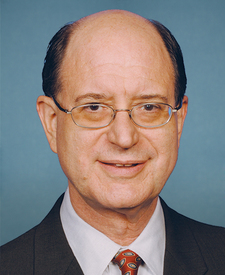
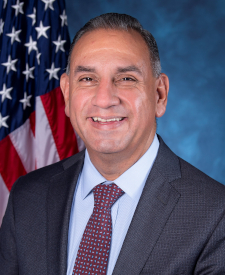
In CommitteeMs. Friedman (for herself, Mr. Ezell, Mr. Carbajal, Ms. Chu, …
Referred to the Subcommittee on Economic Development, Public Buildings, and …
Referred to the House Committee on Transportation and Infrastructure.
Introduced in House
Bill Structure & Actor Mappings
Who is "The Secretary" in each section?
We use a combination of our own taxonomy and classification in addition to large language models to assess meaning and potential beneficiaries. High confidence means strong textual evidence. Always verify with the original bill text.
Learn more about our methodology