National Landslide Preparedness Act Reauthorization Act of 2025
Summary
What This Bill Does
The National Landslide Preparedness Act Reauthorization Act of 2025 updates federal landslide preparedness around modern flood and precipitation risks. It amends the FLOODS Act to define atmospheric rivers, atmospheric river flooding events, and extreme precipitation events, and adds hurricanes, atmospheric river flooding events, and extreme precipitation events to covered flood decision-support work. It amends the National Landslide Preparedness Act to incorporate those definitions, add institutions of higher education, Native Hawaiian organizations, and tribal organizations, and require the first post-enactment national landslide strategy to assess risks that atmospheric river flooding and extreme precipitation pose to life and property. It directs more attention to hydrology, erosion, drought, atmospheric rivers, extreme precipitation, volcanic eruptions, earthquakes, tsunamis, data-poor areas, poor monitoring, thawing permafrost, and glacial retreat. It adds Native Hawaiian organizations and tribal organizations to planning, emergency management, grants, and coordination provisions. It adds NASA to the interagency committee, authorizes regional partnerships in Alaska and other regions with expert organizations or universities, supports long-term landslide research and monitoring, and updates grants for mapping, assessment, monitoring, emergency response, and regions that recently experienced loss of life.
Who Benefits and How
Landslide-prone communities benefit from better mapping, monitoring, risk assessment, and emergency response for landslides caused by atmospheric rivers, extreme precipitation, earthquakes, tsunamis, permafrost thaw, and glacial retreat. State emergency managers benefit from expanded federal coordination and hazard-risk information. Indian Tribes, tribal organizations, and Native Hawaiian organizations benefit from explicit inclusion in planning, grants, emergency management, and coordination. Institutions of higher education benefit from eligibility for regional partnerships and grant-supported expertise. Alaska communities benefit because the Secretary must establish a regional partnership in Alaska as soon as practicable. NASA and NOAA benefit from clearer roles in landslide and flood decision-support work.
Who Bears the Burden and How
The Interior Secretary and USGS landslide program must revise strategies, coordinate with Commerce, establish regional partnerships, administer grants, and support real-time risk management. The Commerce Secretary and NOAA must help define and identify atmospheric river flooding and extreme precipitation risks. NASA must participate in the interagency landslide committee. State, local, tribal, and Native Hawaiian emergency managers must coordinate on landslide preparedness and response procedures. Universities and regional partners must conduct research, mapping, monitoring, and partnership work if they receive support. Private-sector partners may be consulted on monitoring and real-time risk tools.
Key Provisions
- Defines atmospheric river, atmospheric river flooding event, and extreme precipitation event in federal flood decision-support law.
- Requires the national landslide strategy to assess atmospheric-river and extreme-precipitation risks.
- Adds hydrology, erosion, drought, geologic activity, data-poor areas, thawing permafrost, and glacial retreat to landslide-risk considerations.
- Adds Native Hawaiian organizations, tribal organizations, and institutions of higher education to landslide coordination and grant provisions.
- Adds NASA to the interagency landslide committee.
- Requires a regional landslide partnership in Alaska and allows other regional partnerships.
- Supports long-term landslide research, mapping, monitoring, emergency response, and real-time risk management.
- Updates grants for regions that recently experienced loss of life due to landslides.
Evidence Chain:
This summary is generated from the full bill text using AI analysis. Expand "Detailed Analysis" below for identified beneficiaries/burden bearers with clause-level evidence links.
At a Glance
What This Bill Does
Reauthorizes and expands the National Landslide Preparedness Act by adding atmospheric river and extreme precipitation definitions, requiring landslide strategy updates on atmospheric-river and extreme-precipitation risks, adding Native Hawaiian organizations, tribal organizations, institutions of higher education, NASA, Alaska and regional partnerships, real-time risk management, monitoring, mapping, emergency response, and grant updates, and extending landslide program authorization.
Key Policy Areas
Natural Hazards, Science, Emergency Management
Primary Purpose
Reauthorizes and expands the National Landslide Preparedness Act by adding atmospheric river and extreme precipitation definitions, requiring landslide strategy updates on atmospheric-river and extreme-precipitation risks, adding Native Hawaiian organizations, tribal organizations, institutions of higher education, NASA, Alaska and regional partnerships, real-time risk management, monitoring, mapping, emergency response, and grant updates, and extending landslide program authorization.
Policy Domains
House resolution provisions
Identified Gains
- Landslide-prone communities
- State emergency managers
- Indian Tribes
- Tribal organizations
- Native Hawaiian organizations
- Institutions of higher education
- Alaska communities
- National Aeronautics and Space Administration
- National Oceanic and Atmospheric Administration
Identified Costs
- Secretary of the Interior
- U.S. Geological Survey landslide program
- Secretary of Commerce
- National Oceanic and Atmospheric Administration
- National Aeronautics and Space Administration
- Emergency managers
- Universities receiving landslide support
- Regional landslide partners
Sponsors

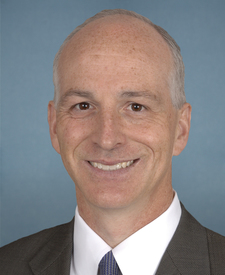



Legislative Progress
ReportedReported (Amended) by the Committee on Natural Resources. H. Rept. …
Ordered to be Reported in the Nature of a Substitute …
Committee Consideration and Mark-up Session Held
Subcommittee on Energy and Mineral Resources Discharged
Subcommittee Hearings Held
Referred to the Subcommittee on Energy and Mineral Resources.
Introduced in House
Referred to the Committee on Science, Space, and Technology, and …
Ms. DelBene (for herself, Mr. Newhouse, Ms. Schrier, Ms. Perez, …
Stakeholder Effects
cui bono?How this legislation distributes effects. Mention counts reflect frequency, not effect magnitude.
Landslide-prone communities, National Oceanic and Atmospheric Administration, U.S. Geological Survey landslide program
Positive-direction: Landslide-prone communities
Negative-direction: National Oceanic and Atmospheric Administration, U.S. Geological Survey landslide program
National Aeronautics and Space Administration
Bill Structure & Actor Mappings
Who is "The Secretary" in each section?
- "nasa"
- → National Aeronautics and Space Administration
- "noaa"
- → National Oceanic and Atmospheric Administration
- "usgs"
- → U.S. Geological Survey
We use a combination of our own taxonomy and classification in addition to large language models to assess meaning and potential beneficiaries. High confidence means strong textual evidence. Always verify with the original bill text.
Learn more about our methodology