Eliminating Fraud and Improper Payments in TANF Act
Summary
What This Bill Does
The Eliminating Fraud and Improper Payments in TANF Act adds payment-integrity obligations to Temporary Assistance for Needy Families. It amends Social Security Act section 404 so the Payment Integrity Information Act of 2019 applies to each state with respect to its TANF-funded state program in the same manner that the Act applies to a federal agency. That means states would have to handle TANF improper-payment review with federal-style payment-integrity controls. The amendment takes effect October 1, 2026. Separately, HHS must submit a written report to Congress within one year of enactment containing a plan to reduce or eliminate improper payments made by states under TANF within 10 years.
Who Benefits and How
Federal taxpayers benefit if TANF improper payments are identified, reduced, or eliminated over the 10-year plan horizon. Eligible TANF families benefit if program-integrity controls preserve funds for lawful benefits rather than improper payments. Congressional oversight committees benefit from a required HHS plan for reducing state TANF improper payments. State auditors benefit from a clear statutory mandate to apply federal payment-integrity concepts to TANF.
Who Bears the Burden and How
State TANF agencies must apply Payment Integrity Information Act requirements as if they were federal agencies. HHS program integrity staff must write and submit the 10-year improper-payment reduction plan to Congress. State benefit administrators must prepare for the October 1, 2026 effective date and improve TANF payment controls. TANF recipients may face additional verification or review if states tighten improper-payment procedures.
Key Provisions
- Requires state TANF programs to follow Payment Integrity Information Act of 2019 requirements.
- Applies federal-agency-style payment-integrity treatment to states for TANF purposes.
- Provides an October 1, 2026 effective date for the new requirement.
- Requires HHS to report to Congress within one year with a 10-year plan to reduce or eliminate state TANF improper payments.
Evidence Chain:
This summary is generated from the full bill text using AI analysis. Expand "Detailed Analysis" below for identified beneficiaries/burden bearers with clause-level evidence links.
At a Glance
What This Bill Does
Applies the Payment Integrity Information Act to state TANF programs as if each state were a federal agency, effective October 1, 2026, and requires HHS to submit a 10-year plan to reduce or eliminate state TANF improper payments.
Key Policy Areas
TANF, Program Integrity, Welfare, Oversight
Primary Purpose
Applies the Payment Integrity Information Act to state TANF programs as if each state were a federal agency, effective October 1, 2026, and requires HHS to submit a 10-year plan to reduce or eliminate state TANF improper payments.
Policy Domains
Resolution provisions
Identified Gains
- Federal taxpayers
- Eligible TANF families
- Congressional oversight committees
- State auditors
Identified Costs
- State TANF agencies
- HHS program integrity staff
- State benefit administrators
- TANF recipients
Sponsors


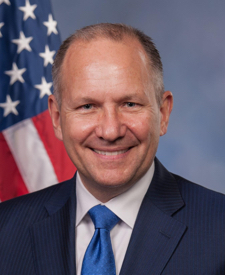

Legislative Progress
In CommitteeMr. Arrington introduced the following bill; which was referred to …
Referred to the House Committee on Ways and Means.
Introduced in House
Stakeholder Effects
cui bono?How this legislation distributes effects. Mention counts reflect frequency, not effect magnitude.
State TANF agencies, State auditors, State benefit administrators
Bill Structure & Actor Mappings
Who is "The Secretary" in each section?
We use a combination of our own taxonomy and classification in addition to large language models to assess meaning and potential beneficiaries. High confidence means strong textual evidence. Always verify with the original bill text.
Learn more about our methodology