Healthy Foods for Native Seniors Act
Summary
What This Bill Does
The Healthy Foods for Native Seniors Act creates a demonstration project inside the Commodity Supplemental Food Program. Subject to appropriations, USDA must let one or more Tribal entities enter self-determination contracts to purchase agricultural commodities for the CSFP food distribution program on that Tribal entity's reservation. USDA must consult Tribal entities on the participation process and select entities that successfully administer their food distribution program, have capacity to purchase commodities, and meet criteria set in consultation with Interior and Tribal entities. Purchased commodities must be domestically produced, cannot materially increase the amount of food beyond the CSFP guide rate, must be of similar or higher nutritional value than supplanted foods or have Tribal significance, and must meet other USDA criteria. USDA must report annually to House and Senate agriculture committees, $5 million is authorized until expended for the demonstration, and $1.2 million per year for fiscal years 2026 through 2029 is authorized for USDA contract officers and program staff salaries and benefits.
Who Benefits and How
Native seniors receiving CSFP food packages benefit if Tribal entities can purchase more culturally significant or nutritionally comparable foods. Tribal governments benefit from self-determination contracts that shift commodity purchasing authority closer to reservation food programs. Tribal food distribution programs benefit from direct procurement flexibility while staying within CSFP guide-rate limits. Domestic agricultural producers benefit because commodities purchased under the demonstration must be domestically produced.
Who Bears the Burden and How
USDA Food and Nutrition Service staff must consult Tribal entities, select participants, manage contracts, and report annually to Congress. USDA contract officers must award and administer nutrition program self-determination contracts. Participating Tribal entities must demonstrate administrative capacity and satisfy commodity criteria. Federal taxpayers fund the $5 million demonstration authorization and $1.2 million annually for USDA staffing from fiscal years 2026 through 2029.
Key Provisions
- Creates a CSFP demonstration project for Tribal self-determination commodity purchasing.
- Requires selected Tribal entities to have successful program administration and purchasing capacity.
- Limits purchased commodities to domestic products that are nutritionally comparable or Tribally significant.
- Requires annual USDA reports to House and Senate agriculture committees.
- Authorizes $5 million for the demonstration and $1.2 million annually for USDA contract staff in fiscal years 2026 through 2029.
Evidence Chain:
This summary is generated from the full bill text using AI analysis. Expand "Detailed Analysis" below for identified beneficiaries/burden bearers with clause-level evidence links.
At a Glance
What This Bill Does
Creates a USDA Commodity Supplemental Food Program demonstration project allowing selected Tribal entities to use self-determination contracts to purchase domestically produced agricultural commodities for their reservation food packages, with $5 million authorized and $1.2 million annually for USDA contract staff for fiscal years 2026 through 2029.
Key Policy Areas
Nutrition, Tribal Affairs, Agriculture, USDA
Primary Purpose
Creates a USDA Commodity Supplemental Food Program demonstration project allowing selected Tribal entities to use self-determination contracts to purchase domestically produced agricultural commodities for their reservation food packages, with $5 million authorized and $1.2 million annually for USDA contract staff for fiscal years 2026 through 2029.
Policy Domains
Resolution provisions
Identified Gains
- Native seniors receiving CSFP food
- Tribal governments
- Tribal food distribution programs
- Domestic agricultural producers
Identified Costs
- USDA Food and Nutrition Service staff
- USDA contract officers
- Participating Tribal entities
- Federal taxpayers
Sponsors
Legislative Progress
In CommitteeReferred to the Subcommittee on Nutrition and Foreign Agriculture.
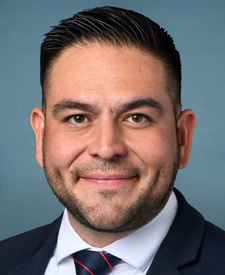
Mr. Vasquez introduced the following bill; which was referred to …
Referred to the House Committee on Agriculture.
Introduced in House
Stakeholder Effects
cui bono?How this legislation distributes effects. Mention counts reflect frequency, not effect magnitude.
Native seniors receiving CSFP food, Tribal food distribution programs
USDA Food and Nutrition Service staff, USDA contract officers
Bill Structure & Actor Mappings
Who is "The Secretary" in each section?
We use a combination of our own taxonomy and classification in addition to large language models to assess meaning and potential beneficiaries. High confidence means strong textual evidence. Always verify with the original bill text.
Learn more about our methodology