Improving VA Training for Military Sexual Trauma Claims Act
Summary
What This Bill Does
H.R. 2201, the Improving VA Training for Military Sexual Trauma Claims Act, would amend 38 USC1166 and5103A. VA employees who process covered claims, communicate with claimants about supporting evidence, or decide those claims would receive annual sensitivity training and training to identify markers of military sexual trauma. Training must reflect the employee's experience, and VA must update it at least annually. The bill concerns the covered mental-health compensation claims described in section1166, not every type of veteran claim or all VA employees regardless of their duties.
The final House text also adds an express requirement to obtain both the claimant's service personnel record and service medical record in a section1166 claim. Within90days after enactment, the Secretary of Veterans Affairs would send the House and Senate Veterans' Affairs Committees two reports: one on prior employee training and implementation plans; the other on sensitivity training for contracted examination professionals and schedulers, plus plans to improve training and prevent retraumatization during examinations. The official record checked September22,2026 shows Senate Veterans' Affairs referral on May20,2025 as the latest action. The bill has not become law, so its90-day clocks have not started.
Who Benefits and How
Veterans claiming compensation for covered mental-health conditions related to military sexual trauma could receive more sensitive, better-informed assistance and more complete evidence development. These are procedural protections: the bill does not presume every claim valid, change disability ratings, set a payment amount, or guarantee either an award or a trauma-free examination. Existing section1166 covers PTSD, anxiety, depression and other qualifying mental-health diagnoses related to military sexual trauma; its definition includes sexual assault, battery and harassment during active service.
Claimants whose files already contain credible supporting evidence of trauma are specifically affected by the committee change. The introduced bill required VA to obtain the personnel record under its new provision only when that evidence was absent. The reported and House-passed texts remove that condition; both personnel and medical records are expressly included for covered claims. Congressional Veterans' Affairs Committees receive implementation information for oversight, not authority to decide individual claims.
Who Bears the Burden and How
The Department of Veterans Affairs would bear curriculum-design, annual updating, staff-training, records-retrieval and reporting work. Covered VA claims employees would have recurring training obligations tailored to their experience. Contracted examination providers and appointment schedulers are subjects of the second report and could face changes through VA's improvement plan. That reporting provision does not itself apply the annual employee-training requirement to every contractor or prescribe a new contractor training schedule. No appropriation, contractor fee increase, new penalty or separate private damages remedy appears in the bill.
Current law already requires specialized-team training to identify trauma markers and annual training for certain coordinators and peer support specialists. It also already requires assistance obtaining relevant service and other federal records. The bill broadens and specifies those protections rather than creating VA training or the duty to assist from nothing. It retains the existing federal-record search rule allowing efforts to end when records do not exist or further efforts would be futile, renumbering that provision. It does not expressly replace the duty-to-assist limits for higher-level review and Board appeals, automatically reopen previously denied claims or remove the other statutory requirements for compensation.
Key Provisions
- Expands training coverage to VA employees who process, discuss supporting evidence for, or decide covered military sexual trauma claims, with annual sensitivity training and marker-identification training.
- Requires experience-appropriate training and curriculum updates at least once annually.
- Adds express service-personnel and service-medical-record assistance for covered claims, without the introduced bill's no-credible-evidence condition on personnel records.
- Requires two reports within90days of enactment covering employee training and plans for more sensitive contracted examinations, including scheduling personnel.
Evidence Chain:
This summary is generated from the full bill text using AI analysis. Expand "Detailed Analysis" below for identified beneficiaries/burden bearers with clause-level evidence links.
At a Glance
What This Bill Does
Expand experience-appropriate annual VA training and records assistance for compensation claims involving military sexual trauma, and require reports on employee training and contracted examination sensitivity.
Key Policy Areas
Veterans Benefits, Claims Administration, Workforce Training
Primary Purpose
Expand experience-appropriate annual VA training and records assistance for compensation claims involving military sexual trauma, and require reports on employee training and contracted examination sensitivity.
Policy Domains
Improving VA Training for Military Sexual Trauma Claims Act
Identified Gains
- Veterans pursuing compensation for covered mental-health conditions related to military sexual trauma
- House Committee on Veterans Affairs
- Senate Committee on Veterans Affairs
Identified Costs
- Department of Veterans Affairs
- VA employees handling covered claims
Sponsors




Legislative Progress
Passed HouseReceived; read twice and referred to the Committee on Veterans' …
Passed House (inferred from eh version)
Received in the Senate and Read twice and referred to …
Motion to reconsider laid on the table Agreed to without …
On motion to suspend the rules and pass the bill, …
Passed/agreed to in House: On motion to suspend the rules …
DEBATE - The House proceeded with forty minutes of debate …
Considered under suspension of the rules. (consideration: CR H2130-2132)
Mr. Bost moved to suspend the rules and pass the …
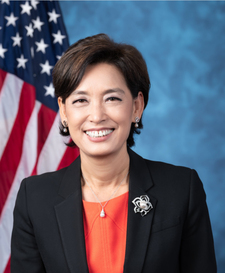
Additional sponsors: Mrs. Radewagen and Mr. Vindman
Stakeholder Effects
cui bono?How this legislation distributes effects. Mention counts reflect frequency, not effect magnitude.
VA employees handling covered military sexual trauma compensation claims, Veterans pursuing covered military sexual trauma compensation claims, Veterans with covered military sexual trauma claims already containing credible supporting evidence
Positive-direction: Veterans pursuing covered military sexual trauma compensation claims, Veterans with covered military sexual trauma claims already containing credible supporting evidence
Negative-direction: VA employees handling covered military sexual trauma compensation claims
Bill Structure & Actor Mappings
Who is "The Secretary" in each section?
- "employees"
- → VA employees processing, discussing evidence for or deciding covered claims
- "secretary"
- → Secretary of Veterans Affairs
- "contractors"
- → Health care professionals and examination schedulers contracted under section504 of Public Law104-275
Note: IH section2 supplies the substantive baseline. RH replacement changes the personnel-record condition and explicitly lists schedulers alongside health care professionals; RH/EH/RFS canonical text is identical. Paired XML-ID removals are not policy repeal.
Key Definitions
Terms defined in this bill
Compensation claims for a covered mental-health condition based on military sexual trauma experienced during active service, as defined in existing38USC1166.
We use a combination of our own taxonomy and classification in addition to large language models to assess meaning and potential beneficiaries. High confidence means strong textual evidence. Always verify with the original bill text.
Learn more about our methodology