SAVE Act
Summary
What This Bill Does
The SAVE Act rewrites federal voter-registration rules for elections for federal office. It defines documentary proof of U.S. citizenship to include REAL ID documents that indicate citizenship, a U.S. passport, military ID plus service record showing U.S. birthplace, government photo ID showing U.S. birthplace, government photo ID plus a qualifying birth certificate, hospital birth record, adoption decree showing U.S. birthplace, Consular Report of Birth Abroad, Naturalization Certificate, Certificate of Citizenship, other federal citizenship proof under immigration law, or a DHS American Indian Card classified as KIC. States may not accept or process a registration application for federal elections unless the applicant presents documentary proof with the application. The bill applies that requirement to motor-voter registration, mail registration, and voter-registration agencies; requires applicants who cannot present documentary proof to sign a penalty-of-perjury attestation and submit other citizenship evidence for state or local determination; allows states to identify noncitizens using DHS SAVE, Social Security verification, state ID or driver-license citizenship data, and other databases; and requires federal agencies with relevant eligibility information to provide it to state election officials within 24 hours, including batched information. It permits use of registration information in criminal or immigration proceedings against applicants who knowingly make false eligibility declarations, treats registering an applicant without documentary proof as an enforceable NVRA violation, adds penalties for executive-branch personnel who materially assist noncitizens attempting to register or vote in federal elections, requires EAC guidance within 10 days, requires DHS to notify state election officials when a person becomes a naturalized citizen, and preserves state exemptions from unrelated federal laws.
Who Benefits and How
State election officials, the Election Assistance Commission, congressional election-oversight committees, election-integrity organizations, voters concerned about noncitizen registration, state motor vehicle agencies, state vital records offices, Department of Homeland Security verification staff, Social Security Administration verification staff, and federal prosecutors benefit from a mandatory documentation framework, federal database access, 24-hour agency responses, naturalization notices, and clearer enforcement hooks for federal-election voter registration.
Who Bears the Burden and How
Prospective voters without ready citizenship documents, naturalized citizens, citizens born abroad, Native voters relying on tribal or DHS documents, elderly voters, low-income voters, recently moved voters, state election officials, local election offices, motor vehicle agencies, voter-registration agencies, Department of State passport staff, DHS SAVE administrators, Social Security Administration verification staff, executive-branch employees, and voting-rights organizations must provide or verify documentation, manage alternate attestations, handle database checks, respond within 24 hours, update forms and public notices, and face higher registration barriers, compliance costs, litigation risk, or criminal exposure if applications are processed without required proof.
Key Provisions
- Adds a detailed documentary-proof-of-citizenship definition covering passports, REAL ID citizenship documents, military records, birth records, adoption decrees, consular reports, naturalization documents, citizenship certificates, and DHS KIC American Indian Cards.
- Requires states to reject or not process federal-election registration applications unless documentary proof of citizenship is presented.
- Requires alternate attestation and evidence processes for applicants who cannot present documentary proof, with state or local citizenship determinations.
- Requires states and federal agencies to use DHS SAVE, Social Security, driver-license, state-ID, and other citizenship databases, with relevant federal agencies responding to state officials within 24 hours.
- Requires EAC implementation guidance within 10 days and DHS naturalization notices to state election officials.
- Adds enforcement exposure for officials who register applicants without proof and for executive-branch employees who materially assist noncitizens attempting to register or vote.
Evidence Chain:
This summary is generated from the full bill text using AI analysis. Expand "Detailed Analysis" below for identified beneficiaries/burden bearers with clause-level evidence links.
At a Glance
What This Bill Does
Amends the National Voter Registration Act to require documentary proof of U.S. citizenship before states accept or process federal voter-registration applications, create alternate proof and database-verification processes, require EAC guidance, require DHS naturalization notices to state election officials, and add enforcement consequences for officials who register applicants without required proof.
Key Policy Areas
Elections, Immigration, Civil Rights
Primary Purpose
Amends the National Voter Registration Act to require documentary proof of U.S. citizenship before states accept or process federal voter-registration applications, create alternate proof and database-verification processes, require EAC guidance, require DHS naturalization notices to state election officials, and add enforcement consequences for officials who register applicants without required proof.
Policy Domains
Substantive provisions
Identified Gains
- State election officials
- Election Assistance Commission
- Congressional election-oversight committees
- Election-integrity organizations
- Voters concerned about noncitizen registration
- State motor vehicle agencies
- State vital records offices
- Department of Homeland Security verification staff
- Social Security Administration verification staff
Identified Costs
- Prospective voters without ready citizenship documents
- Naturalized citizens
- Citizens born abroad
- Native voters
- Elderly voters
- Low-income voters
- State election officials
- Local election offices
- Motor vehicle agencies
- DHS SAVE administrators
- Voting-rights organizations
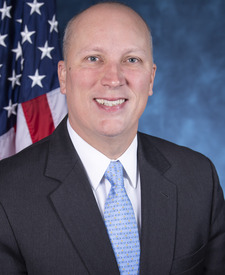
Sponsors




Legislative Progress
Passed HouseReceived in the Senate.
Motion to reconsider laid on the table Agreed to without …
On passage Passed by the Yeas and Nays: 220 - …
Passed/agreed to in House: On passage Passed by the Yeas …
On motion to recommit Failed by the Yeas and Nays: …
Considered as unfinished business. (consideration: CR H1580-1581)
POSTPONED PROCEEDINGS - At the conclusion of debate on H.R. …
The previous question on the motion to recommit was ordered …
Ms. Johnson (TX) moved to recommit to the Committee on …
The previous question was ordered pursuant to the rule.
Stakeholder Effects
cui bono?How this legislation distributes effects. Mention counts reflect frequency, not effect magnitude.
Local election offices, State election officials, State motor vehicle agencies
State election officials faces effects in multiple directions
Positive-direction: States with existing federal law exemptions
Negative-direction: Local election offices, State motor vehicle agencies
Citizens born abroad, Naturalized citizens, Prospective voters without ready citizenship documents
Positive-direction: Naturalized citizens
Negative-direction: Citizens born abroad, Prospective voters without ready citizenship documents
Department of Homeland Security, Election Assistance Commission, Social Security Administration
Election-integrity organizations, Voting-rights organizations
Positive-direction: Election-integrity organizations
Negative-direction: Voting-rights organizations
On Passage
SAVE Act
On Motion to Recommit
SAVE Act
Bill Structure & Actor Mappings
Who is "The Secretary" in each section?
- "eac"
- → Election Assistance Commission
- "secretary_dhs"
- → Secretary of Homeland Security
- "state_official"
- → chief State election official
Key Definitions
Terms defined in this bill
Specified citizenship documents accepted for voter registration under the amended NVRA.
State may not register an individual for federal elections unless citizenship proof is provided or established through alternate procedures.
We use a combination of our own taxonomy and classification in addition to large language models to assess meaning and potential beneficiaries. High confidence means strong textual evidence. Always verify with the original bill text.
Learn more about our methodology