To amend the Internal Revenue Code of 1986 to restore the limitation on downward attribution of stock ownership in applying constructive ownership rules.
Summary
What This Bill Does
This tax bill reverses part of the post-2017 downward-attribution regime. Section 958(b) would again provide that section 318(a)(3) attribution rules do not treat a U.S. person as owning stock owned by a non-U.S. person. That relief can prevent some U.S. subsidiaries or shareholders in foreign-parented groups from being treated as owning foreign corporation stock solely through foreign-person attribution. At the same time, the bill creates new section 951B, which applies Subpart F and section 951A rules to foreign controlled U.S. shareholders of foreign controlled foreign corporations. A foreign controlled U.S. shareholder generally means a U.S. person that would be a U.S. shareholder if the ownership threshold were more than 50 percent and the restored attribution limitation were ignored. Treasury must issue guidance to carry out the regime and prevent avoidance. The amendments apply to the last taxable year of foreign corporations beginning before January 1, 2025 and subsequent years.
Who Benefits and How
Foreign-parented U.S. corporate taxpayers benefit because downward attribution from foreign owners is limited again for section 958(b). Multinational tax compliance staff benefit from a more targeted ownership rule that can reduce unintended CFC reporting. U.S. subsidiary employees in foreign-controlled groups benefit when their employers are no longer treated as owning foreign stock solely through foreign-person attribution. Tax attorneys benefit from statutory definitions for foreign controlled U.S. shareholders and foreign controlled foreign corporations.
Who Bears the Burden and How
Foreign controlled U.S. shareholders may owe Subpart F or GILTI-style inclusions under new section 951B. Treasury Department tax staff must issue regulations or guidance to implement the new foreign-controlled shareholder rules and prevent avoidance. IRS international audit staff must apply restored attribution limits and the new section 951B inclusion regime. Federal taxpayers may bear revenue losses for some attribution relief, offset by revenue from taxpayers captured by section 951B.
Key Provisions
- Restores the section 958(b) limitation on downward stock attribution from non-U.S. persons.
- Creates section 951B for foreign controlled U.S. shareholders of foreign controlled foreign corporations.
- Applies Subpart F and section 951A rules separately to those foreign-controlled U.S. shareholders.
- Directs Treasury to issue anti-avoidance and implementation guidance.
- Applies to foreign corporation taxable years beginning before January 1, 2025 and later years.
Evidence Chain:
This summary is generated from the full bill text using AI analysis. Expand "Detailed Analysis" below for identified beneficiaries/burden bearers with clause-level evidence links.
At a Glance
What This Bill Does
Restores the Internal Revenue Code limitation on downward stock attribution from foreign persons while adding section 951B rules that tax foreign-controlled U.S. shareholders of foreign-controlled foreign corporations under Subpart F and GILTI-style rules.
Key Policy Areas
Tax, International Tax, Corporate Tax
Primary Purpose
Restores the Internal Revenue Code limitation on downward stock attribution from foreign persons while adding section 951B rules that tax foreign-controlled U.S. shareholders of foreign-controlled foreign corporations under Subpart F and GILTI-style rules.
Policy Domains
Resolution provisions
Identified Gains
- Foreign-parented U.S. corporate taxpayers
- Multinational tax compliance staff
- U.S. subsidiary employees
- Tax attorneys
Identified Costs
- Foreign controlled U.S. shareholders
- Treasury Department tax staff
- IRS international audit staff
- Federal taxpayers
Sponsors
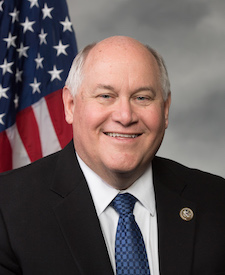
Ron Estes
R-KS | Primary Sponsor

Legislative Progress
In CommitteeMr. Estes (for himself and Ms. Moore of Wisconsin) introduced …
Referred to the House Committee on Ways and Means.
Introduced in House
Stakeholder Effects
cui bono?How this legislation distributes effects. Mention counts reflect frequency, not effect magnitude.
Foreign controlled U.S. shareholders, Foreign-parented U.S. corporate taxpayers, U.S. subsidiary employees
Positive-direction: Foreign-parented U.S. corporate taxpayers, U.S. subsidiary employees
Negative-direction: Foreign controlled U.S. shareholders
IRS international audit staff, Treasury Department tax staff
Bill Structure & Actor Mappings
Who is "The Secretary" in each section?
We use a combination of our own taxonomy and classification in addition to large language models to assess meaning and potential beneficiaries. High confidence means strong textual evidence. Always verify with the original bill text.
Learn more about our methodology