Seizure Awareness and Preparedness Act
Summary
What This Bill Does
The Seizure Awareness and Preparedness Act adds a new Elementary and Secondary Education Act grant program for students with epilepsy or seizure disorders. The Education Department may award competitive grants to state education agencies, which then subgrant funds to local educational agencies. Funded schools must train nurses, teachers, administrators, bus drivers, and other staff on seizure recognition, individualized health care plans, individualized emergency health care plans, medication administration, sports and trip accommodations, family communication, and emergency response. The bill authorizes $34.5 million for each of fiscal years 2026 through 2030 and requires grant funds to supplement, not replace, existing state or local spending.
Who Benefits and How
Students with epilepsy benefit because schools receiving grants must prepare individualized care and emergency plans rather than relying on ad hoc staff response. Parents of students with seizure disorders benefit from clearer school communication, emergency contacts, medical-information releases, and bus-driver preparedness. State education agencies benefit from federal grant authority to build seizure-awareness programs across local school districts. Local educational agencies benefit from subgrants that can pay for staff training, compliance support, and approved seizure-preparedness activities.
Who Bears the Burden and How
School nurses must coordinate plans, train school personnel at least every two years, and communicate with parents and health care providers. Bus drivers who transport covered students must receive seizure recognition, first-aid, care-plan, and parent-contact information. The Department of Education must run the competitive grant program and approve training courses from national epilepsy organizations. Federal taxpayers fund the $34.5 million annual authorization for fiscal years 2026 through 2030.
Key Provisions
- Creates an ESEA grant program for seizure-awareness and preparedness activities.
- Authorizes $34.5 million annually for fiscal years 2026 through 2030.
- Requires school personnel training on individualized health care plans and emergency seizure response.
- Directs bus-driver notification and training for students with epilepsy or seizure disorders.
- Protects good-faith school personnel from liability except for willful misconduct, gross negligence, or recklessness.
Evidence Chain:
This summary is generated from the full bill text using AI analysis. Expand "Detailed Analysis" below for identified beneficiaries/burden bearers with clause-level evidence links.
At a Glance
What This Bill Does
Creates a five-year ESEA grant program for state education agencies to help local schools prepare for and support students with epilepsy or seizure disorders.
Key Policy Areas
Education, Health Care, Disability
Primary Purpose
Creates a five-year ESEA grant program for state education agencies to help local schools prepare for and support students with epilepsy or seizure disorders.
Policy Domains
Resolution provisions
Identified Gains
- Students with epilepsy
- Parents of students with seizure disorders
- State education agencies
- Local educational agencies
Identified Costs
- School nurses
- School bus drivers
- Department of Education
- Federal taxpayers
Sponsors
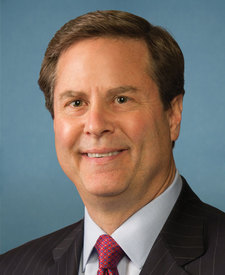



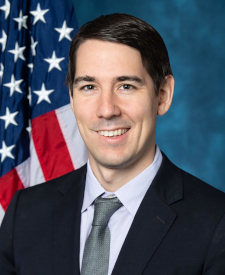
Legislative Progress
In CommitteeMr. Norcross (for himself, Mr. Costa, and Mr. Fitzpatrick) introduced …
Referred to the House Committee on Education and Workforce.
Introduced in House
Stakeholder Effects
cui bono?How this legislation distributes effects. Mention counts reflect frequency, not effect magnitude.
Local educational agencies, Parents of students with seizure disorders, Students with epilepsy
Bill Structure & Actor Mappings
Who is "The Secretary" in each section?
We use a combination of our own taxonomy and classification in addition to large language models to assess meaning and potential beneficiaries. High confidence means strong textual evidence. Always verify with the original bill text.
Learn more about our methodology