FOCA Act of 2025
Summary
What This Bill Does
The FOCA Act requires open competition and federal labor neutrality on federal and federally funded construction projects. Executive agencies and construction managers acting for the federal government may not include bid specifications, project agreements, or controlling documents that require or prohibit contractors or subcontractors from entering labor-organization agreements, or that discriminate or give preference based on whether a bidder, offeror, contractor, or subcontractor signs or refuses such agreements. The rule applies to contracts awarded after enactment and to subcontracts under those contracts, but does not stop contractors or subcontractors from voluntarily entering labor agreements. The Federal Acquisition Regulation must be revised within 60 days. Executive agencies awarding grants, financial assistance, or cooperative agreements for construction projects must ensure recipients and construction managers do not impose the same requirements or preferences. Agencies must take appropriate action for noncompliance. Agency heads may exempt a project, contract, subcontract, grant, or cooperative agreement to avert an imminent threat to public health or safety or serve national security, but not merely because of a labor dispute involving nonunion contractors or workers. A separate grandfather exemption is available for projects whose bid specifications or labor agreements existed and had construction contracts awarded by enactment. The bill defines construction contracts broadly to cover construction, rehabilitation, alteration, conversion, extension, or repair of buildings, highways, or other real property improvements.
Who Benefits and How
Open-shop construction contractors benefit because federal projects cannot require project labor agreements or prefer union signatories. Small and disadvantaged construction businesses benefit from the bill's stated goal of expanding job opportunities on federal and federally assisted projects. Federal contracting officers benefit from a uniform labor-neutrality rule in bid specifications and project agreements. Taxpayers benefit if open competition reduces federal construction costs as the bill intends.
Who Bears the Burden and How
Building trade unions lose federal leverage to require project labor agreements on covered projects. Executive agencies must revise procurement practices, enforce compliance, and process limited exemption requests. Grant and financial assistance recipients must remove prohibited labor-organization requirements from federally assisted construction documents. Construction managers acting for federal agencies or recipients must apply the labor-neutrality restrictions.
Key Provisions
- Bars federal construction documents from requiring or prohibiting labor-organization agreements.
- Bars preferences or discrimination based on whether contractors sign or refuse labor agreements.
- Provides the rule for post-enactment federal contracts, subcontracts, grants, assistance, and cooperative agreements.
- Requires Federal Acquisition Regulation revisions within 60 days.
- Authorizes narrow public-health, safety, national-security, and grandfathered-project exemptions.
Evidence Chain:
This summary is generated from the full bill text using AI analysis. Expand "Detailed Analysis" below for identified beneficiaries/burden bearers with clause-level evidence links.
At a Glance
What This Bill Does
Bars federal agencies and federally funded construction recipients from requiring, prohibiting, preferring, or discriminating based on project labor agreements or other labor-organization agreements, while preserving voluntary agreements and allowing narrow public-health, safety, national-security, and grandfathered-project exemptions.
Key Policy Areas
Federal Procurement, Construction, Labor
Primary Purpose
Bars federal agencies and federally funded construction recipients from requiring, prohibiting, preferring, or discriminating based on project labor agreements or other labor-organization agreements, while preserving voluntary agreements and allowing narrow public-health, safety, national-security, and grandfathered-project exemptions.
Policy Domains
Resolution provisions
Identified Gains
- Open-shop construction contractors
- Small construction businesses
- Federal contracting officers
- Federal taxpayers
Identified Costs
- Building trade unions
- Executive agencies
- Grant recipients
- Construction managers
Sponsors
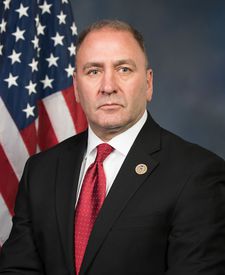




Legislative Progress
In CommitteeMr. Higgins of Louisiana (for himself, Mr. Meuser, Mr. Collins, …
Referred to the House Committee on Oversight and Government Reform.
Introduced in House
Stakeholder Effects
cui bono?How this legislation distributes effects. Mention counts reflect frequency, not effect magnitude.
Construction managers, Open-shop construction contractors, Small construction businesses
Bill Structure & Actor Mappings
Who is "The Secretary" in each section?
We use a combination of our own taxonomy and classification in addition to large language models to assess meaning and potential beneficiaries. High confidence means strong textual evidence. Always verify with the original bill text.
Learn more about our methodology