LAND Act
Summary
What This Bill Does
The LAND Act creates reciprocal limits for foreign purchases of agricultural land. A foreign purchaser buying U.S. agricultural land must comply with the same restrictions a U.S. citizen or national would face when buying agricultural land in that purchaser's home country, plus any applicable state restrictions. The bill has special rules for dual citizens, multi-country citizens, foreign companies, and foreign governments. For companies, the home country is the country with the most restrictive agricultural land purchase laws, as determined by the Task Force, among countries whose citizens hold at least five percent of the company. Sellers of agricultural land to foreign purchasers must report the sale to the Secretary of Agriculture, and USDA must notify the state's senators and the House member for the district where the land is located. The bill creates a U.S. Land Protection Task Force chaired by the Secretary of Agriculture and including CFIUS, DOJ's National Security Division, and the Secretary of State. Within one year and every six months after that, the Task Force must report to Congress on foreign agricultural land sales by land type, states, average cost, title history, and whether any purchased land is within 100 miles of a military installation.
Who Benefits and How
U.S. farmers competing for agricultural land benefit if foreign buyers face reciprocal and state-law limits. Rural communities near military installations benefit from reporting on foreign land purchases within 100 miles of those installations. Members of Congress benefit from notice when foreign purchasers buy agricultural land in their state or district. National security reviewers benefit from a task force combining USDA, CFIUS, DOJ, and State Department information.
Who Bears the Burden and How
Foreign purchasers must comply with reciprocal home-country agricultural land restrictions and state restrictions. Agricultural land sellers must report sales to foreign purchasers to USDA. USDA must notify senators and House members and chair the U.S. Land Protection Task Force. Foreign companies must be analyzed by ownership and the most restrictive relevant home-country land laws.
Key Provisions
- Requires foreign purchasers of agricultural land to comply with reciprocal home-country restrictions and state restrictions.
- Provides home-country rules for dual citizens, multi-country citizens, companies, and foreign governments.
- Requires sellers to report foreign agricultural land sales to USDA.
- Directs USDA to notify the relevant senators and House member for each reported sale.
- Creates a U.S. Land Protection Task Force with reports every six months after the first year.
Evidence Chain:
This summary is generated from the full bill text using AI analysis. Expand "Detailed Analysis" below for identified beneficiaries/burden bearers with clause-level evidence links.
At a Glance
What This Bill Does
Subjects foreign purchasers of U.S. agricultural land to both state restrictions and reciprocal restrictions based on their home country's agricultural land purchase rules, requires sellers to report foreign sales to USDA, notifies congressional members, and creates a U.S. Land Protection Task Force with recurring reports.
Key Policy Areas
Agriculture, Foreign Investment, Land Ownership, National Security
Primary Purpose
Subjects foreign purchasers of U.S. agricultural land to both state restrictions and reciprocal restrictions based on their home country's agricultural land purchase rules, requires sellers to report foreign sales to USDA, notifies congressional members, and creates a U.S. Land Protection Task Force with recurring reports.
Policy Domains
Resolution provisions
Identified Gains
- U.S. farmers
- Rural communities near military installations
- Members of Congress
- National security reviewers
Identified Costs
- Foreign purchasers of agricultural land
- Agricultural land sellers
- Department of Agriculture
- Foreign companies buying farmland
Sponsors

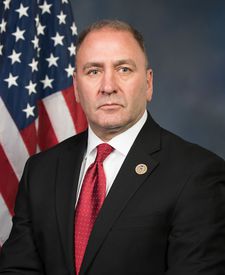
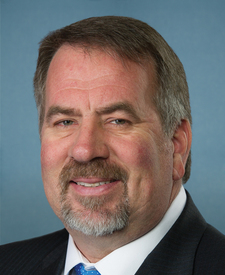
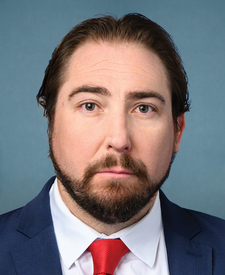
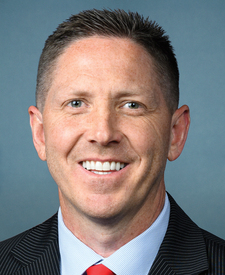
Legislative Progress
In CommitteeReferred to the Subcommittee on Nutrition and Foreign Agriculture.
Mr. Gill of Texas (for himself, Mr. Brecheen, Mr. Higgins …
Referred to the House Committee on Agriculture.
Introduced in House
Stakeholder Effects
cui bono?How this legislation distributes effects. Mention counts reflect frequency, not effect magnitude.
Agricultural land sellers, Foreign companies buying farmland, Foreign purchasers of agricultural land
Department of Agriculture, Members of Congress
Rural communities near military installations
Bill Structure & Actor Mappings
Who is "The Secretary" in each section?
We use a combination of our own taxonomy and classification in addition to large language models to assess meaning and potential beneficiaries. High confidence means strong textual evidence. Always verify with the original bill text.
Learn more about our methodology