SAFE Bet Act of 2025
Summary
What This Bill Does
The SAFE Bet Act creates a federal overlay for sports wagering. It generally prohibits knowingly accepting sports wagers unless the operator is in an Attorney General-approved opt-in state program or falls under state social gambling law. States seeking approval must submit program applications, identify their regulatory entity, show legal authority, and receive a decision within 180 days. State programs must meet detailed standards: public regulators, in-state or compact-based geolocation for interactive betting, age limits, no wagers by athletes, coaches, referees, trainers, certain employees, or people with access to nonpublic confidential information, no proposition bets on individual college athletes, background checks and suitability standards for operators and senior executives, employee and contractor background checks, records of account wagers and certain large non-account wagers, suspicious-transaction reporting to regulators, sports organizations, and law enforcement, data security, real-time anonymized wagering data within 24 hours, internal controls, audits at least every three years, and cooperation with sports-organization and law-enforcement investigations. The Attorney General can bring civil actions and penalties for unlawful wagering. HHS must conduct an annual online sports betting survey using the Problem Gambling Severity Index and independent researchers, the Surgeon General must report on public health challenges within one year, and CDC may build a National Gambling Addiction Surveillance System with privacy protections. The bill treats certain interactive wagers on Indian lands as occurring at the server location for Indian Gaming Regulatory Act purposes, preserves state and Tribal authority to impose stricter rules and taxes, and requires states and operators to issue cease-and-desist orders against designated offshore unlicensed platforms.
Who Benefits and How
People at risk of gambling disorder benefit from national surveys, a Surgeon General report, and CDC gambling-addiction surveillance. Sports bettors benefit from geolocation, age, data-security, recordkeeping, suitability, and suspicious-transaction standards. Sports organizations benefit from suspicious-transaction reports and cooperation duties tied to integrity investigations. State gaming regulators benefit from a federal approval framework that preserves stricter state authority and taxation. Indian Tribes with compacts benefit from server-location rules for interactive wagering on Indian lands.
Who Bears the Burden and How
Sports wagering operators must satisfy licensing, background-check, recordkeeping, data reporting, internal control, audit, suspicious-transaction, and cooperation duties. State regulatory entities must submit applications, enforce federal standards, monitor operators, refer criminal evidence, and support action against offshore platforms. The Department of Justice must approve state programs, bring enforcement actions, designate offshore platforms, and receive suspicious-transaction reports. HHS, the Surgeon General, and CDC must build recurring public-health surveys, reports, and gambling-addiction surveillance infrastructure. Offshore unlicensed gaming platforms face cease-and-desist orders and coordinated federal, state, and operator pressure.
Key Provisions
- Prohibits knowingly accepting sports wagers unless a federal opt-in exception applies.
- Requires Attorney General approval of state sports wagering programs within 180 days if statutory standards are met.
- Establishes standards for geolocation, prohibited bettors, college-athlete proposition bets, suitability checks, records, data, audits, and suspicious-transaction reports.
- Requires annual online sports betting surveys, a Surgeon General public-health report, and CDC gambling-addiction surveillance authority.
- Preserves stricter state and Tribal authority and requires cooperation against offshore unlicensed gaming platforms.
Evidence Chain:
This summary is generated from the full bill text using AI analysis. Expand "Detailed Analysis" below for identified beneficiaries/burden bearers with clause-level evidence links.
At a Glance
What This Bill Does
Creates a federal opt-in framework for sports wagering, makes unapproved sports betting unlawful, requires Attorney General approval of state programs meeting detailed consumer-protection and integrity standards, mandates gambling-harm surveys and surveillance, preserves state and Tribal authority for stricter rules, and requires cooperation against offshore unlicensed platforms.
Key Policy Areas
Sports Wagering, Consumer Protection, Public Health, Tribal Gaming
Primary Purpose
Creates a federal opt-in framework for sports wagering, makes unapproved sports betting unlawful, requires Attorney General approval of state programs meeting detailed consumer-protection and integrity standards, mandates gambling-harm surveys and surveillance, preserves state and Tribal authority for stricter rules, and requires cooperation against offshore unlicensed platforms.
Policy Domains
Resolution provisions
Identified Gains
- People at risk of gambling disorder
- Sports bettors
- Sports organizations
- State gaming regulators
- Indian Tribes with gaming compacts
Identified Costs
- Sports wagering operators
- State regulatory entities
- Department of Justice
- Department of Health and Human Services
- Offshore unlicensed gaming platforms
Sponsors
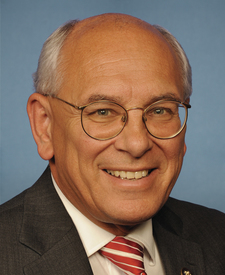
Legislative Progress
In CommitteeMr. Tonko introduced the following bill; which was referred to …
Referred to the Committee on Energy and Commerce, and in …
Introduced in House
Stakeholder Effects
cui bono?How this legislation distributes effects. Mention counts reflect frequency, not effect magnitude.
Department of Health and Human Services, Department of Justice, Indian Tribes with gaming compacts
Offshore unlicensed gaming platforms, Sports wagering operators
Bill Structure & Actor Mappings
Who is "The Secretary" in each section?
We use a combination of our own taxonomy and classification in addition to large language models to assess meaning and potential beneficiaries. High confidence means strong textual evidence. Always verify with the original bill text.
Learn more about our methodology