Mental Health Research Accelerator Act of 2025
Summary
What This Bill Does
The Mental Health Research Accelerator Act creates new Internal Revenue Code section 45BB. Taxpayers can claim a translational research credit equal to 25 percent of amounts paid or incurred for translational research regarding neurodegenerative diseases and psychiatric conditions. The credit is subject to national allocation caps: $1 billion for 2026, $2 billion for each year 2027 through 2030, and $1 billion for 2031, with unused limitation carried into the next year. Treasury must allocate limitation to selected applicants and, in consultation with HHS, FDA, and NIH, issue regulations governing applications and criteria. Required criteria include scientific merit, all phases of the research continuum, emphasis on new therapeutics and devices for central nervous system disorders in neurological and psychiatric fields, standards for repurposing existing drugs and devices, and standards for public-private partnerships with priority for collaboration and sharing intellectual property held by tax-exempt project entities. Tax-exempt governments and 501(c)(3) entities can elect to transfer credit treatment to eligible project partners. Expenses used for section 45BB generally cannot also be used for the regular research credit, no deduction is allowed for expenses equal to the credit, and the credit terminates after taxable years beginning after December 31, 2035.
Who Benefits and How
Neurodegenerative disease researchers benefit from a large allocated tax credit for translational research expenses. Psychiatric condition researchers benefit because the credit expressly covers central nervous system, neurological, and psychiatric therapeutic and device work. Biotechnology companies benefit from credit allocations and public-private partnerships with tax-exempt research entities. Tax-exempt universities and government research entities benefit because they can elect to transfer credit value to eligible project partners.
Who Bears the Burden and How
Treasury must allocate multiyear credit caps and write scientific-merit application rules with HHS, FDA, and NIH. The IRS must administer credit limits, transfers, deduction disallowance, section 41 coordination, and post-2035 termination. Federal taxpayers bear revenue loss from up to $10 billion in national credit limitation over 2026 through 2031. Applicants must document translational research merit, partnerships, expenses, and eligibility for allocated credit.
Key Provisions
- Creates a 25 percent tax credit for translational research on neurodegenerative diseases and psychiatric conditions.
- Authorizes national credit limits of $1 billion in 2026, $2 billion annually from 2027 through 2030, and $1 billion in 2031.
- Requires Treasury, HHS, FDA, and NIH criteria based on scientific merit, therapeutics, devices, repurposing, and partnerships.
- Provides transfer rules for tax-exempt entities and eligible project partners.
- Bars duplicate use with the regular research credit and terminates the credit after 2035 taxable years.
Evidence Chain:
This summary is generated from the full bill text using AI analysis. Expand "Detailed Analysis" below for identified beneficiaries/burden bearers with clause-level evidence links.
At a Glance
What This Bill Does
Creates a 25 percent translational research tax credit for neurodegenerative disease and psychiatric condition research, capped nationally at $1 billion for 2026, $2 billion annually from 2027 through 2030, and $1 billion for 2031, with Treasury allocation rules based on scientific merit and public-private collaboration.
Key Policy Areas
Tax, Mental Health Research, Biomedical Research
Primary Purpose
Creates a 25 percent translational research tax credit for neurodegenerative disease and psychiatric condition research, capped nationally at $1 billion for 2026, $2 billion annually from 2027 through 2030, and $1 billion for 2031, with Treasury allocation rules based on scientific merit and public-private collaboration.
Policy Domains
Resolution provisions
Identified Gains
- Neurodegenerative disease researchers
- Psychiatric condition researchers
- Biotechnology companies
- Tax-exempt research entities
Identified Costs
- Treasury Department
- Internal Revenue Service
- Federal taxpayers
- Credit applicants
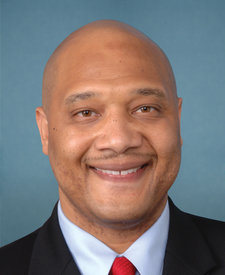
Sponsors




Legislative Progress
In CommitteeMr. Thompson of California (for himself and Mr. Kelly of …
Referred to the House Committee on Ways and Means.
Introduced in House
Stakeholder Effects
cui bono?How this legislation distributes effects. Mention counts reflect frequency, not effect magnitude.
Bill Structure & Actor Mappings
Who is "The Secretary" in each section?
We use a combination of our own taxonomy and classification in addition to large language models to assess meaning and potential beneficiaries. High confidence means strong textual evidence. Always verify with the original bill text.
Learn more about our methodology