Stop Secret Spending Act of 2025
Summary
What This Bill Does
The Stop Secret Spending Act of 2025 expands federal spending transparency under the Federal Funding Accountability and Transparency Act. It adds other transaction agreements to the covered award data that must be reported on USAspending.gov and requires Treasury to ensure, within three years, that OTA data is automatically transmitted to the site with a centralized view. Within one year and annually thereafter, Treasury, in consultation with OMB, must post a report showing the total amount of federal award spending not posted to the site and why the data is missing, including whether spending is classified or national-security-related, tied to legislative or judicial branch grants or contracts, or below a primary subaward. If OTA integration is not done after one year, Treasury must publish a report listing and describing OTAs from relevant agencies for the preceding fiscal year; if it is still not done after two years, Treasury and OMB must submit a plan to Congress for full incorporation by year three. The bill also expands inspector general reporting, requires Treasury and OMB to establish data-completeness and accuracy rules for posting agencies and components, and directs GAO to recommend updates to Federal Acquisition Regulation clause 52.204-10.
Who Benefits and How
Taxpayers benefit from more complete public visibility into federal awards, including other transaction agreements that can otherwise be hard to track. Congressional oversight committees benefit from annual reports on unposted spending and reasons for missing data. Watchdog organizations and journalists benefit from centralized OTA data and inspector general data-quality reports. Contractors, grant recipients, subcontractors, and subgrantees benefit from clearer USAspending.gov reporting expectations. GAO benefits from a defined role recommending FAR updates that align acquisition reporting with transparency law.
Who Bears the Burden and How
The Treasury Secretary must integrate OTA data, post annual missing-spending reports, verify data completeness, and coordinate with OMB and agencies. The OMB Director must consult on reports, plans, and data-quality requirements. Relevant agencies with OTA authority must supply detailed OTA data and help describe unposted spending. Agency inspectors general must submit and publish recurring data-quality reports for covered agencies. Federal agencies and components posting award data must ensure the information is complete and accurate. Classified or national-security programs may need to account for why spending is not public.
Key Provisions
- Adds other transaction agreements to Federal Funding Accountability and Transparency Act award reporting.
- Requires automatic OTA data transmission and a centralized USAspending.gov view within 3 years.
- Requires annual public reports on federal award spending not posted to USAspending.gov and the reasons for omission.
- Requires interim OTA listing and description reports if integration is incomplete after 1 year.
- Requires a congressional integration plan if OTA data is still not incorporated after 2 years.
- Expands inspector general reporting on award data quality for covered agencies.
- Requires Treasury and OMB to establish complete and accurate data-posting requirements.
- Directs GAO to recommend FAR clause updates for FFATA reporting.
Evidence Chain:
This summary is generated from the full bill text using AI analysis. Expand "Detailed Analysis" below for identified beneficiaries/burden bearers with clause-level evidence links.
At a Glance
What This Bill Does
Adds other transaction agreements to federal award transparency law, requires automatic USAspending.gov transmission and a centralized view of OTA data within 3 years, creates annual reporting on federal spending missing from USAspending.gov, expands inspector general data-quality reports, requires Treasury and OMB data-completeness rules, and directs GAO to recommend Federal Acquisition Regulation updates.
Key Policy Areas
Government Oversight, Federal Spending, Procurement
Primary Purpose
Adds other transaction agreements to federal award transparency law, requires automatic USAspending.gov transmission and a centralized view of OTA data within 3 years, creates annual reporting on federal spending missing from USAspending.gov, expands inspector general data-quality reports, requires Treasury and OMB data-completeness rules, and directs GAO to recommend Federal Acquisition Regulation updates.
Policy Domains
House resolution provisions
Identified Gains
- Taxpayers
- Congressional oversight committees
- Watchdog organizations
- Journalists
- Federal contractors
- Grant recipients
- Government Accountability Office
Identified Costs
- Secretary of the Treasury
- Office of Management and Budget
- Agencies with other transaction authority
- Agency inspectors general
- Federal award-reporting offices
- Classified federal programs
Sponsors
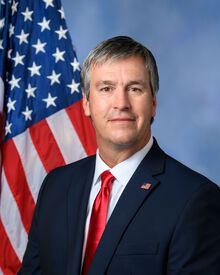

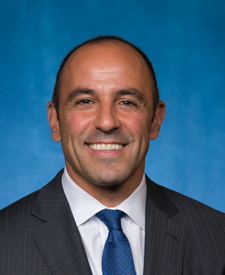

Legislative Progress
ReportedOrdered to be Reported (Amended) by the Yeas and Nays: …
Committee Consideration and Mark-up Session Held
Mr. Moore of Alabama (for himself, Mr. Panetta, and Ms. …
Referred to the House Committee on Oversight and Government Reform.
Introduced in House
Stakeholder Effects
cui bono?How this legislation distributes effects. Mention counts reflect frequency, not effect magnitude.
Agencies with other transaction authority, Agency inspectors general, Office of Management and Budget
Positive-direction: Taxpayers, Watchdog organizations
Negative-direction: Agencies with other transaction authority, Agency inspectors general, Office of Management and Budget, Secretary of the Treasury
Bill Structure & Actor Mappings
Who is "The Secretary" in each section?
- "gao"
- → Government Accountability Office
- "omb"
- → Office of Management and Budget
- "treasury"
- → Department of the Treasury
We use a combination of our own taxonomy and classification in addition to large language models to assess meaning and potential beneficiaries. High confidence means strong textual evidence. Always verify with the original bill text.
Learn more about our methodology