Hidden Fee Disclosure Act of 2025
Summary
What This Bill Does
The Hidden Fee Disclosure Act broadens ERISA fee-disclosure rules for group health plan service providers. It clarifies that covered service-provider disclosure applies to services including brokerage, plan design, claim repricing, insurance and product selection including dental and vision, recordkeeping, medical management, benefits administration, stop-loss insurance, pharmacy benefit management, wellness design and management, transparency tools, group purchasing organizations, preferred vendor panels, disease management, compliance services, employee assistance programs, third party administration, and consulting related to those services. It requires compensation to be disclosed by service rather than only in the aggregate. It treats certain arrangements involving health insurers and PBM service providers as indirect furnishing of services to the plan. PBMs must disclose expected and annual compensation from manufacturers, distributors, rebate aggregators, accumulators, maximizers, GPOs, pharmacies, and other third parties; rebates, discounts, price concessions, co-payment offsets, spread pricing, retained amounts, fees, gross and net drug spending, owned-pharmacy spending by location, excess cost-sharing, and other information needed to assess reasonableness and conflicts. TPAs must disclose rebates, discounts, savings fees, recoveries from overpayments, billing errors, subrogation, fraud, uncashed checks, gross and net spending, indirect compensation, aggregate fees, and other information needed by plan fiduciaries. The Labor Secretary must issue notice-and-comment rulemaking within one year and account for varied compensation practices and standards for expected compensation.
Who Benefits and How
Employer health plan fiduciaries benefit because they receive more detailed information about PBM, TPA, broker, consultant, and vendor compensation. Workers in group health plans benefit if better fee transparency helps fiduciaries negotiate lower drug and administrative costs. Plan sponsors benefit from annual gross and net spending, rebate, spread-pricing, owned-pharmacy, and fee data. Labor Department investigators benefit from clearer statutory disclosure categories and rulemaking authority.
Who Bears the Burden and How
Pharmacy benefit managers must disclose rebates, discounts, fees, spread pricing, owned-pharmacy spending, cost-sharing excesses, and third-party remuneration. Third party administrators must disclose direct and indirect compensation, recoveries, gross and net spending, and retained fees. Health insurers and service-provider affiliates face more ERISA party-in-interest and indirect service disclosure scrutiny. The Labor Department must complete notice-and-comment rulemaking within one year.
Key Provisions
- Expands covered service-provider disclosure categories for group health plans.
- Requires compensation disclosure by service rather than only in aggregate.
- Strengthens PBM disclosure for rebates, price concessions, spread pricing, owned pharmacies, fees, and gross and net drug spending.
- Strengthens TPA disclosure for rebates, recoveries, overpayments, fraud recoveries, indirect compensation, and gross and net plan spending.
- Requires Labor Department rulemaking within one year.
Evidence Chain:
This summary is generated from the full bill text using AI analysis. Expand "Detailed Analysis" below for identified beneficiaries/burden bearers with clause-level evidence links.
At a Glance
What This Bill Does
Expands ERISA group health plan service-provider fee disclosures to cover pharmacy benefit management, third party administration, brokerage, consulting, stop-loss, wellness, transparency, preferred vendor, disease-management, compliance, employee-assistance, and related services, with annual PBM and TPA compensation, spread-pricing, rebate, gross-spending, net-spending, and fee disclosures and Labor Department rulemaking.
Key Policy Areas
Health Care, Employee Benefits, Pharmacy Benefit Managers, Disclosure
Primary Purpose
Expands ERISA group health plan service-provider fee disclosures to cover pharmacy benefit management, third party administration, brokerage, consulting, stop-loss, wellness, transparency, preferred vendor, disease-management, compliance, employee-assistance, and related services, with annual PBM and TPA compensation, spread-pricing, rebate, gross-spending, net-spending, and fee disclosures and Labor Department rulemaking.
Policy Domains
Resolution provisions
Identified Gains
- Employer health plan fiduciaries
- Workers in group health plans
- Plan sponsors
- Labor Department investigators
Identified Costs
- Pharmacy benefit managers
- Third party administrators
- Health insurers
- Labor Department
Sponsors
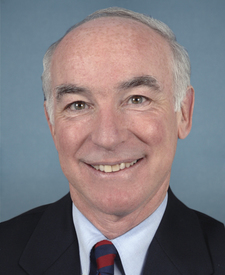
Joe Courtney
D-CT | Primary Sponsor

Legislative Progress
In CommitteeMr. Courtney (for himself and Mrs. Houchin) introduced the following …
Referred to the House Committee on Education and Workforce.
Introduced in House
Stakeholder Effects
cui bono?How this legislation distributes effects. Mention counts reflect frequency, not effect magnitude.
Pharmacy benefit managers, Third party administrators, Workers in group health plans
Employer health plan fiduciaries, Plan sponsors
Bill Structure & Actor Mappings
Who is "The Secretary" in each section?
We use a combination of our own taxonomy and classification in addition to large language models to assess meaning and potential beneficiaries. High confidence means strong textual evidence. Always verify with the original bill text.
Learn more about our methodology