American Housing and Economic Mobility Act of 2025
Summary
What This Bill Does
The American Housing and Economic Mobility Act is a broad housing and tax package. On supply, it creates competitive local housing innovation grants for states, local governments, and tribes that reform zoning and land-use barriers, with $2 billion authorized for each fiscal year 2025 through 2029, Davis-Bacon labor standards, and eligible uses including housing, transportation-linked local projects, and school or college facility modernization. It also authorizes $48 billion per year for the Housing Trust Fund and $3 billion per year for the Capital Magnet Fund for fiscal years 2025 through 2034, $70 billion for public housing capital funding in fiscal year 2025, $2.5 billion for Native American housing block grants in fiscal year 2025, $50 million for Native Hawaiian housing in fiscal year 2025, and several rural housing loan and grant appropriations. On ownership, it creates down payment assistance for first-time, first-generation homebuyers under income limits, equal to up to 3.5 percent of appraised value or the FHA mortgage limit base, and a $5 billion appraisal-gap formula grant program for arrears, principal, taxes, liens, repairs, and distressed property rehabilitation. It tightens FHA, Fannie Mae, and Freddie Mac sales of foreclosed or nonperforming assets to favor owner-occupants and community partners, strengthens the Community Reinvestment Act for deposit-taking and nonbank lending footprints with data, advisory committees, studies, and public registries, expands credit union underserved-area service, raises bank public-welfare investment caps, temporarily extends VA home loan eligibility to certain first-generation descendants of deceased veterans who served from June 22, 1944 through April 11, 1968 and never used the benefit, expands Fair Housing Act protections for actual or perceived traits, sexual orientation, gender identity, marital status, source of income, and veteran status, and requires voucher agencies to analyze neighborhood access. The tax title lowers the estate-tax basic exclusion to $3.5 million, adds a 10 percent surtax on billion-dollar estates, tightens GRATs, grantor trusts, generation-skipping transfers, annual gift exclusions, grantor-trust basis step-up, valuation discounts, high-income estate and trust income, and conservation easement rules. HUD-assisted housing under the Act must double the otherwise required accessible units.
Who Benefits and How
Low-income renters benefit from large Housing Trust Fund, public housing, Native housing, rural housing, and tenant-protection investments. First-time first-generation homebuyers benefit from down payment grants and appraisal-gap assistance for negative equity, arrears, taxes, liens, and repairs. Community land trusts, nonprofit housing developers, and state housing finance agencies benefit from grant, loan, and acquisition tools for affordable housing. Voucher families, people with disabilities, veterans, and source-of-income renters benefit from expanded fair-housing protections and neighborhood-access requirements. Credit unions and banks serving low- and moderate-income communities benefit from expanded underserved-area and public-welfare investment authorities.
Who Bears the Burden and How
HUD must administer local innovation grants, housing funds, down payment assistance, appraisal-gap grants, public housing funding, accessibility rules, and voucher mapping requirements. Regulated financial institutions must comply with stronger Community Reinvestment Act data, advisory committee, assessment-area, registry, and examination duties. High-net-worth estates and trusts bear higher transfer-tax exposure from lower exclusions, billion-dollar surtaxes, GRAT limits, grantor-trust rules, GST changes, gift limits, valuation limits, and high-income trust surcharges. The Treasury Department and IRS must write and enforce extensive estate, trust, gift, valuation, and surcharge rules. Federal taxpayers fund the housing grants, public housing capital, Native housing, rural housing, down payment assistance, appraisal-gap program, and administrative costs.
Key Provisions
- Creates local housing innovation grants and authorizes $2 billion per year for fiscal years 2025 through 2029.
- Authorizes $48 billion per year for the Housing Trust Fund and $3 billion per year for the Capital Magnet Fund for fiscal years 2025 through 2034.
- Creates first-generation down payment assistance and a $5 billion appraisal-gap formula grant program.
- Strengthens CRA coverage, credit union underserved-area service, bank public-welfare investment caps, and VA loan access for certain veterans' descendants.
- Expands Fair Housing Act protections and requires voucher agencies to analyze and reduce neighborhood-access barriers.
- Raises estate and trust taxes and doubles HUD-assisted housing accessibility requirements.
Evidence Chain:
This summary is generated from the full bill text using AI analysis. Expand "Detailed Analysis" below for identified beneficiaries/burden bearers with clause-level evidence links.
At a Glance
What This Bill Does
Combines major housing supply, affordability, fair-housing, credit, and wealth-tax changes, including $2 billion annual local housing innovation grants, $48 billion annual Housing Trust Fund funding, $3 billion annual Capital Magnet Fund funding, $70 billion public housing capital funding, first-generation down payment assistance, appraisal-gap grants, CRA reform, credit union underserved-area expansion, higher public-welfare investment caps, temporary VA loan eligibility for descendants of certain veterans, expanded Fair Housing Act protections, housing voucher outcome rules, estate and trust tax increases, and doubled HUD accessibility requirements.
Key Policy Areas
Housing, Fair Housing, Banking, Tax
Primary Purpose
Combines major housing supply, affordability, fair-housing, credit, and wealth-tax changes, including $2 billion annual local housing innovation grants, $48 billion annual Housing Trust Fund funding, $3 billion annual Capital Magnet Fund funding, $70 billion public housing capital funding, first-generation down payment assistance, appraisal-gap grants, CRA reform, credit union underserved-area expansion, higher public-welfare investment caps, temporary VA loan eligibility for descendants of certain veterans, expanded Fair Housing Act protections, housing voucher outcome rules, estate and trust tax increases, and doubled HUD accessibility requirements.
Policy Domains
Resolution provisions
Identified Gains
- Low-income renter families
- First-time first-generation homebuyer applicants
- Nonprofit housing developers
- Public housing agencies
- Native housing tribes
- Credit union service users
Identified Costs
- Department of Housing and Urban Development
- Regulated financial institutions
- High-net-worth estate tax planners
- Internal Revenue Service examiners
- Treasury Department
- Federal taxpayers
- HUD accessibility administrators
Sponsors
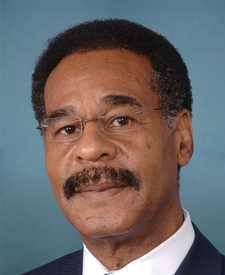

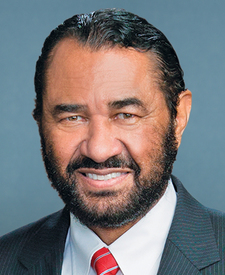

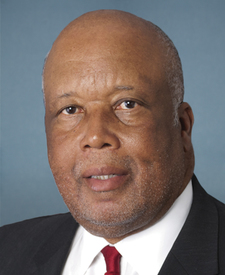
Legislative Progress
In CommitteeReferred to the Subcommittee on Economic Opportunity.
Mr. Cleaver (for himself, Ms. Ansari, Ms. Bonamici, Mr. Fields, …
Referred to the Committee on Financial Services, and in addition …
Introduced in House
Stakeholder Effects
cui bono?How this legislation distributes effects. Mention counts reflect frequency, not effect magnitude.
First-time first-generation homebuyers, Low-income renters, Nonprofit housing developers
High-net-worth estates, Regulated financial institutions
Bill Structure & Actor Mappings
Who is "The Secretary" in each section?
We use a combination of our own taxonomy and classification in addition to large language models to assess meaning and potential beneficiaries. High confidence means strong textual evidence. Always verify with the original bill text.
Learn more about our methodology