Credit for Caring Act of 2025
Summary
What This Bill Does
The Credit for Caring Act creates a new section 25F caregiver credit. Eligible caregivers with earned income above $7,500 can claim 30 percent of qualified expenses above $2,000, up to a $5,000 credit, with the cap indexed after 2025. A qualified care recipient must be a spouse or specified relative certified by a licensed health care practitioner as having long-term care needs for at least 180 consecutive days. Covered needs include adults unable to perform at least two activities of daily living or needing substantial supervision for severe cognitive impairment, young children with functional limitations, and children under two who need specific durable medical equipment or a skilled practitioner. Qualified expenses include goods, services, and supports for activities of daily living and instrumental activities; human assistance including direct care workers; assistive technology and remote monitoring; home modifications; medication management; transportation; incontinence supplies; care coordination; respite care; caregiver counseling, support groups, and training; verified lost wages for unpaid time off; caregiver travel; and caregiving technologies. The credit phases down by $100 for each $1,000 above $150,000 of modified AGI for joint returns or $75,000 for others, coordinates with other tax benefits, excludes ABLE contributions, and requires taxpayer, care-recipient, and practitioner identification.
Who Benefits and How
Working family caregivers benefit from a tax credit for respite care, direct care workers, home modifications, travel, lost wages, and caregiving technologies. Older adults with long-term care needs benefit if relatives can better afford in-home and community supports. People with severe cognitive impairment benefit from caregiver support tied to supervision and activities-of-daily-living needs. Direct care workers benefit if more families can pay for human assistance as a qualified expense.
Who Bears the Burden and How
The IRS must administer a new credit, income phaseout, inflation adjustments, substantiation rules, and identification requirements. Licensed health care practitioners must certify long-term care needs for recipients before the filing deadline. Caregivers must substantiate expenses and coordinate the credit with dependent care, medical expense, HSA, and ABLE rules. Federal taxpayers bear revenue loss from the new caregiver credit.
Key Provisions
- Creates a 30 percent caregiver tax credit for qualified expenses above $2,000.
- Limits the credit to $5,000, indexed after 2025, and phases it out above $150,000 joint or $75,000 other modified AGI.
- Requires earned income above $7,500 and certified long-term care needs lasting at least 180 days.
- Covers respite care, direct care workers, assistive technology, home modifications, travel, lost wages, and caregiver training.
- Requires substantiation and care-recipient and practitioner identification on the tax return.
Evidence Chain:
This summary is generated from the full bill text using AI analysis. Expand "Detailed Analysis" below for identified beneficiaries/burden bearers with clause-level evidence links.
At a Glance
What This Bill Does
Creates a working family caregiver tax credit equal to 30 percent of qualified caregiving expenses above $2,000, capped at $5,000 and inflation-adjusted, for caregivers with earned income over $7,500 caring for certified long-term-care recipients, with income phaseouts, substantiation, and identification rules.
Key Policy Areas
Tax, Caregiving, Long-Term Care
Primary Purpose
Creates a working family caregiver tax credit equal to 30 percent of qualified caregiving expenses above $2,000, capped at $5,000 and inflation-adjusted, for caregivers with earned income over $7,500 caring for certified long-term-care recipients, with income phaseouts, substantiation, and identification rules.
Policy Domains
Resolution provisions
Identified Gains
- Working family caregivers
- Older adults with long-term care needs
- People with cognitive impairment
- Direct care workers
Identified Costs
- Internal Revenue Service
- Licensed health care practitioners
- Caregivers claiming the credit
- Federal taxpayers
Sponsors



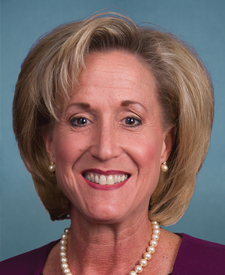

Legislative Progress
In CommitteeMr. Carey (for himself and Ms. Sánchez) introduced the following …
Referred to the House Committee on Ways and Means.
Introduced in House
Stakeholder Effects
cui bono?How this legislation distributes effects. Mention counts reflect frequency, not effect magnitude.
Direct care workers, Licensed health care practitioners, Older adults with long-term care needs
Positive-direction: Direct care workers
Negative-direction: Licensed health care practitioners
Bill Structure & Actor Mappings
Who is "The Secretary" in each section?
We use a combination of our own taxonomy and classification in addition to large language models to assess meaning and potential beneficiaries. High confidence means strong textual evidence. Always verify with the original bill text.
Learn more about our methodology