Women's Retirement Protection Act
Summary
What This Bill Does
The Women's Retirement Protection Act addresses retirement-security gaps through plan rules, consumer information, and grants. It adds ERISA section 205A so many individual account plans must obtain spousal consent before distributions, beneficiary designations, or beneficiary changes, with exceptions for required minimum distributions, small distributions below 25 percent of account balance, specified survivor-annuity forms, certain rollovers, and circumstances where there is no spouse, the marriage is under one year, the spouse cannot be located, or Treasury and Labor prescribe another exception. Consent must be written, acknowledge the effect, occur during the consent period, and be witnessed by a plan representative or notary. The bill also requires financial product or service providers selling retirement or later-life economic security products to provide an accessible CFPB link to independent consumer education materials. The Labor Department Women's Bureau would award competitive grants of at least $250,000 to community-based organizations for financial literacy education for working-age or retired women, with $100 million authorized for fiscal year 2026 and each later year, and separate grants of at least $250,000 to help low-income women and survivors of domestic violence obtain and effectuate qualified domestic relations orders, also authorized at $100 million per year.
Who Benefits and How
Spouses of defined-contribution plan participants benefit because many distributions and beneficiary changes require informed written consent. Women approaching retirement benefit from CFPB-linked education and Women's Bureau financial literacy grants. Low-income women benefit from grants that help obtain qualified domestic relations orders and secure retirement benefits owed through those orders. Survivors of domestic violence benefit from QDRO assistance targeted to retirement benefits and financial security. Community-based women's organizations benefit from competitive grants of at least $250,000.
Who Bears the Burden and How
Defined-contribution plan administrators must implement spousal-consent notices, witnessing, exceptions, beneficiary-change limits, and effective-date amendments. Financial product providers must provide the CFPB education link in retirement-product offers. The Labor Department Women's Bureau must run two grant programs and coordinate QDRO assistance with EBSA. Federal taxpayers fund the two $100 million annual grant authorizations.
Key Provisions
- Requires spousal consent for many individual account plan distributions, rollovers, and beneficiary changes.
- Provides exceptions for RMDs, small distributions, survivor-annuity forms, certain rollovers, and unavailable-spouse situations.
- Requires retirement financial product providers to link consumers to CFPB and federal education resources.
- Authorizes Women's Bureau financial literacy grants for women at not less than $250,000 each.
- Authorizes QDRO assistance grants for low-income women and domestic-violence survivors.
Evidence Chain:
This summary is generated from the full bill text using AI analysis. Expand "Detailed Analysis" below for identified beneficiaries/burden bearers with clause-level evidence links.
At a Glance
What This Bill Does
Expands retirement protections by requiring spousal consent for many defined-contribution distributions and beneficiary changes, requiring retirement-product sellers to link to CFPB consumer resources, and authorizing Women's Bureau grants for women's financial literacy and qualified domestic relations order assistance.
Key Policy Areas
Retirement, Women, Financial Literacy, Domestic Violence
Primary Purpose
Expands retirement protections by requiring spousal consent for many defined-contribution distributions and beneficiary changes, requiring retirement-product sellers to link to CFPB consumer resources, and authorizing Women's Bureau grants for women's financial literacy and qualified domestic relations order assistance.
Policy Domains
Resolution provisions
Identified Gains
- Spouses of defined-contribution plan participants
- Women approaching retirement
- Low-income women
- Survivors of domestic violence
- Community-based women's organizations
Identified Costs
- Defined-contribution plan administrators
- Financial product providers
- Labor Department Women's Bureau
- Federal taxpayers
Sponsors

Legislative Progress
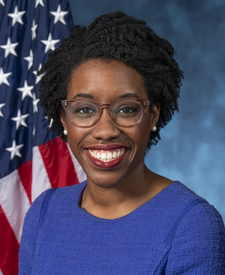
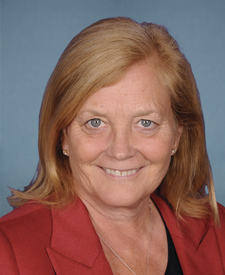
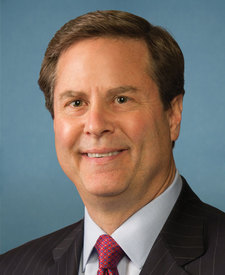
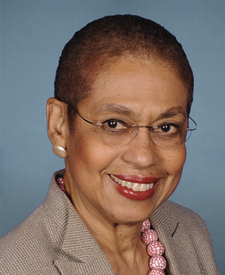
In CommitteeMs. Underwood (for herself, Ms. Bonamici, Ms. Schakowsky, Mr. Norcross, …
Referred to the Committee on Education and Workforce, and in …
Introduced in House
Stakeholder Effects
cui bono?How this legislation distributes effects. Mention counts reflect frequency, not effect magnitude.
Low-income women, Survivors of domestic violence
Defined-contribution plan administrators, Financial product providers
Spouses of defined-contribution plan participants
Bill Structure & Actor Mappings
Who is "The Secretary" in each section?
We use a combination of our own taxonomy and classification in addition to large language models to assess meaning and potential beneficiaries. High confidence means strong textual evidence. Always verify with the original bill text.
Learn more about our methodology