Disclose GIFT Act
Summary
What This Bill Does
The Disclose GIFT Act adds faculty-and-staff foreign gift and contract disclosure rules to the Higher Education Act. Covered institutions are institutions eligible for title IV programs that either received more than $50 million in federal R&D support in any of the previous five years or receive title VI funds. Within 90 days, they must require covered individuals to disclose annual foreign gifts above the federal minimal-value threshold, foreign-source contracts of $5,000 or more, contracts of undetermined value, and any contract with a foreign country or entity of concern even at $0. Institutions must publish searchable, downloadable databases without personal identifiers, retain records, manage espionage risks, keep names for investigations and FOIA responses, designate one to three compliance officers, and certify compliance. Enforcement runs through Education Department General Counsel investigations, Attorney General civil actions to compel compliance, recovery of federal enforcement costs, first-time fines of the greater of $250,000 or the compelled report amount, later fines of the greater of $500,000 or twice the report amount, a Department single point of contact, public lists of foreign countries and entities of concern, title IV ineligibility after three compelled-compliance civil actions, and a GAO coordination study.
Who Benefits and How
Students and taxpayers benefit because large research universities must make foreign gift and contract information searchable without exposing faculty personal identifiers. University research-security offices benefit from explicit institutional policies, compliance-officer roles, and Department technical assistance. Congressional education and national-security committees benefit from 90-day investigation status updates and a GAO coordination study. The Education Department benefits from clearer enforcement tools and a single point of contact for compliance.
Who Bears the Burden and How
Federally funded universities must build disclosure policies, public databases, compliance offices, certification systems, and espionage-risk plans. Faculty and staff researchers must report covered foreign gifts and contracts to their institutions each year. Foreign sources and countries of concern face public disclosure of contracts, attributable countries, dates, values, and full contract text for concern-country agreements. Noncompliant institutions face civil actions, enforcement-cost recovery, escalating fines, and possible title IV ineligibility.
Key Provisions
- Requires covered institutions to collect annual faculty and staff disclosures of foreign gifts and contracts.
- Requires searchable public databases that omit personally identifiable information but retain disclosure details for at least five years or contract termination.
- Creates Education Department investigations, Attorney General civil actions, enforcement-cost recovery, and escalating fines.
- Requires one to three institutional compliance officers and compliance certification.
- Bars repeat noncompliant institutions from title IV programs for at least two institutional fiscal years.
Evidence Chain:
This summary is generated from the full bill text using AI analysis. Expand "Detailed Analysis" below for identified beneficiaries/burden bearers with clause-level evidence links.
At a Glance
What This Bill Does
Requires federally funded higher education institutions to collect, publish, and enforce faculty and staff disclosures of foreign gifts and contracts, with searchable databases, compliance officers, Education Department investigations, DOJ civil actions, escalating fines, and title IV consequences.
Key Policy Areas
Higher Education, Research Security, Foreign Influence, Enforcement
Primary Purpose
Requires federally funded higher education institutions to collect, publish, and enforce faculty and staff disclosures of foreign gifts and contracts, with searchable databases, compliance officers, Education Department investigations, DOJ civil actions, escalating fines, and title IV consequences.
Policy Domains
Resolution provisions
Identified Gains
- Students and taxpayers
- University research-security offices
- Congressional education committees
- Education Department
Identified Costs
- Federally funded universities
- Faculty researchers
- Foreign sources
- Noncompliant institutions
Sponsors

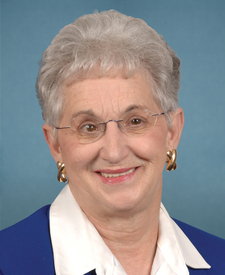
John James
R-MI | Primary Sponsor
Legislative Progress
In CommitteeMr. James (for himself and Ms. Foxx) introduced the following …
Referred to the House Committee on Education and Workforce.
Introduced in House
Stakeholder Effects
cui bono?How this legislation distributes effects. Mention counts reflect frequency, not effect magnitude.
Faculty researchers, Federally funded universities, Noncompliant institutions
Bill Structure & Actor Mappings
Who is "The Secretary" in each section?
We use a combination of our own taxonomy and classification in addition to large language models to assess meaning and potential beneficiaries. High confidence means strong textual evidence. Always verify with the original bill text.
Learn more about our methodology