To amend and reauthorize the Staff Sergeant Parker Gordon Fox Suicide Prevention Grant Program of the Department of Veterans Affairs.
Summary
What This Bill Does
The No Wrong Door for Veterans Act updates several VA authorities. Section 2 reauthorizes the Staff Sergeant Parker Gordon Fox Suicide Prevention Grant Program by replacing the original sunset with September 30, 2026 and adding $52.5 million for fiscal year 2026 after the existing $174 million authorization for fiscal years 2021 through 2025. It requires grant recipients providing or coordinating suicide-prevention services to notify eligible veterans that they may qualify for emergent suicide care under title 38 section 1720J and to notify the VA Secretary if the veteran elects that care. If VA does not provide referred services within 72 hours, the veteran is treated as eligible for emergent suicide care. The bill expands eligible entities to include health care providers that have continuously provided mental health care or support services in the United States for two years before applying, adjusts definitions, and requires the Columbia Protocol, also known as the Columbia-Suicide Severity Rating Scale, for risk assessment in grants made after enactment. Section 3 adds adaptive prostheses and terminal devices for sports and recreational activities to VA medical services for eligible veterans. Section 4 extends certain pension-payment limits from November 30, 2031, to January 30, 2033.
Who Benefits and How
Veterans at risk of suicide, veterans receiving grant-supported suicide-prevention services, veterans needing emergent suicide care, VA medical center suicide-prevention teams, nonprofit mental-health organizations, health care providers, veterans service organizations, veterans with limb loss, adaptive sports participants, prosthetics manufacturers, adaptive sports equipment providers, and community care coordinators benefit from continued grant funding, clearer emergent-care notification, a 72-hour safety net, expanded provider eligibility, standardized Columbia Protocol screening, and explicit coverage of adaptive sports prostheses.
Who Bears the Burden and How
The Department of Veterans Affairs, VA suicide-prevention program staff, VA medical centers, grant recipients, nonprofit mental-health organizations, health care providers, VA community care coordinators, VA prosthetics staff, VA pension administrators, federal budget officials, and grantee compliance staff must administer $52.5 million in FY2026 grant authority, send required notices, track 72-hour referrals, use the Columbia Protocol, process provider eligibility, furnish adaptive sports prostheses, and implement the pension-payment date extension.
Key Provisions
- Extends the Staff Sergeant Parker Gordon Fox Suicide Prevention Grant Program through September 30, 2026.
- Authorizes $52.5 million for fiscal year 2026 in addition to the prior $174 million authorization.
- Requires grantees to notify eligible veterans and VA about emergent suicide care and creates a 72-hour fallback if VA does not provide referred services.
- Expands eligible grant entities to include qualifying health care providers and requires Columbia Protocol risk screening for new grants.
- Adds adaptive prostheses and terminal devices for sports and recreation to VA medical services.
- Extends certain pension-payment limits to January 30, 2033.
Evidence Chain:
This summary is generated from the full bill text using AI analysis. Expand "Detailed Analysis" below for identified beneficiaries/burden bearers with clause-level evidence links.
At a Glance
What This Bill Does
Reauthorizes and improves the Staff Sergeant Parker Gordon Fox Suicide Prevention Grant Program through September 30, 2026 with $52.5 million for fiscal year 2026, requires grantees to notify eligible veterans and VA about emergent suicide care, creates a 72-hour fallback to emergent care if VA does not provide referred services, expands eligible entities to health care providers, requires Columbia Protocol risk screening for new grants, adds adaptive sports prostheses to VA medical services, and extends certain pension-payment limits to January 30, 2033.
Key Policy Areas
Veterans, Mental Health, Health Care
Primary Purpose
Reauthorizes and improves the Staff Sergeant Parker Gordon Fox Suicide Prevention Grant Program through September 30, 2026 with $52.5 million for fiscal year 2026, requires grantees to notify eligible veterans and VA about emergent suicide care, creates a 72-hour fallback to emergent care if VA does not provide referred services, expands eligible entities to health care providers, requires Columbia Protocol risk screening for new grants, adds adaptive sports prostheses to VA medical services, and extends certain pension-payment limits to January 30, 2033.
Policy Domains
Substantive provisions
Identified Gains
- Veterans at risk of suicide
- Veterans receiving grant-supported suicide-prevention services
- Veterans needing emergent suicide care
- VA medical center suicide-prevention teams
- Nonprofit mental-health organizations
- Health care providers
- Veterans service organizations
- Veterans with limb loss
- Prosthetics manufacturers
Identified Costs
- Department of Veterans Affairs
- VA suicide-prevention program staff
- VA medical centers
- Grant recipients
- Nonprofit mental-health organizations
- Health care providers
- VA community care coordinators
- VA prosthetics staff
- Federal budget officials
Sponsors
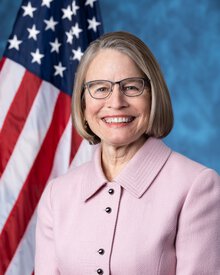
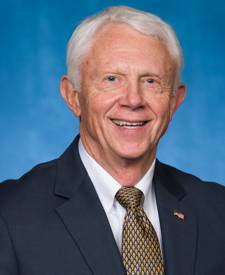
Legislative Progress
Passed HouseAdditional sponsor: Mr. Bergman
Reported with an amendment, committed to the Committee of the …
Passed House (inferred from eh version)
Mrs. Miller-Meeks introduced the following bill; which was referred to …
Stakeholder Effects
cui bono?How this legislation distributes effects. Mention counts reflect frequency, not effect magnitude.
Adaptive sports participants, Taxpayers, Veterans at risk of suicide
Positive-direction: Adaptive sports participants, Veterans at risk of suicide, Veterans needing emergent suicide care, Veterans with limb loss
Negative-direction: Taxpayers
Grant recipients, Health care providers, Nonprofit mental-health organizations
Department of Veterans Affairs, VA pension administrators, VA suicide-prevention program staff
Bill Structure & Actor Mappings
Who is "The Secretary" in each section?
- "secretary"
- → Secretary of Veterans Affairs
We use a combination of our own taxonomy and classification in addition to large language models to assess meaning and potential beneficiaries. High confidence means strong textual evidence. Always verify with the original bill text.
Learn more about our methodology