JUDGES Act of 2025
Summary
What This Bill Does
The JUDGES Act responds to district-court caseload growth by adding new Article III district judgeships in phased waves. Congress finds that no new district court judgeship has been created since 2003, comprehensive judgeship legislation has not passed since 1990, filings grew 30 percent by the end of fiscal year 2022, pending cases reached 686,797 as of March 31, 2023, and the Judicial Conference requested 66 new district judgeships. The bill creates additional judgeships across districts including California, Delaware, Florida, Indiana, Iowa, New Jersey, New York, Texas, Arizona, Georgia, Idaho, Colorado, Nebraska, and Oklahoma, with effective dates from January 21, 2029, through January 21, 2039. It authorizes annual funding rising from about $12.97 million in fiscal years 2029 and 2030 to about $61.12 million in fiscal year 2039 and later, indexed to CPI. GAO must report on court workload methodologies, non-case work, senior-judge policies, and federal detention-space needs. The Administrative Office of the U.S. Courts must make Judicial Conference Article III judgeship recommendation reports publicly available at least biennially with methodology, surveys, appendixes, and court-specific information.
Who Benefits and How
Federal district courts with high caseloads benefit from phased new judgeships that can reduce pending-case pressure. Litigants benefit if additional judges reduce delays in civil and criminal cases. Judicial Conference planners benefit because their Article III judgeship recommendations must be published with supporting appendixes and surveys. Congressional judiciary committees benefit from GAO workload and detention-space reports before later judgeship debates.
Who Bears the Burden and How
The President and Senate must nominate, vet, and confirm additional district judges across multiple administrations. The Administrative Office of the U.S. Courts must publish biennial judgeship recommendation reports and support new judgeships. GAO must evaluate workload measures, senior-judge policies, and detention-space needs. Federal taxpayers fund the phased judgeships and related annual appropriations indexed to inflation. Districts receiving temporary judgeships may lose the first vacancy after the five-year period specified in the bill.
Key Provisions
- Creates phased additional district judgeships effective from January 21, 2029, through January 21, 2039.
- Authorizes annual appropriations that rise by phase and are indexed to CPI.
- Requires GAO reports on judicial workload measures, non-case duties, senior-judge policy, and detention-space needs.
- Requires public biennial Judicial Conference Article III judgeship recommendation reports with methodology and court-specific support.
Evidence Chain:
This summary is generated from the full bill text using AI analysis. Expand "Detailed Analysis" below for identified beneficiaries/burden bearers with clause-level evidence links.
At a Glance
What This Bill Does
Creates phased new federal district judgeships from January 21, 2029, through January 21, 2039, authorizes escalating annual appropriations indexed to CPI, requires GAO reports on workload methods, non-case work, senior-judge policy, and detention-space needs, and requires public biennial Judicial Conference judgeship recommendation reports.
Key Policy Areas
Federal Courts, Judgeships, Congressional Oversight
Primary Purpose
Creates phased new federal district judgeships from January 21, 2029, through January 21, 2039, authorizes escalating annual appropriations indexed to CPI, requires GAO reports on workload methods, non-case work, senior-judge policy, and detention-space needs, and requires public biennial Judicial Conference judgeship recommendation reports.
Policy Domains
Resolution provisions
Identified Gains
- Federal district courts
- Litigants
- Judicial Conference planners
- Congressional judiciary committees
Identified Costs
- President of the United States
- Senate
- Administrative Office of the U.S. Courts
- GAO
- Federal taxpayers
Sponsors
Legislative Progress
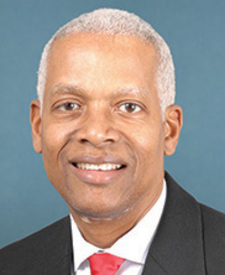
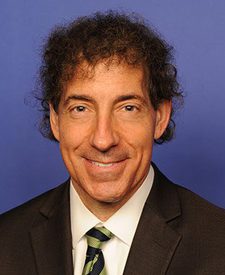
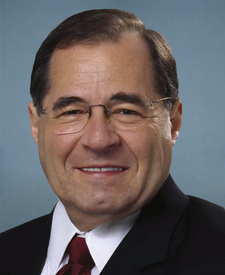
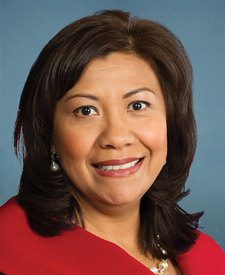
In CommitteeMr. Johnson of Georgia (for himself, Mr. Raskin, and Mr. …
Referred to the House Committee on the Judiciary.
Introduced in House
Stakeholder Effects
cui bono?How this legislation distributes effects. Mention counts reflect frequency, not effect magnitude.
Administrative Office of the U.S. Courts, Federal district courts, Judicial Conference planners
Positive-direction: Federal district courts
Negative-direction: Administrative Office of the U.S. Courts
Bill Structure & Actor Mappings
Who is "The Secretary" in each section?
We use a combination of our own taxonomy and classification in addition to large language models to assess meaning and potential beneficiaries. High confidence means strong textual evidence. Always verify with the original bill text.
Learn more about our methodology