Sanctuary City Accountability Act
Summary
What This Bill Does
The Sanctuary City Accountability Act creates civil liability for sanctuary jurisdictions. A U.S. national may sue a state or local government in federal district court when an alien who was located in that sanctuary jurisdiction commits a crime against the plaintiff or an immediate family member, either in that jurisdiction or in another jurisdiction after relocating. Remedies can include injunctive relief and compensatory damages. The bill defines sanctuary jurisdiction as a state or local government whose laws or practices obstruct immigration enforcement and shield criminals from ICE, including refusal to comply with detainers, unreasonable detainer conditions, denial of ICE access to interview incarcerated aliens, or interference with communication and information exchange with federal immigration officers. A local government is not liable for enforcing a state-imposed policy.
Who Benefits and How
U.S. crime victims benefit because they receive a federal damages and injunction route against sanctuary jurisdictions tied to the alleged offender's location. Immediate family members of victims benefit because the right of action reaches crimes against close relatives. ICE officials benefit indirectly because sanctuary jurisdictions face litigation pressure to comply with detainers and information requests. Immigration enforcement advocates benefit from a private enforcement mechanism that does not depend solely on federal agency action.
Who Bears the Burden and How
Sanctuary jurisdictions face damages suits and injunction requests if their policies are linked to an offender's location. State governments imposing sanctuary policies may shift liability dynamics because local governments are protected when following state law. Federal district courts must hear and manage the new civil actions. Immigrant defendants and affected communities may face increased pressure on localities to cooperate with ICE.
Key Provisions
- Creates a private federal right of action against sanctuary jurisdictions.
- Allows U.S. nationals to seek injunctive relief or compensatory damages after specified crimes by aliens located in sanctuary jurisdictions.
- Defines sanctuary jurisdiction through ICE detainer refusal, access denial, and information-sharing obstruction.
- Protects local governments from liability for enforcing state-imposed sanctuary policies.
Evidence Chain:
This summary is generated from the full bill text using AI analysis. Expand "Detailed Analysis" below for identified beneficiaries/burden bearers with clause-level evidence links.
At a Glance
What This Bill Does
Creates a federal private right of action allowing U.S. nationals to sue sanctuary jurisdictions for injunctive relief or compensatory damages when an alien located in that sanctuary jurisdiction commits a crime against them or an immediate family member there or after relocating.
Key Policy Areas
Immigration, Civil Litigation, Local Government
Primary Purpose
Creates a federal private right of action allowing U.S. nationals to sue sanctuary jurisdictions for injunctive relief or compensatory damages when an alien located in that sanctuary jurisdiction commits a crime against them or an immediate family member there or after relocating.
Policy Domains
Resolution provisions
Identified Gains
- U.S. crime victims
- Victims' immediate family members
- ICE officials
- Immigration enforcement advocates
Identified Costs
- Sanctuary jurisdictions
- State governments imposing sanctuary policies
- Federal district courts
- Immigrant communities
Sponsors

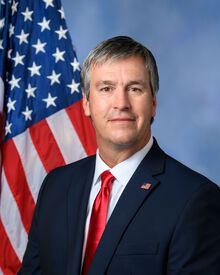



Legislative Progress
In CommitteeMr. Issa (for himself, Mr. Gill of Texas, Mr. Crane, …
Referred to the House Committee on the Judiciary.
Introduced in House
Stakeholder Effects
cui bono?How this legislation distributes effects. Mention counts reflect frequency, not effect magnitude.
U.S. crime victims, Victims' immediate family members
ICE officials, Immigrant communities
Bill Structure & Actor Mappings
Who is "The Secretary" in each section?
We use a combination of our own taxonomy and classification in addition to large language models to assess meaning and potential beneficiaries. High confidence means strong textual evidence. Always verify with the original bill text.
Learn more about our methodology