To amend the Agricultural Foreign Investment Disclosure Act of 1978 to strengthen oversight over foreign investment in the United States agricultural industry, and for other purposes.
Analysis under review: This bill has generated analysis that may be too generic or incomplete. Clause-level evidence remains available below.
Summary
What This Bill Does
The FARMLAND Act significantly tightens restrictions on foreign ownership of U.S. agricultural land, with a particular focus on China, Russia, and state sponsors of terrorism. It strengthens existing disclosure requirements by increasing penalties for non-compliance, creating a new Chief of Operations position at USDA to investigate violations, and expanding CFIUS review authority to cover agricultural land transactions by foreign entities exceeding $5 million or 320 acres.
Who Benefits and How
U.S. farmers and agricultural producers benefit from reduced foreign competition in farmland markets and exclusive access to Farm Service Agency programs. Domestic agricultural businesses gain protection from foreign acquisition. National security agencies gain new oversight tools. USDA and FBI gain new investigative authorities and $35 million in initial funding.
Who Bears the Burden and How
Foreign investors from China, Russia, and designated countries face new disclosure requirements, penalties, CFIUS scrutiny, and exclusion from USDA programs. Real estate agents, brokers, and title companies must conduct due diligence and certify compliance. Foreign landowners face potential divestment. USDA bears significant new administrative burden creating databases and enforcement infrastructure.
Key Provisions
- Penalties for AFIDA disclosure violations increased to 5-25% of land value (up from max 25%)
- CFIUS must review agricultural land purchases over $5M or 320 acres by foreign entities of concern
- Foreign persons prohibited from participating in Farm Service Agency programs
- Secretary of Agriculture must appoint Chief of Operations for Investigative Actions
- Creation of national database of foreign-owned agricultural land
Evidence Chain:
This summary is generated from the full bill text using AI analysis. Expand "Detailed Analysis" below for identified beneficiaries/burden bearers.
At a Glance
What This Bill Does
Strengthens federal oversight of foreign investment in U.S. agricultural land, particularly targeting China and other adversaries, by enhancing AFIDA enforcement, expanding CFIUS review authority, prohibiting foreign persons from Farm Service Agency programs, and creating a database of foreign-owned farmland
Key Policy Areas
Agriculture, National Security, Foreign Investment, Land Use
Primary Purpose
Strengthens federal oversight of foreign investment in U.S. agricultural land, particularly targeting China and other adversaries, by enhancing AFIDA enforcement, expanding CFIUS review authority, prohibiting foreign persons from Farm Service Agency programs, and creating a database of foreign-owned farmland
Policy Domains
Amendments to Agricultural Foreign Investment Disclosure Act
Identified Gains
Contextual inference, no direct clause citation- U.S. farmers and agricultural producers
- Domestic agricultural companies
- USDA enforcement personnel
- National security agencies
Contextual inference, no direct clause citation
Identified Costs
Contextual inference, no direct clause citation- Foreign investors from China and other designated countries
- Real estate professionals in agricultural land transactions
- Foreign landowners
- USDA (administrative burden)
- Title companies and brokers
Contextual inference, no direct clause citation
Sponsors
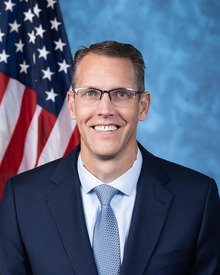




Legislative Progress
IntroducedMr. Feenstra (for himself, Ms. McDonald Rivet, Mr. Taylor, Mr. …
Stakeholder Effects
cui bono?How this legislation distributes effects. Mention counts reflect frequency, not effect magnitude.
Chief of Operations of Investigative Actions, Committee on Foreign Investment in the United States, Congressional oversight committees
Positive-direction: Congressional oversight committees, USDA enforcement and database programs, USDA enforcement personnel
Negative-direction: Chief of Operations of Investigative Actions, Committee on Foreign Investment in the United States, Department of Homeland Security, FBI agricultural crime investigations, Farm Service Agency, Secretary of Agriculture, USDA Farm Service Agency, USDA and DHS (database development)
Chinese government-linked agricultural investors, Chinese investors in U.S. farmland, Chinese, Russian investors in U.S. farmland
Agricultural land brokers, Foreign investors in U.S. agricultural land, Real estate agents specializing in agricultural land
U.S. citizen farmers, U.S. farmers competing for land
Federal contractors building databases/secure facilities
Bill Structure & Actor Mappings
Who is "The Secretary" in each section?
- "cfius"
- → Committee on Foreign Investment in the United States
- "the_secretary"
- → Secretary of Agriculture
- "chief_of_operations"
- → Chief of Operations of Investigative Actions (USDA)
Key Definitions
Terms defined in this bill
As defined in section 9901 of the William M. (Mac) Thornberry National Defense Authorization Act for Fiscal Year 2021 (15 U.S.C. 4651)
Any hostile effort undertaken by, at the direction of, on behalf of, or with the substantial support of the government of a foreign entity of concern
People's Republic of China, Russian Federation, state sponsors of terrorism, and any other country identified by Secretary of Homeland Security or Secretary of Agriculture
We use a combination of our own taxonomy and classification in addition to large language models to assess meaning and potential beneficiaries. High confidence means strong textual evidence. Always verify with the original bill text.
Learn more about our methodology