Responsible Legislating Act
Summary
What This Bill Does
The Responsible Legislating Act is a large multi-title package. Agriculture provisions extend livestock mandatory reporting authorities through 2025. Veterans and workforce provisions require Labor's Veterans' Employment and Training Service, with VA, to provide a searchable apprenticeship website for veterans with occupation, location, cost, contact, credential, VSO endorsement, and veteran-hiring preference information. Federal workforce provisions protect injured law enforcement officers, CBP officers, firefighters, air traffic controllers, nuclear materials couriers, Supreme Court police, Capitol Police, and diplomatic security special agents who move to non-covered civil service positions after duty-related illness or injury by preserving covered-position retirement treatment in specified circumstances. The retirement-security title adds automatic enrollment rules for 401(k) and 403(b) plans, expands small employer pension startup credits and contribution credits, promotes and enhances the saver's credit, updates 403(b) investment options, raises required minimum distribution ages to 73, 74, and 75 over time, indexes IRA catch-up limits, adds higher catch-up limits for ages 62 through 64, revises pooled employer and multiple employer plan rules, treats qualified student loan payments as elective deferrals for matching contributions, creates a military spouse retirement plan eligibility credit, improves correction rules, expands part-time worker coverage, updates ESOP rules, removes annuity and QLAC barriers, limits overpayment recoupment, reduces certain accumulation excise taxes, requires disclosure review and paper statements, creates a retirement savings lost-and-found, expands EPCRS, permits domestic abuse penalty-free withdrawals, updates hardship withdrawals, Roth SIMPLE and SEP IRAs, and optional Roth matching contributions. Other titles authorize Boots to Business entrepreneurship training through September 30, 2028; create a privately funded commission to study a National Museum of Asian Pacific American History and Culture; direct SelectUSA to work with state economic development organizations on semiconductor foreign direct investment and report to Congress; require FEMA to use a uniform process for homeland security grant equipment that does not meet voluntary consensus standards; add House rules protecting whistleblower identities; require a Federal Maritime Commission study of foreign ownership at the 15 largest U.S. container ports; and reduce Federal credit union board meeting frequency for well-rated credit unions while retaining monthly meetings for de novo or weaker-rated institutions.
Who Benefits and How
Retirement savers benefit from automatic enrollment, stronger saver's credit rules, student-loan match treatment, later RMD ages, lost-and-found support, and domestic abuse withdrawal relief. Small employers benefit from expanded pension startup credits, contribution credits, pooled plan changes, and military spouse retirement eligibility credits. Veterans and transitioning servicemembers benefit from apprenticeship information, Boots to Business entrepreneurship training, and programs tied to veteran hiring and credentials. Injured federal public-safety employees benefit from retirement protection when duty-related illness or injury forces transfer out of a covered position. Asian Pacific American history advocates benefit from a commission studying a national museum without obligating federal funds. Semiconductor manufacturers and state economic development agencies benefit from SelectUSA coordination on foreign direct investment. Federal credit unions benefit from less frequent board meeting requirements when they are seasoned and well-rated.
Who Bears the Burden and How
Treasury, Labor, VA, SBA, Commerce, FEMA, the Federal Maritime Commission, and credit union regulators receive new rulemaking, reporting, website, grant, coordination, or administrative duties. Employers sponsoring retirement plans must implement automatic enrollment, paper statements, student-loan matching, correction, hardship, Roth, and disclosure changes when applicable. Federal taxpayers bear revenue loss and administrative cost from retirement tax credits, saver's credit changes, RMD changes, refunds, and agency implementation. House Members and staff face restrictions on public disclosure of whistleblower identities and personally identifiable information. Foreign owners of marine terminals at major U.S. ports face economic-security scrutiny from the mandated study.
Key Provisions
- Extends livestock mandatory reporting through 2025 and requires a veteran apprenticeship website.
- Protects retirement treatment for injured federal public-safety employees transferred out of covered positions.
- Expands automatic enrollment, retirement plan credits, saver incentives, student-loan matching, catch-up contributions, RMD ages, lost-and-found, EPCRS, hardship, Roth, and domestic abuse withdrawal rules.
- Authorizes Boots to Business and creates an Asian Pacific American museum study commission.
- Requires SelectUSA semiconductor investment coordination, FEMA equipment review processes, foreign port ownership study, House whistleblower identity protections, and credit union board meeting updates.
Evidence Chain:
This summary is generated from the full bill text using AI analysis. Expand "Detailed Analysis" below for identified beneficiaries/burden bearers with clause-level evidence links.
At a Glance
What This Bill Does
Combines livestock reporting, veterans apprenticeship information, injured federal public-safety employee retirement, a broad retirement-security tax and ERISA package, Boots to Business authority, an Asian Pacific American museum commission, SelectUSA semiconductor foreign direct investment work, FEMA equipment approval process changes, NASA enhanced-use leasing findings, House whistleblower identity protections, a foreign port ownership study, and Federal credit union board meeting changes.
Key Policy Areas
Retirement Security, Veterans, Small Business, Government Operations, Manufacturing
Primary Purpose
Combines livestock reporting, veterans apprenticeship information, injured federal public-safety employee retirement, a broad retirement-security tax and ERISA package, Boots to Business authority, an Asian Pacific American museum commission, SelectUSA semiconductor foreign direct investment work, FEMA equipment approval process changes, NASA enhanced-use leasing findings, House whistleblower identity protections, a foreign port ownership study, and Federal credit union board meeting changes.
Policy Domains
Resolution provisions
Identified Gains
- Retirement savers
- Small employers
- Veterans
- Injured federal public-safety employees
- Asian Pacific American history advocates
- Semiconductor manufacturers
- Federal credit unions
Identified Costs
- Treasury Department
- Department of Labor
- Small Business Administration
- Employers sponsoring retirement plans
- Federal taxpayers
- House Members
- Foreign marine terminal owners
Legislative Progress
In CommitteeReferred to the Subcommittee on Livestock, Dairy, and Poultry.
Referred to the Subcommittee on Economic Opportunity.
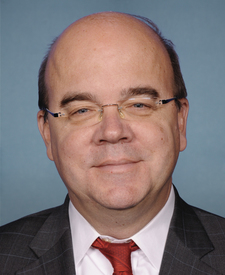
Mr. McGovern introduced the following bill; which was referred to …
Referred to the Committee on Ways and Means, and in …
Introduced in House
Stakeholder Effects
cui bono?How this legislation distributes effects. Mention counts reflect frequency, not effect magnitude.
Employers sponsoring retirement plans, Small employers
Positive-direction: Small employers
Negative-direction: Employers sponsoring retirement plans
Injured federal public-safety employees
Bill Structure & Actor Mappings
Who is "The Secretary" in each section?
We use a combination of our own taxonomy and classification in addition to large language models to assess meaning and potential beneficiaries. High confidence means strong textual evidence. Always verify with the original bill text.
Learn more about our methodology