To amend the Federal Food, Drug, and Cosmetic Act to increase transparency in generic drug applications.
Summary
What This Bill Does
H.R.1843 amends the generic drug application review provisions in section 505(j) of the Federal Food, Drug, and Cosmetic Act. For drugs that must contain the same inactive ingredients in the same concentrations as the listed drug, or where FDA allows an in vitro bioequivalence approach tied to same inactive ingredients, FDA must tell a current or prospective abbreviated application sponsor whether the proposed drug is qualitatively and quantitatively the same as the listed drug when asked through controlled correspondence or a similar process. FDA may also provide the information during review on its own initiative. If the drug is not the same, FDA must identify the ingredient or ingredients causing the difference and disclose the amount of any quantitative deviation, notwithstanding trade secret limits because the disclosure is authorized by law. If FDA says the drug is the same, it generally may not change or rescind that determination after ANDA submission unless the listed-drug formulation changes and the old version was withdrawn for safety or effectiveness, or FDA identifies an error and provides written notice. HHS must publish draft guidance within one year, provide at least 60 days for comment, and publish final guidance within one year after the comment period closes, including guidance on pH adjusters.
Who Benefits and How
Generic drug applicants benefit from earlier FDA clarity on inactive-ingredient sameness before or during abbreviated application review. Prospective ANDA sponsors benefit because FDA must disclose which inactive ingredients differ and by how much when sameness is lacking. Patients and payers benefit if clearer FDA feedback reduces avoidable delays in lower-cost generic drug competition. Pharmaceutical formulation scientists benefit from guidance on qualitative and quantitative sameness, including pH adjusters.
Who Bears the Burden and How
The Food and Drug Administration must answer controlled-correspondence requests, disclose specified differences, and manage reliance on sameness determinations. The Department of Health and Human Services must issue draft and final guidance on the determination process. Brand drug manufacturers may face faster generic development when inactive-ingredient barriers become clearer. FDA review staff must document any later error-based change to a prior sameness determination.
Key Provisions
- Requires FDA to tell ANDA sponsors whether covered drugs are qualitatively and quantitatively the same as listed drugs.
- Requires FDA to identify differing inactive ingredients and quantitative deviations when sameness is lacking.
- Limits FDA's ability to rescind sameness determinations after abbreviated application submission.
- Requires HHS draft and final guidance on the sameness process, including pH adjusters.
Evidence Chain:
This summary is generated from the full bill text using AI analysis. Expand "Detailed Analysis" below for identified beneficiaries/burden bearers with clause-level evidence links.
At a Glance
What This Bill Does
Requires FDA, on request or during abbreviated new drug application review, to tell generic applicants whether certain drugs are qualitatively and quantitatively the same as the listed drug, identify inactive-ingredient differences and quantitative deviations when they are not, limit later rescission of sameness determinations, and issue guidance on the determination process.
Key Policy Areas
Food and Drug Administration, Generic Drugs, Pharmaceuticals
Primary Purpose
Requires FDA, on request or during abbreviated new drug application review, to tell generic applicants whether certain drugs are qualitatively and quantitatively the same as the listed drug, identify inactive-ingredient differences and quantitative deviations when they are not, limit later rescission of sameness determinations, and issue guidance on the determination process.
Policy Domains
Resolution provisions
Identified Gains
- Generic drug applicants
- Prospective ANDA sponsors
- Patients and payers
- Pharmaceutical formulation scientists
Identified Costs
- Food and Drug Administration
- Department of Health and Human Services
- Brand drug manufacturers
- FDA review staff
Sponsors
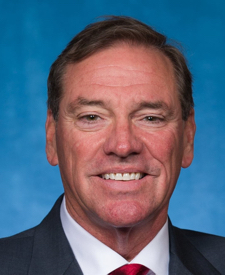
Neal P. Dunn
R-FL | Primary Sponsor

Legislative Progress
In CommitteeMr. Dunn of Florida (for himself and Mr. Mullin) introduced …
Referred to the House Committee on Energy and Commerce.
Introduced in House
Stakeholder Effects
cui bono?How this legislation distributes effects. Mention counts reflect frequency, not effect magnitude.
Brand drug manufacturers, Generic drug applicants
Positive-direction: Generic drug applicants
Negative-direction: Brand drug manufacturers
Department of Health and Human Services, Food and Drug Administration
Bill Structure & Actor Mappings
Who is "The Secretary" in each section?
We use a combination of our own taxonomy and classification in addition to large language models to assess meaning and potential beneficiaries. High confidence means strong textual evidence. Always verify with the original bill text.
Learn more about our methodology