Closing the De Minimis Loophole Act
Summary
What This Bill Does
The Closing the De Minimis Loophole Act ends the Tariff Act de minimis treatment that lets many low-value imports enter with simplified treatment. It strikes the section 321(a)(2)(C) pathway and applies the repeal immediately to articles originating in China, except goods already loaded at the port or in final-mode transit during the three days before enactment. For articles from other countries, the repeal applies to entries or warehouse withdrawals for consumption 120 days after enactment. During that 120-day transition, Treasury must run rulemaking to implement termination of the privilege, strengthen entry procedures, require sufficient tariff data including HTS heading or 10-digit subheading information for chapters 50 through 63 where applicable, and ensure penalties and liabilities deter unlawful or fraudulent activity and require reasonable care in documentation. For international postal shipments that previously used de minimis, Treasury must consult the Postmaster General and set fees and procedures to align postal treatment with other shipments where feasible.
Who Benefits and How
Domestic manufacturers benefit because low-value imports lose a duty and procedure advantage that can undercut U.S.-made goods. Customs enforcement officials benefit from stronger data, entry procedures, and penalty authority for formerly de minimis shipments. Textile and apparel producers benefit because chapters 50 through 63 receive specific HTS data requirements. Federal taxpayers benefit if duties, fees, and taxes are collected more accurately on low-value imports.
Who Bears the Burden and How
E-commerce importers must shift low-value shipments into more formal entry, documentation, duty, fee, and tax processes. Chinese exporters lose de minimis treatment immediately after enactment, apart from the narrow in-transit exception. The Treasury Department and Customs systems must conduct rulemaking and update entry procedures within 120 days. The U.S. Postal Service must coordinate with Treasury on postal shipment fees and procedures. Consumers may face higher prices or slower delivery for low-value imported goods.
Key Provisions
- Repeals section 321(a)(2)(C) de minimis treatment under the Tariff Act.
- Applies the repeal immediately to articles originating in China with a three-day in-transit exception.
- Applies the repeal to other countries after a 120-day transition.
- Requires Treasury rulemaking on entry procedures, HTS data, duty collection, penalties, liabilities, and postal shipments.
Evidence Chain:
This summary is generated from the full bill text using AI analysis. Expand "Detailed Analysis" below for identified beneficiaries/burden bearers with clause-level evidence links.
At a Glance
What This Bill Does
Repeals de minimis entry treatment under section 321(a)(2)(C) of the Tariff Act, applies immediately to articles originating in China with a three-day in-transit exception, applies to other countries after 120 days, and requires Treasury rulemaking on entry procedures, HTS data, duties, fees, taxes, penalties, liabilities, and postal shipments.
Key Policy Areas
Trade, Customs, China
Primary Purpose
Repeals de minimis entry treatment under section 321(a)(2)(C) of the Tariff Act, applies immediately to articles originating in China with a three-day in-transit exception, applies to other countries after 120 days, and requires Treasury rulemaking on entry procedures, HTS data, duties, fees, taxes, penalties, liabilities, and postal shipments.
Policy Domains
Resolution provisions
Identified Gains
- Domestic manufacturers
- Customs enforcement officials
- Textile and apparel producers
- Federal taxpayers
Identified Costs
- E-commerce importers
- Chinese exporters
- Treasury Department
- U.S. Postal Service
- Consumers
Sponsors

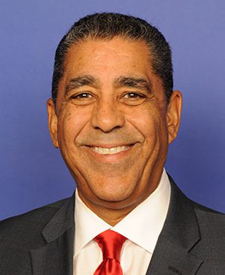

Legislative Progress
In CommitteeMs. Sánchez introduced the following bill; which was referred to …
Referred to the House Committee on Ways and Means.
Introduced in House
Stakeholder Effects
cui bono?How this legislation distributes effects. Mention counts reflect frequency, not effect magnitude.
Customs enforcement officials, Treasury Department
Bill Structure & Actor Mappings
Who is "The Secretary" in each section?
We use a combination of our own taxonomy and classification in addition to large language models to assess meaning and potential beneficiaries. High confidence means strong textual evidence. Always verify with the original bill text.
Learn more about our methodology