To amend title 28, United States Code, to provide an Inspector General for the judicial branch, and for other purposes.
Summary
What This Bill Does
The bill amends Title 28 of the U.S. Code to add a new chapter creating the Office of Inspector General for the Judicial Branch, including provisions for appointment, duties, powers, reporting requirements, and whistleblower, establishes the Office of Inspector General for the Judicial Branch as a new oversight entity within the federal judiciary, and defines the duties of the Office of Inspector General including investigating misconduct in both lower federal courts and the Supreme Court, conducting audits, preventing fraud and abuse, and recommending legal changes. It relies on compliance mandates, definition changes, reporting requirements, and liability protections. The main policy areas are Finance.
Who Benefits and How
General Public would be affected, Judicial Branch Employees could face reduced risk, and Congress would be affected.
Who Bears the Burden and How
Federal Judges would take on compliance duties, Supreme Court Justices would take on compliance duties, and Federal Judges (non-Supreme Court) would take on compliance duties.
Key Provisions
- Amends Title 28 of the U.S. Code to add a new chapter creating the Office of Inspector General for the Judicial Branch, including provisions for appointment, duties, powers, reporting requirements, and whistleblower...
- Establishes the Office of Inspector General for the Judicial Branch as a new oversight entity within the federal judiciary.
- Defines the duties of the Office of Inspector General including investigating misconduct in both lower federal courts and the Supreme Court, conducting audits, preventing fraud and abuse, and recommending legal changes.
- Requires grants the Inspector General broad investigative powers including subpoena authority, ability to obtain information from government agencies, power to administer oaths, hire staff, and enter into contracts...
- Requires the Inspector General to make annual reports to the Chief Justice and Congress, provide prompt reports on matters requiring action, and report potential criminal violations to the Attorney General.
Evidence Chain:
This summary is generated from the full bill text using AI analysis. Expand "Detailed Analysis" below for identified beneficiaries/burden bearers with clause-level evidence links.
At a Glance
What This Bill Does
The bill amends Title 28 of the U.S. Code to add a new chapter creating the Office of Inspector General for the Judicial Branch, including provisions for appointment, duties, powers, reporting requirements, and whistleblower, establishes the Office of Inspector General for the Judicial Branch as a new oversight entity within the federal judiciary, and defines the duties of the Office of Inspector General including investigating misconduct in both lower federal courts and the Supreme Court, conducting audits, preventing fraud and abuse, and recommending legal changes.
Key Policy Areas
Finance
Primary Purpose
The bill amends Title 28 of the U.S. Code to add a new chapter creating the Office of Inspector General for the Judicial Branch, including provisions for appointment, duties, powers, reporting requirements, and whistleblower, establishes the Office of Inspector General for the Judicial Branch as a new oversight entity within the federal judiciary, and defines the duties of the Office of Inspector General including investigating misconduct in both lower federal courts and the Supreme Court, conducting audits, preventing fraud and abuse, and recommending legal changes.
Policy Domains
Main Body - Hatch Act Enforcement Transparency
Identified Gains
- General Public
- Judicial Branch Employees
- Congress
- Audit and Investigation Services Providers
Identified Costs
- Federal Judges
- Supreme Court Justices
- Federal Judges (non-Supreme Court)
- Judicial Conference of the United States
- Federal Judiciary
Sponsors



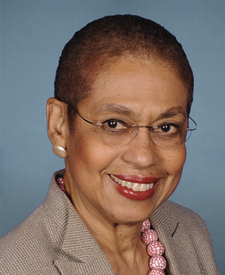
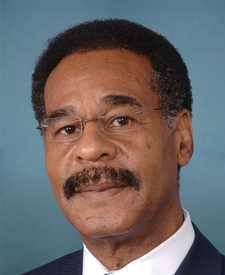
Legislative Progress
IntroducedMs. Stansbury (for herself, Ms. Tokuda, Ms. Schakowsky, Mr. Cleaver, …
Stakeholder Effects
cui bono?How this legislation distributes effects. Mention counts reflect frequency, not effect magnitude.
Administrative Office of the United States Courts, Chief Justice of the United States, Federal Judges
Positive-direction: Judicial Branch Employees
Negative-direction: Administrative Office of the United States Courts, Federal Judges, Federal Judges (non-Supreme Court), Federal Judiciary, Judicial Conference of the United States, Supreme Court Justices
Audit and Investigation Services Providers
Bill Structure & Actor Mappings
Who is "The Secretary" in each section?
- "the_board"
- → Merit Systems Protection Board
- "the_director"
- → Director of the Office of Personnel Management
- "the_special_counsel"
- → Special Counsel (Office of Special Counsel)
Key Definitions
Terms defined in this bill
An individual who is an employee as defined in section 7322 and is not a noncareer employee
An allegation concerning political activity prohibited under subchapter III of chapter 73 (Hatch Act violations)
An employee serving in the executive branch who was appointed by the President (including noncareer appointees, positions comparable to SES without merit-based procedures, and certain other political positions), excluding uniformed service members and career Foreign Service
We use a combination of our own taxonomy and classification in addition to large language models to assess meaning and potential beneficiaries. High confidence means strong textual evidence. Always verify with the original bill text.
Learn more about our methodology