Safe Schools Improvement Act
Summary
What This Bill Does
The Safe Schools Improvement Act adds a Safe Schools Improvement part to title IV of the Elementary and Secondary Education Act. It defines bullying as conduct that places a student in fear of harm and adversely affects participation in school programs. States receiving title IV grants must require local educational agencies to prohibit bullying and harassment that limits school participation or creates a hostile or abusive educational environment. Required policies must enumerate actual or perceived race, color, national origin, sex, sexual orientation, gender identity, sex characteristics including intersex traits, disability, religion, association with someone in those categories, and other state or local characteristics. LEAs must give annual notice to students, parents, and educational professionals; create grievance procedures with responsible officials and timelines; collect accurate school-level incidence and frequency data; and publicly report data without identifying victims or perpetrators. States must submit biennial reports, the Education Secretary must conduct independent biennial evaluations, the Commissioner for Education Statistics must collect data, and the Secretary must report to the President and Congress every two years starting January 1, 2026. The bill preserves other federal and state civil-rights remedies and free-speech protections.
Who Benefits and How
Students experiencing bullying benefit from required policies, grievance procedures, and data reporting in public schools. LGBTQ students, students with disabilities, religious minority students, and students of color benefit because the policy categories must be enumerated. Parents benefit from annual notices and complaint timelines that make school anti-bullying rules easier to use. Civil rights enforcement organizations benefit from public school-level data and preservation of other discrimination remedies.
Who Bears the Burden and How
State educational agencies must require local policy adoption and submit biennial reports to the Education Secretary. Local educational agencies must write policies, operate grievance systems, provide notices, and publish school-level data. The Department of Education must evaluate anti-bullying programs and report to the President and Congress every two years. School administrators must protect privacy while reporting incident frequency and responding to complaints.
Key Provisions
- Requires states receiving title IV grants to mandate local anti-bullying and harassment policies.
- Requires annual notices, grievance procedures, school-level data collection, and public reporting.
- Directs state biennial reports, federal evaluations, Education Statistics data collection, and congressional reporting.
- Protects existing civil-rights remedies, state laws, and free-speech standards.
Evidence Chain:
This summary is generated from the full bill text using AI analysis. Expand "Detailed Analysis" below for identified beneficiaries/burden bearers with clause-level evidence links.
At a Glance
What This Bill Does
Requires states receiving Elementary and Secondary Education Act grants to make local educational agencies adopt enumerated anti-bullying policies, annual notices, grievance procedures, school-level public incident reporting, state biennial reports, and federal biennial evaluations while preserving other civil rights and free-speech laws.
Key Policy Areas
Education, Civil Rights, School Safety
Primary Purpose
Requires states receiving Elementary and Secondary Education Act grants to make local educational agencies adopt enumerated anti-bullying policies, annual notices, grievance procedures, school-level public incident reporting, state biennial reports, and federal biennial evaluations while preserving other civil rights and free-speech laws.
Policy Domains
Resolution provisions
Identified Gains
- Students experiencing bullying
- LGBTQ students
- Parents
- Civil rights enforcement organizations
Identified Costs
- State educational agencies
- Local educational agencies
- Department of Education
- School administrators
Sponsors
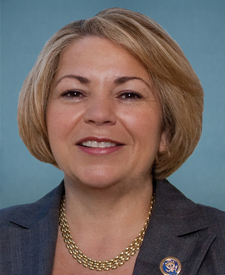
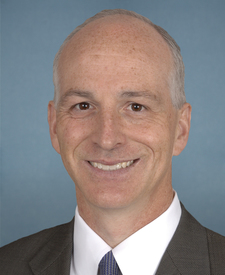

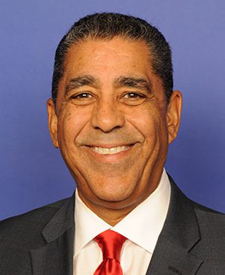
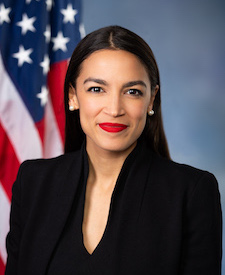
Legislative Progress
In CommitteeMs. Sánchez (for herself, Mr. Takano, Mr. Beyer, Mr. Mrvan, …
Referred to the House Committee on Education and Workforce.
Introduced in House
Stakeholder Effects
cui bono?How this legislation distributes effects. Mention counts reflect frequency, not effect magnitude.
LGBTQ students, Local educational agencies, Parents
Positive-direction: LGBTQ students, Parents, Students experiencing bullying
Negative-direction: Local educational agencies
Bill Structure & Actor Mappings
Who is "The Secretary" in each section?
We use a combination of our own taxonomy and classification in addition to large language models to assess meaning and potential beneficiaries. High confidence means strong textual evidence. Always verify with the original bill text.
Learn more about our methodology