Financial Reporting Threshold Modernization Act
Summary
What This Bill Does
The Financial Reporting Threshold Modernization Act updates several Bank Secrecy Act dollar thresholds that have not kept pace with inflation. Treasury must revise Currency Transaction Report and international transportation-of-currency rules under title 31 so $10,000 thresholds become $30,000, and must update those thresholds every five years using the Consumer Price Index for All Urban Consumers, rounded to the nearest $500. Section 5331 cash-receipt reporting thresholds also move from $10,000 to $30,000 and receive five-year inflation updates. Federal agencies that issue suspicious-activity reporting rules must raise $5,000 thresholds to $10,000 and $2,000 thresholds to $3,000 and update them every five years. Treasury must revise 31 CFR 1010.100(ff) so $1,000 money-services-business threshold references become $3,000 with inflation updates. Within 360 days, Treasury must consult private-sector stakeholders and law enforcement, review BSA forms and reporting and recordkeeping requirements under sections 5313, 5315, and 5318, analyze aggregation, prioritization, and automation, update forms as needed, complete Anti-Money Laundering Act review duties, and report recommendations to Senate Banking and House Financial Services. The bill also extends a FinCEN director testimony interval on beneficial ownership information from five years to ten years.
Who Benefits and How
Banks, credit unions, money services businesses, casinos, dealers, and other BSA-regulated firms benefit from higher reporting thresholds that may reduce low-value filings and compliance workload. Small businesses receiving cash payments benefit from the $30,000 section 5331 threshold if fewer ordinary transactions trigger IRS Form 8300-style reporting. Consumers and businesses conducting lawful cash transactions benefit from reduced reporting at lower transaction amounts. Treasury and FinCEN benefit from a required review focused on making forms more effective and efficient for identifying illicit finance. Law enforcement benefits if revised forms and automation improve prioritization of genuinely suspicious activity.
Who Bears the Burden and How
The Treasury Secretary must revise regulations within 180 days, update thresholds every five years, consult stakeholders, review forms, complete AML Act reports, and submit recommendations to Congress. Federal departments and agencies with suspicious-activity reporting rules must update their thresholds and inflation adjustments. FinCEN must adapt beneficial-ownership testimony timing and support Treasury's review. Law enforcement agencies may receive fewer reports at lower dollar levels and must rely on updated forms and priorities. Anti-money-laundering compliance teams must update policies, systems, training, and monitoring thresholds.
Key Provisions
- Raises title 31 $10,000 currency reporting thresholds to $30,000 within 180 days.
- Requires five-year CPI-U inflation updates rounded to the nearest $500.
- Raises suspicious-activity reporting thresholds from $5,000 to $10,000 and from $2,000 to $3,000.
- Raises specified money-services-business threshold references from $1,000 to $3,000.
- Requires Treasury to review BSA forms, recordkeeping, aggregation, prioritization, and automation within 360 days.
- Requires consultation with private-sector stakeholders and law enforcement.
- Directs Treasury to report recommendations to Senate Banking and House Financial Services.
- Extends FinCEN beneficial-ownership testimony timing from five years to ten years.
Evidence Chain:
This summary is generated from the full bill text using AI analysis. Expand "Detailed Analysis" below for identified beneficiaries/burden bearers with clause-level evidence links.
At a Glance
What This Bill Does
Raises Bank Secrecy Act reporting thresholds from $10,000 to $30,000, suspicious-activity thresholds from $5,000 to $10,000 and $2,000 to $3,000, money-services-business threshold references from $1,000 to $3,000, requires inflation updates every five years rounded to the nearest $500, directs Treasury to review and update AML forms and recordkeeping with private-sector and law-enforcement input, and extends FinCEN beneficial-ownership testimony timing from five to ten years.
Key Policy Areas
Financial Regulation, Anti-Money Laundering, Small Business
Primary Purpose
Raises Bank Secrecy Act reporting thresholds from $10,000 to $30,000, suspicious-activity thresholds from $5,000 to $10,000 and $2,000 to $3,000, money-services-business threshold references from $1,000 to $3,000, requires inflation updates every five years rounded to the nearest $500, directs Treasury to review and update AML forms and recordkeeping with private-sector and law-enforcement input, and extends FinCEN beneficial-ownership testimony timing from five to ten years.
Policy Domains
House resolution provisions
Identified Gains
- Banks
- Credit unions
- Money services businesses
- Small businesses receiving cash payments
- Consumers conducting lawful cash transactions
- Department of the Treasury
- Financial Crimes Enforcement Network
- Law enforcement agencies
Identified Costs
- Secretary of the Treasury
- Federal agencies with suspicious-activity rules
- Financial Crimes Enforcement Network
- Law enforcement agencies
- Anti-money-laundering compliance teams
Sponsors
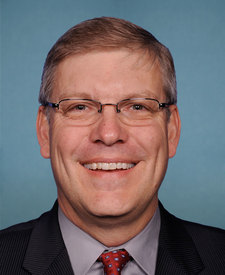
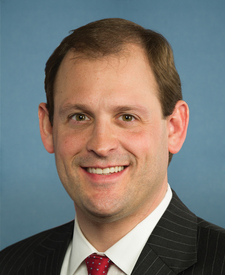
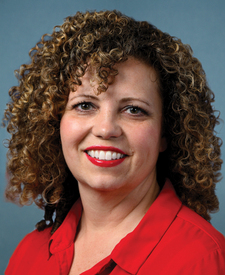
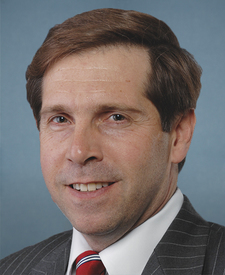

Legislative Progress
ReportedPlaced on the Union Calendar, Calendar No. 478.
Reported (Amended) by the Committee on Financial Services. H. Rept. …
Additional sponsors: Mr. Rose, Mr. Bilirakis, Mr. Collins, Mr. Carter …
Placed on the Union Calendar, Calendar No. 478.
Ordered to be Reported (Amended) by the Yeas and Nays: …
Committee Consideration and Mark-up Session Held
Introduced in House
Referred to the House Committee on Financial Services.
Mr. Loudermilk (for himself, Mr. Barr, Mr. Downing, and Mr. …
Stakeholder Effects
cui bono?How this legislation distributes effects. Mention counts reflect frequency, not effect magnitude.
Banks, Credit unions, Financial Crimes Enforcement Network
Positive-direction: Banks, Credit unions, Money services businesses
Negative-direction: Financial Crimes Enforcement Network, Secretary of the Treasury
Bill Structure & Actor Mappings
Who is "The Secretary" in each section?
- "fincen"
- → Financial Crimes Enforcement Network
- "treasury"
- → Department of the Treasury
We use a combination of our own taxonomy and classification in addition to large language models to assess meaning and potential beneficiaries. High confidence means strong textual evidence. Always verify with the original bill text.
Learn more about our methodology