Employment Services and Jobs Parity Act
Summary
What This Bill Does
The Employment Services and Jobs Parity Act brings the Commonwealth of the Northern Mariana Islands and American Samoa into Wagner-Peyser Act provisions that already cover Guam and the Virgin Islands. It adds both territories to the Act's definition of state, adds them to the unemployment compensation law requirement, and changes the allotment formula so that, once total allotment funding exceeds fiscal year 2025 levels, each receives one-half of Guam's corresponding allotment. The bill is a territorial parity measure for public employment offices and labor exchange services rather than a new national job program.
Who Benefits and How
CNMI workers benefit because the territory becomes expressly included in Wagner-Peyser employment-service coverage. American Samoa workers benefit from statutory access to the same employment-service framework applied to other territories. Territorial workforce agencies benefit from clearer eligibility for allotments and employment-service administration. Employers in the territories benefit if stronger labor exchange services improve recruitment and job matching.
Who Bears the Burden and How
The Department of Labor must update Wagner-Peyser administration, guidance, and allotment calculations for both territories. State workforce administrators must account for new territorial allotment treatment when national funding increases. Guam and Virgin Islands workforce officials may need to compare allotment treatment with the new CNMI and American Samoa formula. Federal taxpayers bear any added allotment cost when appropriations exceed the fiscal year 2025 baseline.
Key Provisions
- Adds CNMI and American Samoa to Wagner-Peyser Act state definitions.
- Adds both territories to unemployment-compensation-law requirements.
- Requires future allotments to each territory equal to one-half of Guam's amount when funding exceeds fiscal year 2025 levels.
- Expands employment-service parity for U.S. territories without creating a separate job program.
Evidence Chain:
This summary is generated from the full bill text using AI analysis. Expand "Detailed Analysis" below for identified beneficiaries/burden bearers.
At a Glance
What This Bill Does
Adds the Commonwealth of the Northern Mariana Islands and American Samoa to Wagner-Peyser Act employment-service definitions, unemployment-compensation-law requirements, and allotment formulas, including future allotments equal to one-half of Guam's amount when funding rises above fiscal year 2025 levels.
Key Policy Areas
Labor, Territories, Employment Services
Primary Purpose
Adds the Commonwealth of the Northern Mariana Islands and American Samoa to Wagner-Peyser Act employment-service definitions, unemployment-compensation-law requirements, and allotment formulas, including future allotments equal to one-half of Guam's amount when funding rises above fiscal year 2025 levels.
Policy Domains
Resolution provisions
Identified Gains
Contextual inference, no direct clause citation- CNMI workers
- American Samoa workers
- Territorial workforce agencies
- Territorial employers
Contextual inference, no direct clause citation
Identified Costs
Contextual inference, no direct clause citation- Department of Labor
- State workforce administrators
- Guam workforce officials
- Federal taxpayers
Contextual inference, no direct clause citation
Sponsors

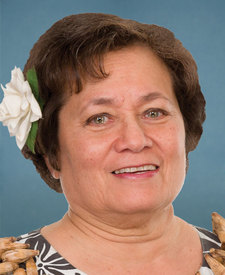
Legislative Progress
In CommitteeMs. King-Hinds (for herself and Mrs. Radewagen) introduced the following …
Referred to the House Committee on Education and Workforce.
Introduced in House
Sponsor introductory remarks on measure. (CR E179)
Bill Structure & Actor Mappings
Who is "The Secretary" in each section?
We use a combination of our own taxonomy and classification in addition to large language models to assess meaning and potential beneficiaries. High confidence means strong textual evidence. Always verify with the original bill text.
Learn more about our methodology