Proven Forest Management Act of 2025
Summary
What This Bill Does
The Proven Forest Management Act of 2025 changes how federal land managers conduct forest management activities. The Secretary concerned must coordinate with impacted parties to increase efficiency and make management practices compatible across National Forest System land. Forest management activities generally must pursue multiple ecosystem benefits, including reducing forest fuels, maintaining biological diversity, improving wetland and water quality including Stream Environment Zones, and increasing resilience to changing water temperature and precipitation, unless the Secretary determines the costs are excessive. The Secretary must establish post-program ground condition criteria for ground disturbance and monitor whether relevant conditions are attained. Fuel-reduction forest management activities on National Forest System land are categorically excluded from NEPA if they do not exceed 10,000 acres, include no more than 3,000 acres of mechanical thinning, are developed with impacted parties including local government representatives and other interested entities, and are consistent with the forest plan. The Secretary may enter into contracts and cooperative agreements with qualified entities for fuel reduction, erosion control, reforestation, Stream Environment Zone restoration, and similar management on federal and non-federal land within land adjustment programs.
Who Benefits and How
Communities near fire-prone forests benefit if fuel-reduction projects move faster and reduce wildfire risk. The Forest Service and Interior land managers benefit from a categorical exclusion for qualifying fuel-reduction work and authority to coordinate contracts or cooperative agreements. Local governments benefit because county supervisors or commissioners are specifically included in project coordination. Qualified forestry contractors benefit from contract and cooperative-agreement opportunities for fuel reduction, erosion control, reforestation, and restoration work. Watershed and wetland protection efforts benefit from required attention to water quality and Stream Environment Zones unless costs are excessive.
Who Bears the Burden and How
The Agriculture Secretary and Interior Secretary must coordinate with impacted parties, apply ecosystem-benefit standards, set ground condition criteria, and monitor outcomes. Environmental reviewers and conservation advocates lose NEPA review opportunities for qualifying fuel-reduction projects under the categorical exclusion. Local fire departments, state governments, tribal governments, NOAA, and volunteer groups may be asked to participate as interested entities. Federal land managers must decide when ecosystem-benefit costs are excessive. Mechanical thinning operators must stay within acreage and forest-plan limits for categorical exclusion eligibility.
Key Provisions
- Requires coordination with impacted parties for forest management activities on National Forest System land.
- Requires multiple ecosystem benefits including fuel reduction, biodiversity, water quality, and climate resilience unless costs are excessive.
- Requires post-program ground condition criteria and monitoring.
- Creates a NEPA categorical exclusion for qualifying fuel-reduction projects up to 10,000 acres.
- Limits mechanical thinning under the categorical exclusion to 3,000 acres.
- Requires coordination with local governments and consultation with interested entities for excluded projects.
- Authorizes contracts and cooperative agreements for fuel reduction, erosion control, reforestation, and Stream Environment Zone restoration.
- Defines interested entities, forest management activity, public lands, Secretary concerned, and Stream Environment Zone.
Evidence Chain:
This summary is generated from the full bill text using AI analysis. Expand "Detailed Analysis" below for identified beneficiaries/burden bearers with clause-level evidence links.
At a Glance
What This Bill Does
Directs the Agriculture or Interior Secretary to coordinate forest management activities on National Forest System and covered public lands, pursue multiple ecosystem benefits unless costs are excessive, monitor post-project ground conditions, categorically exclude qualifying fuel-reduction projects up to 10,000 acres with no more than 3,000 acres of mechanical thinning from NEPA, and authorize contracts or cooperative agreements for fuel reduction, erosion control, reforestation, and Stream Environment Zone restoration.
Key Policy Areas
Forestry, Wildfire, Public Lands
Primary Purpose
Directs the Agriculture or Interior Secretary to coordinate forest management activities on National Forest System and covered public lands, pursue multiple ecosystem benefits unless costs are excessive, monitor post-project ground conditions, categorically exclude qualifying fuel-reduction projects up to 10,000 acres with no more than 3,000 acres of mechanical thinning from NEPA, and authorize contracts or cooperative agreements for fuel reduction, erosion control, reforestation, and Stream Environment Zone restoration.
Policy Domains
House resolution provisions
Identified Gains
- Communities near fire-prone forests
- U.S. Forest Service
- Interior land managers
- Local governments
- Qualified forestry contractors
- Watershed protection efforts
Identified Costs
- Secretary of Agriculture
- Secretary of the Interior
- Environmental reviewers
- Conservation advocates
- Local fire departments
- State governments
- Tribal governments
- Mechanical thinning operators
Sponsors
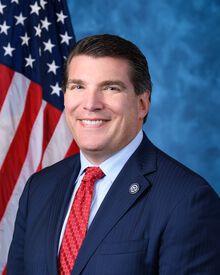
Legislative Progress
ReportedReported (Amended) by the Committee on Natural Resources. H. Rept. …
Ordered to be Reported in the Nature of a Substitute …
Committee Consideration and Mark-up Session Held
Referred to the Subcommittee on Forestry and Horticulture.
Mr. McClintock (for himself, Mr. Calvert, Mr. LaMalfa, Mr. Valadao, …
Referred to the Committee on Agriculture, and in addition to …
Introduced in House
Stakeholder Effects
cui bono?How this legislation distributes effects. Mention counts reflect frequency, not effect magnitude.
Communities near fire-prone forests, Forest Service, Interior land managers
Positive-direction: Communities near fire-prone forests
Negative-direction: Forest Service, Interior land managers
Conservation advocates, Environmental reviewers
Positive-direction: Environmental reviewers
Negative-direction: Conservation advocates
Bill Structure & Actor Mappings
Who is "The Secretary" in each section?
- "noaa"
- → National Oceanic and Atmospheric Administration
- "usfs"
- → U.S. Forest Service
We use a combination of our own taxonomy and classification in addition to large language models to assess meaning and potential beneficiaries. High confidence means strong textual evidence. Always verify with the original bill text.
Learn more about our methodology