SECURE Notarization Act of 2025
Summary
What This Bill Does
The SECURE Notarization Act creates a national framework for electronic and remote notarization. It defines communication technology, electronic records and signatures, notarial officers, notarization, remotely located individuals, and state officials. A notary may perform electronic notarizations in or affecting interstate commerce if the electronic signature and required information are attached or logically associated with the electronic record and bound so later changes are evident. A notary may perform remote notarizations for remotely located individuals using simultaneous sight-and-sound communication, identity proofing through personal knowledge, third-party verification processes, or credible witnesses, and related fraud-deterrence standards. Federal courts and states must recognize valid notarizations from other states or under the Act, whether tangible, electronic, in-person, or remote. The bill does not require notaries to use remote or electronic notarization, preserves remedies for fraud or invalid transactions, preserves state practice-of-law rules, allows state laws based on the Revised Uniform Law on Notarial Acts or consistent alternative procedures, and lets states regulate commissions, standards of care, endorsements, sanctions, and false advertising.
Who Benefits and How
Remote notary providers benefit because federal law validates electronic and remote notarizations in interstate commerce. Consumers signing documents remotely benefit from broader recognition of notarizations performed through communication technology. Mortgage lenders and title companies benefit from national recognition rules for electronic and remote notarized records. State notary regulators benefit because the bill preserves commission, standard-of-care, sanction, and endorsement authority.
Who Bears the Burden and How
Notaries performing remote notarizations must meet identity-proofing, communication technology, and record-association requirements. States with inconsistent remote notarization rules may need to revise rules to avoid preemption. Courts must recognize qualifying notarizations from other states or under the Act. Fraud victims must use preserved state or federal remedies to challenge records rather than relying on automatic notarization invalidity.
Key Provisions
- Creates federal standards for electronic notarizations in interstate commerce.
- Creates federal standards for remote notarizations using communication technology and identity proofing.
- Requires federal courts and states to recognize valid notarizations from other states or under the Act.
- Protects state notary regulation, sanctions, practice-of-law rules, and special commission authority.
- Limits preemption for state laws that are consistent with federal standards or approved uniform notarial acts.
Evidence Chain:
This summary is generated from the full bill text using AI analysis. Expand "Detailed Analysis" below for identified beneficiaries/burden bearers with clause-level evidence links.
At a Glance
What This Bill Does
Creates federal rules for electronic and remote notarizations in interstate commerce, requires interstate and federal-court recognition of valid notarizations, preserves state regulatory powers, and limits preemption where state rules meet federal consistency standards.
Key Policy Areas
Notarization, Electronic Commerce, State Law
Primary Purpose
Creates federal rules for electronic and remote notarizations in interstate commerce, requires interstate and federal-court recognition of valid notarizations, preserves state regulatory powers, and limits preemption where state rules meet federal consistency standards.
Policy Domains
Resolution provisions
Identified Gains
- Remote notary providers
- Consumers signing documents remotely
- Mortgage lenders
- State notary regulators
Identified Costs
- Notaries performing remote notarizations
- States with inconsistent rules
- Courts
- Fraud victims
Sponsors
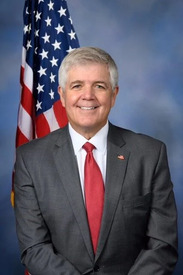




Legislative Progress
In CommitteeMr. Bentz (for himself, Ms. Dean of Pennsylvania, and Ms. …
Referred to the Committee on Energy and Commerce, and in …
Introduced in House
Stakeholder Effects
cui bono?How this legislation distributes effects. Mention counts reflect frequency, not effect magnitude.
Notaries performing remote notarizations, Remote notary providers
Positive-direction: Remote notary providers
Negative-direction: Notaries performing remote notarizations
Bill Structure & Actor Mappings
Who is "The Secretary" in each section?
We use a combination of our own taxonomy and classification in addition to large language models to assess meaning and potential beneficiaries. High confidence means strong textual evidence. Always verify with the original bill text.
Learn more about our methodology