Timely and Accurate Benefits Act
Summary
What This Bill Does
The Timely and Accurate Benefits Act conditions federal funding for covered benefit programs on state use of an Enhanced Income Verification Platform. Within one year after enactment, each state must procure, contract for, and use such a platform for any federal, state, or local program using federal funds where eligibility or benefit amount depends in whole or in part on individual or household income. The bill defines enhanced gross income broadly to include wages, tips, contract work, self-employment, gig work, unemployment compensation, Social Security benefits, Supplemental Security Income, interest, dividends, rental income, royalties, child support, alimony, cash assistance, recurring gifts, trust or estate distributions, other taxable or nontaxable income, and consumer-permissioned deposit account transaction data. The platform must use automated real-time data matching and analytics to identify unreported or underreported income, inconsistent income reporting, potential ineligibility, and improper payments while letting claimants review and attest to the data and avoiding double-counting.
Who Benefits and How
Federal benefit programs benefit from stronger income verification before benefits are paid. State benefit agencies benefit from automated tools for detecting inconsistent income reporting and potential improper payments. Federal taxpayers benefit if the platform reduces payments to ineligible households or incorrect benefit amounts. Eligible beneficiaries benefit if more accurate verification protects program integrity and preserves funds for qualified applicants. Data analytics vendors benefit from state procurement and contracting demand for Enhanced Income Verification Platforms.
Who Bears the Burden and How
States must procure, contract for, and use an Enhanced Income Verification Platform within one year to remain eligible for federal funds. State eligibility workers must integrate platform results into benefit determinations and handle claimant review and attestation. Benefit applicants must authorize and review deposit account transaction data when the platform uses consumer-permissioned access. Privacy and civil-liberties advocates may face concerns about expanded use of bank transaction data in benefits administration. Platform vendors must provide real-time matching, analytics, and duplicate-data controls.
Key Provisions
- Requires states to use an Enhanced Income Verification Platform within one year as a condition of federal benefit funding.
- Defines covered programs as income-tested benefit programs administered with federal funds.
- Expands income verification to wages, gig work, self-employment, unemployment, Social Security, SSI, rental income, support payments, gifts, and other resources.
- Requires automated real-time matching and analytics to identify underreported income, inconsistent reporting, ineligibility, and improper payments.
- Allows claimant review and attestation of consumer-permissioned deposit account transaction data.
- Requires the platform to consolidate overlapping data and avoid double-counting financial records.
Evidence Chain:
This summary is generated from the full bill text using AI analysis. Expand "Detailed Analysis" below for identified beneficiaries/burden bearers with clause-level evidence links.
At a Glance
What This Bill Does
Requires every state receiving federal funds for income-tested benefit programs to procure, contract for, and use an Enhanced Income Verification Platform within one year, using applicant-permissioned deposit account transaction data, real-time matching, and analytics to identify unreported or underreported income, inconsistent income reporting, potential ineligibility, and improper payments.
Key Policy Areas
Public Benefits, Fraud Prevention, State Government
Primary Purpose
Requires every state receiving federal funds for income-tested benefit programs to procure, contract for, and use an Enhanced Income Verification Platform within one year, using applicant-permissioned deposit account transaction data, real-time matching, and analytics to identify unreported or underreported income, inconsistent income reporting, potential ineligibility, and improper payments.
Policy Domains
House resolution provisions
Identified Gains
- Federal benefit programs
- State benefit agencies
- Federal taxpayers
- Eligible beneficiaries
- Data analytics vendors
Identified Costs
- States administering income-tested benefits
- State eligibility workers
- Benefit applicants
- Privacy advocates
- Enhanced Income Verification Platform vendors
Sponsors




Legislative Progress
ReportedCommittee Consideration and Mark-up Session Held
Ordered to be Reported (Amended) by the Yeas and Nays: …
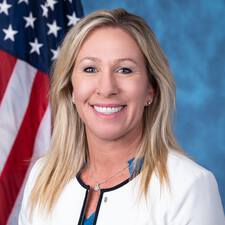
Mr. Timmons (for himself, Ms. Greene of Georgia, and Mr. …
Referred to the House Committee on Oversight and Government Reform.
Introduced in House
Stakeholder Effects
cui bono?How this legislation distributes effects. Mention counts reflect frequency, not effect magnitude.
Benefit applicants, Federal benefit programs, State benefit agencies
Positive-direction: Federal benefit programs
Negative-direction: Benefit applicants, State benefit agencies
Bill Structure & Actor Mappings
Who is "The Secretary" in each section?
- "states"
- → State benefit agencies
We use a combination of our own taxonomy and classification in addition to large language models to assess meaning and potential beneficiaries. High confidence means strong textual evidence. Always verify with the original bill text.
Learn more about our methodology