To amend the Public Health Service Act to provide for greater investments in research on rare diseases and conditions disproportionately affecting minority populations, and for other purposes.
Legislative Progress
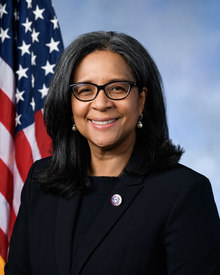
IntroducedMs. Strickland introduced the following bill; which was referred to …
Summary
What This Bill Does
The Health Equity and Rare Disease Act (HEARD Act) of 2025 expands federal research and healthcare workforce programs to address rare diseases that disproportionately affect minority populations. It creates a coordinated NIH research program, establishes new grant programs for data collection and physician training, and provides scholarships and loan repayment for healthcare professionals who commit to serving rare disease patients.
Who Benefits and How
Medical schools, nursing programs, and universities benefit from multiple new grant programs to train healthcare professionals on rare diseases. Medical students can receive up to $50,000 per year in loan repayment or full scholarships if they commit to at least 5 years of serving rare disease populations. Pharmaceutical and biotech companies developing rare disease treatments benefit from increased NIH research funding that could advance their drug pipelines. Tribal Epidemiology Centers and Urban Indian Health Centers receive dedicated grants for culturally appropriate rare disease research. Nonprofit organizations focused on minority health gain access to grants for data collection and community outreach.
Who Bears the Burden and How
Federal agencies face significant new administrative and reporting requirements: NIH must establish a Coordinating Committee and develop a comprehensive research plan within one year; CDC must coordinate data collection grants and conduct public awareness campaigns; FDA must survey its clinical trial diversity policies and report to Congress; HHS must produce multiple reports on rare diseases affecting minorities and review Medicare barriers. Federal taxpayers fund all new grant programs, scholarships, and loan repayment programs, though no specific dollar amounts are authorized.
Key Provisions
- Creates Section 409K of the Public Health Service Act establishing NIH rare diseases health equity research coordination with a new inter-agency Coordinating Committee
- Authorizes grants to medical schools for rare disease training, with emphasis on telehealth capabilities
- Establishes a loan repayment program offering up to $50,000 annually (plus inflation adjustments) for physicians and genetic counselors serving rare disease patients
- Requires the FDA to survey and report on clinical trial diversity policies for rare diseases affecting minorities
- Creates dedicated grants for Tribal Epidemiology Centers to study rare diseases in Native American communities
- Mandates HHS review of Medicare regulatory barriers that inhibit rare disease treatment access for beneficiaries of color
Evidence Chain:
This summary is derived from the structured analysis below. See "Detailed Analysis" for per-title beneficiaries/burden bearers with clause-level evidence links.
Primary Purpose
Expands and coordinates NIH research on rare diseases in minority populations, establishes grant programs for data collection and physician training, and creates scholarship/loan repayment programs for healthcare professionals serving rare disease patients.
Policy Domains
Legislative Strategy
"Expand federal research infrastructure and healthcare workforce pipeline to address health disparities in rare disease outcomes for minority populations through coordinated NIH research, grant programs, and physician incentives"
Likely Beneficiaries
- Minority populations affected by rare diseases
- Medical schools and nursing programs receiving training grants
- Medical students and physicians receiving loan repayment and scholarships
- Nonprofit organizations conducting rare disease research and outreach
- Pharmaceutical and biotech companies developing rare disease treatments
Likely Burden Bearers
- Federal taxpayers (through increased appropriations)
- NIH and HHS (administrative burden of new programs and coordination)
- CDC (coordination requirements for data collection grants)
Bill Structure & Actor Mappings
Who is "The Secretary" in each section?
- "the_director"
- → Director of NIH
- "the_secretary"
- → Secretary of Health and Human Services
- "the_coordinating_committee"
- → Rare Diseases Health Equity Coordinating Committee
- "ncats"
- → National Center for Advancing Translational Sciences
- "nhlbi"
- → National Heart, Lung, and Blood Institute
- "the_director"
- → Director of NIH
- "the_institute"
- → National Institute on Minority Health and Health Disparities
- "the_director"
- → Director of the Centers for Disease Control and Prevention
- "grant_recipients"
- → Public and private nonprofit entities
- "the_secretary"
- → Secretary of Health and Human Services
- "grant_recipients"
- → Accredited schools of medicine, nursing, and health professional training programs
- "the_administrator"
- → Administrator of the Health Resources and Services Administration
Key Definitions
Terms defined in this bill
Has the meaning given such term in section 464z-3 of the Public Health Service Act
Has the meaning given such term in section 526 of the Federal Food, Drug, and Cosmetic Act (21 U.S.C. 360bb)
We use a combination of our own taxonomy and classification in addition to large language models to assess meaning and potential beneficiaries. High confidence means strong textual evidence. Always verify with the original bill text.
Learn more about our methodology